


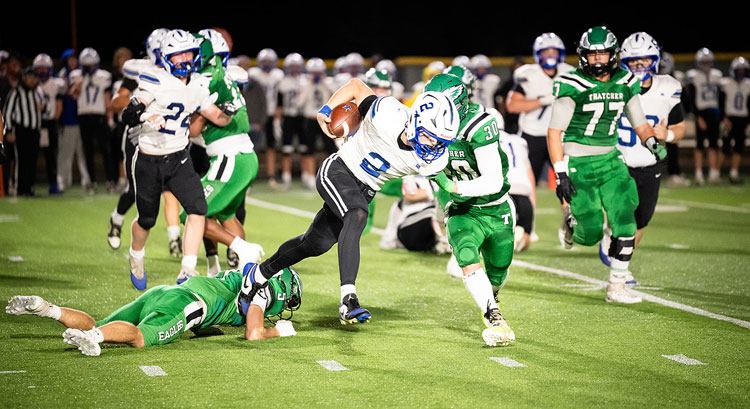
Friday nights in the Gila Valley usually mean bleachers, school colors, and a bag of snacks getting passed down the row. For families heading to a high school game, pork rind snacks are an easy option to toss in a tote. They’re crunchy, salty and easy to pack, and they don’t need a plate, a fork or much cleanup.
A little planning helps, though, especially when the bag is feeding a row of parents, grandparents, cousins and friends.
Why Pork Rinds Work in the Bleachers
Pork rinds are made from pork skin that is prepared and cooked, often by rendering, drying, and frying it until it puffs. That gives them an airy crunch that holds up well in a tote or a backpack under the bleachers.
They’re also commonly called chicharrones, though preparation and terminology vary by region. Some bags are puffed and airy. Others, often sold as cracklins, typically have more fat attached to the skin, giving them a meatier texture.
Plain pork rinds are typically close to zero carbohydrates, which is one reason they show up in the snack bags of people following low-carb eating plans. Flavored varieties can be different, since seasonings may add sugar or starch, so it’s worth checking the bag.

Picking Flavors for a Crowd
A single flavor can get old by halftime. Bringing two or three gives everyone in the row something to reach for.
Many shops now sell pork rind snacks in a wide range of seasonings, from barbecue and Buffalo wing to Hatch chile and spicy dill. For a mixed group, consider bringing one mild flavor, one spicy option, and one tangy or savory variety.
A small container of salsa, guacamole, or bean dip packs easily and turns a bag of rinds into something closer to a shared snack for the whole row. Pork rinds with lime or chile seasoning tend to go well with those flavors.
Reading the Label Before You Share
Snack bags are easy to underestimate. A bag that looks like a single serving may hold two or more, and the numbers on the Nutrition Facts label apply to one serving, not the whole package.
The FDA’s guide to reading the Nutrition Facts label explains how to use serving size and servings per container, along with the percent Daily Value. On that scale, 5% Daily Value or less of sodium per serving is considered low, and 20% or more is considered high.

Some pork rinds can be high in sodium, and levels vary between products. If anyone in your group is watching their salt, comparing the sodium line on a few bags before Friday can help you pick.
Allergies When Snacks Get Passed Down the Row
At a football game, snacks rarely stay with the person who brought them. A bag gets handed to a cousin, a neighbor’s kid, or a friend sitting a few rows up.
That’s where allergies come in. The FDA lists nine major food allergens, including milk, soy, and wheat. Plain pork rinds are usually a short ingredient list, but some flavored varieties, such as cheese-style seasonings, may include milk or other allergens.
Before sharing, read the full ingredients list and any allergen information on the package. If you’re bringing snacks for a team, a fundraiser table or a group of kids, it’s reasonable to check with parents before handing them out.
Home Games and Away Games
Home games are usually easier to plan for because you already know the venue and its rules. Away games take a little more planning. A drive to another school means packing snacks for the ride and for the game, and the visiting side may have different rules about outside food or bags than your home field does. A quick call to the host school or a look at its athletic department page before you leave can save a trip back to the car.
Packing Tips for the Bleachers
A few small habits make game-day snacking easier:
- Portion ahead of time. Splitting a larger bag into small resealable bags keeps hands out of one shared bag and makes it easier to pass down the row.
- Keep bags sealed until kickoff. Pork rinds stay crunchier when they aren’t opened hours early.
- Pack a trash bag. Crumbs and wrappers add up fast in the bleachers, and leaving your row clean helps whoever handles cleanup after the game.
- Check the venue’s rules. Some schools limit outside food or bag sizes, so it’s worth checking with the school or the athletic department before you go.
Store any leftovers according to the package’s storage instructions and date.

See You in the Stands
Game-day snacks don’t need to be complicated. A couple of flavors, a quick look at the label, and a little thought about who else might be reaching into the bag go a long way on a Friday night in the Gila Valley.
Pack the pork rinds, wear your school colors, and get there in time for kickoff.