


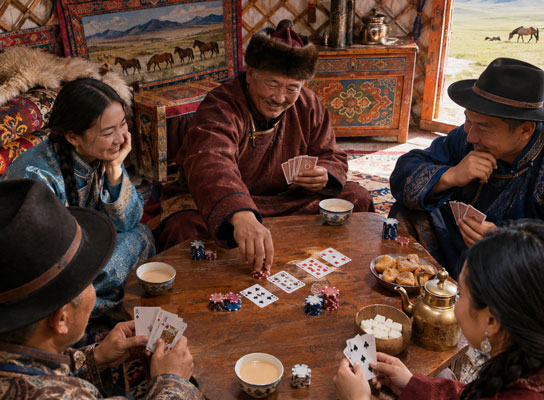
There has been a recent upsurge in interest in poker in Mongolia. For the most part, the initial exposure that Mongolians had to poker was through lesson-type games where the rules of the game were taught. Players started going to official tournaments and events. As interest in the game grew, participants started thinking about strategies and techniques that are used in different variants of the game. Poker has standardized tournament structures and formats. Players are able to communicate with each other and compete against participants in tournaments that are held all over the world.
As interest in online poker in Mongolia has grown, so has the opportunity for the Mongolian poker community to learn strategies. Online gaming has allowed players to view and analyze diverse playing styles. Networked play has allowed players to practice against opposing players from across the globe. Play has become as accessible as educational materials. With time and effort, players are able to hone their skills.
How Poker Became Popular in Mongolia
The first records of poker’s history in Mongolia begin in 2009, with the establishment of the Mongolian Free Poker Federation. Mongolia’s first open poker tournament happened at the end of that year. National championships started in 2019.
From Friendly Matches to Serious Competition
An introduction to poker happens at a table with acquaintances. New players learn to assess hand rankings and poker players’ preferences. Position is paramount in poker, and with experience, players learn to ascertain the line of reasoning of others. All this, while having fun.
Structured tournaments provide the opportunity to test these skills against players yet to be met. The rules remain constant. Success becomes contingent on players’ ability to prepare for the next event, which may include multiple games in a row.

| Poker Format | Main Characteristics | Typical Experience |
| Casual games | Flexible rules and friendly sessions | Learning through practice |
| Free online poker | Digital tables and practice modes | Developing basic skills |
| Poker leagues | Upcoming matches and standings | Regular competitive play |
| National tournaments | Structured events and formal rules | Testing advanced strategies |
Digital Technology Changes the Playing Experience
Online education has made learning poker easier. Aspiring poker players can now study and practice the game at their convenience. Poker players can improve their overall game by recognizing potential situations with virtual reality poker programs. Educational tools integrated into poker software include:
- Simulations that help players identify and properly play common hands.
- Tools that aid players in making optimal decisions by helping them analyze previous hands.
- Programs that help players identify and choose the best hands to play based on their position at the table.
- Poker education has transformed to the point that players are able to educate themselves on advanced poker strategies at any given moment.
iPoker makes it so that players are able to study and learn the intricacies of the game while on the move. Because of the availability of live-streamed poker tournaments, players are able to study different poker tournaments and their rules while traveling.
The Rise of Competitive Poker Tournaments
Recently, Mongolian poker players started holding national poker tournaments and developing an international poker network and opportunities. The Mongolian Free Poker Federation (MFPF) became a member of the International Federation of Match Poker (IFMP) in March 2021. Since then, they introduced poker as a mental sport and helped players compete against players from other countries.
What Separates Tournament Players From Beginners?
Tournament poker encourages discipline. Players must determine the best moments to attack and when to sit back. Because players’ starting chips are always changing, the actions players can take in a hand also change.
Some recurring strategies among skilled players are:

- Recognizing tendencies among opponents and taking advantage of them.
- Making adaptive plays based on seat position.
- Utilizing chip amounts remaining from previous hands.
- Analyzing prior tournament play for errors.
Players learn to eliminate their emotions throughout a tournament, especially after an undesirable outcome. With training, players learn to distance themselves from the previous hand.
Poker, Gambling, and Modern Entertainment
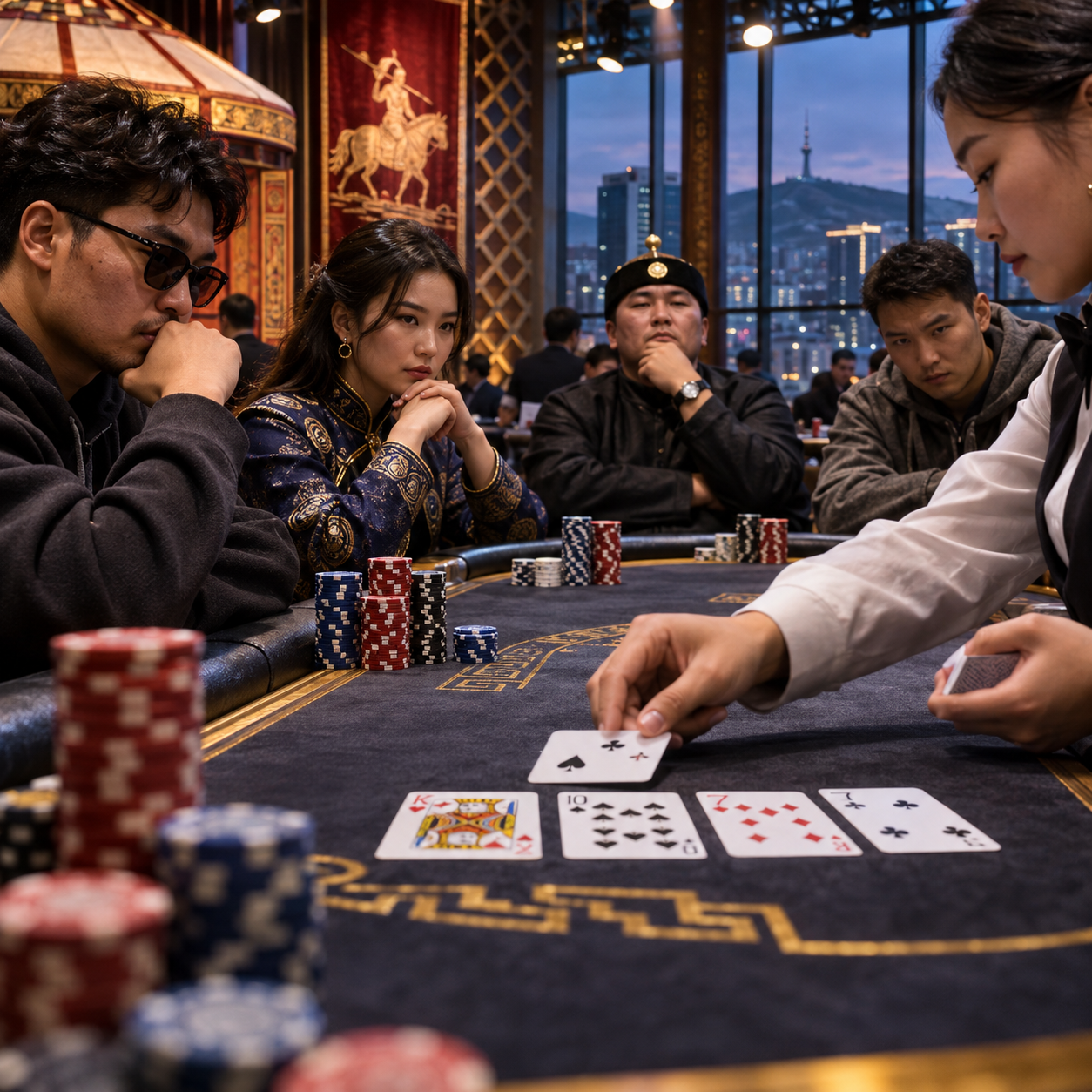
Poker is a gambling game with specific rules and varies from cash games to tournaments. Cash games are played for money, and tournaments are played for evaluation. Cash games and tournaments are similar in structure and rules, but have a different intention and are treated differently by the law.
Starting in 2025, Mongolia’s betting embargoes will prohibit online poker. For the time being, Mongolians can teach and host poker mind sports in person to comply with the new laws.
How Poker Communities Build Their Players
Traditionally, community organizations played an important role in introducing youth to adult activities and responsibilities. Through coaches and older members, youth learned activities and behaviors associated with adulthood. Today, youth interested in poker learn rules and behaviors associated with the game and tournaments through coaching and participation in local poker tournaments.
The Mongolian Free Poker Federation supports training and events both nationally and internationally. Through these contacts and support, members become aware of rules and standards applied in other poker events.
A Growing Interest in Skill-Based Competition
Poker and similar games have gained widespread acceptance in Mongolia relatively recently. Typically, Mongolians teach themselves the game basics from peers and later improve their game through poker-related websites. Competitive formats and rules of games were established by the first organized poker events in the country. It is understood that legalization and regulation of poker games by the government would help develop and promote the game in Mongolia. As a result, the Mongolian Poker Association would be able to expand its membership, games, and partnerships both in and out of the country.