
The Gila River receives more than 1 million visitors a year, and many arrive planning a day trip to gold pan along its banks, which requires understanding local water flows, securing access to public land, and packing tools designed to process desert gravels cleanly. The Gila Valley offers some of the most accessible placer gravels in the desert Southwest. Success comes down to setting realistic expectations and reading the riverbank properly before digging your first bucket.
Map Your Access Points and Public Claims
Before heading toward Safford or Duncan, verify where you can legally sample gravels. Bureau of Land Management (BLM) parcels provide abundant open land along the corridor, but active mining claims dot the entire drainage. Navigating these boundaries requires checking current BLM land status maps or using online mapping overlays that track active mineral claims.
Focus your initial search on public recreation sites or unencumbered stretches where mineral rights remain open to casual collecting. Panning on active claims without owner permission creates unnecessary conflict and violates local land rules.
Assemble Gear Built for Desert Gravels
Placer deposits along desert waterways consist of dry sand, heavily compacted sediment, and dense clay pockets. Traditional stream panning works, but processing raw material efficiently requires a few specialized pieces of equipment.

A solid setup centers on heavy-duty tools that handle coarse material without bending or breaking:
- A 1/4-inch mesh classifier screen to eliminate large rocks and gravel before washing
- A deep green or blue high-impact plastic pan featuring twin riffles to catch fine gold
- A hand trowel and small pry bar to extract heavy paydirt from bedrock cracks
Equipping yourself with a reliable gold mining equipment set ensures your gear withstands rough desert sediment. There are 120 placer mining districts mapped across Arizona, and most require durable tools to break through cemented wash layers. Sturdy pans and classifiers keep your workflow moving steadily through heavy sand deposits.
Read the Riverbed and Sample Paydirt
Gold travels along the path of least resistance during flood stage, settling wherever current speed drops abruptly. Look for natural traps along the river’s high-water marks rather than digging randomly in middle gravel bars.
Concentrate your efforts behind large boulders, inside tight bends, and directly upstream of tree root systems that strain flowing water during seasonal floods. Heavy black sands and raw gold collect in crevices along exposed bedrock benches. Use a pry bar to scrape compacted dirt out of exposed cracks, brushing the fine material directly into your bucket.
Classification saves time and physical energy. Shake your classifier over a bucket filled with water to strip away barren overburden, keeping only the fine sand that drops through the mesh.
Master Desert Pan Techniques for Fine Gold
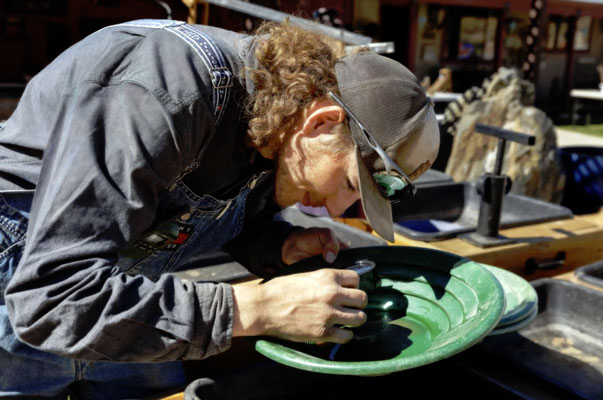
Gila River gold runs predominantly fine, often taking the form of tiny flakes and flour gold rather than large nuggets. Pan control matters far more than speed when recovering tiny particles.

Submerge your pan fully, gently shaking it side to side to let heavy metallic grains settle toward the bottom seams. Tilt the pan forward slightly and wash the lighter top layers off with smooth, circular water movements. Repeat this process until only a thin streak of dark black sand remains near the back rim.
Use a snuffer bottle to suck up concentrated gold flakes directly from the water. Transfer your collected concentrates into a small clear vial at the end of the day for careful inspection at home.
Prepare for Gila Valley Conditions
Desert prospecting demands careful physical preparation. Temperatures in the valley rise rapidly by midday, and shade along river channels can be minimal. So whether you’re planning to pan for gold or visiting one of the other local day-trip hotspots, preparation is key.
Pack at least one gallon of fresh water per person, robust sunscreen, and thick work gloves to protect your hands from sharp rocks and hot metal pans. Check local weather reports for upstream rainfall, as flash floods can travel down dry washes unexpectedly in late summer. Setting up a shaded basecamp near your digging spot keeps energy levels high and makes the day far more enjoyable.
Navigating State and Federal Prospecting Regulations
Operating on public lands across the Gila River corridor requires strict adherence to federal laws and state guidelines. The Bureau of Land Management permits casual-use prospecting with non-motorized hand tools, but mechanical devices like suction dredges face heavy restrictions under Arizona land rules designed to protect fragile desert riparian zones.
Ignorance of active claim markers rarely protects a prospector from trespassing violations. Mining monuments, wooden lath stakes, and metal tags posted along riverbanks indicate private mineral rights that must be fully respected.
Checking county recorder databases or online claim maps prior to your trip prevents costly legal disputes. Responsible stewardship keeps these historic waterways open for casual collectors.
Extracting Fine Gold From Heavy Black Sands
Separating microscopic gold flakes from concentrated black sand magnetic iron is the ultimate test of patience for any desert prospector. Many beginners ruin their yield by using a magnet too aggressively while the material is wet, trapping delicate flakes inside the iron clump.
Drying your final concentrates completely on a flat ceramic dish before applying a rare earth magnet solves this common issue. Once dry, the magnetic sand lifts away cleanly without trapping valuable flour gold.
Archival historical mining records highlight how rich the Gila drainage was during peak extraction eras, and modern prospectors still pull impressive fine gold signatures using these meticulous cleaning methods. Storing your cleaned flakes in mineral oil inside a glass vial preserves their luster and prevents loss.
Preserving Your Equipment After a Desert Session
Desert sediment is notoriously abrasive, acting like fine sandpaper on plastic pans and aluminum classifiers. Washing your gear thoroughly in clean water immediately after a session prevents fine magnetite grains from embedding permanently into plastic surface pores.
Inspect your classifier mesh screens regularly for tiny tears or loose wires that could let valuable nuggets slip through during high-volume processing. Keeping your tools clean and well-maintained ensures they perform reliably on your next weekend outing.
Digging Deeper into Regional Prospecting
Building your skills on the Gila River gives you a strong foundation in reading desert placer formations. For additional information on the Gila Valley region and all that it has to offer, read our other posts.