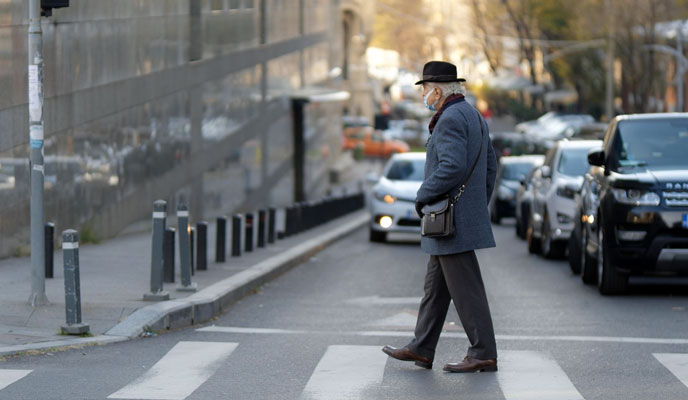
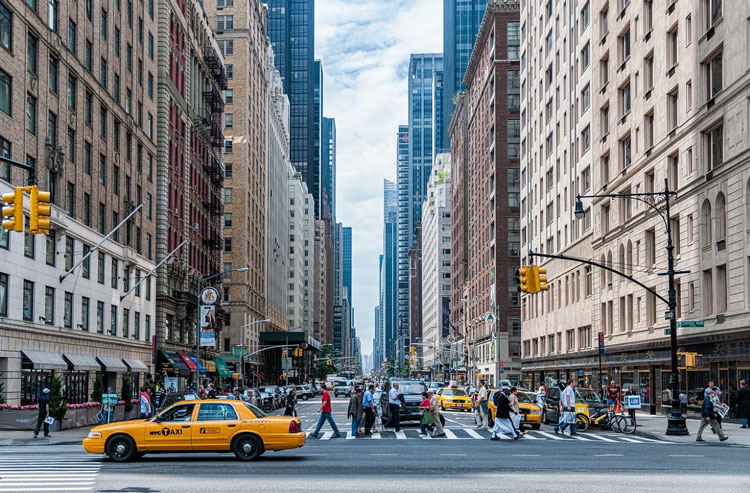
People foolishly believe a painted white crosswalk line provides a physical shield against incoming traffic. It does not. The physics of a two-ton vehicle striking a human body always favor the heavy machine. Many individuals legally using intersections get struck daily by drivers looking exclusively in the opposite direction for oncoming cars. Relying purely on a perceived right-of-way regularly gets pedestrians killed.
Surviving an impact often means facing aggressive insurance adjusters who immediately attempt to assign comparative negligence to the injured party. Understanding the mechanics of these collisions helps prevent victims from making damaging statements immediately after the event.
The Illusion Of The Protected Crosswalk
Most individuals assume that utilizing a marked intersection guarantees driver compliance. Reality tells a different story entirely. Drivers operating vehicles near the Five Points district rarely check for foot traffic before accelerating into a right turn. They focus solely on oncoming vehicles or their mobile devices. Victims dealing with a severe pedestrian accident injury, choosing a local personal injury law firm like Peake & Fowler, a legal team assisting clients with personal injury matters, frequently discover that drivers completely ignored right-of-way statutes.
These intersection collisions frequently happen when drivers misjudge stopping distances. Under current traffic right-of-way regulations, pedestrians hold specific protections. Regardless of the law, drivers rushing through changing lights on Assembly Street routinely fail to brake in time. The resulting impacts cause severe bodily harm requiring immediate transport to facilities like Prisma Health Richland Hospital for emergency surgical intervention.
Speed And Visibility On Major Arterials
Arterial roads present a completely different set of hazards compared to downtown intersections. Vehicles travel at much higher velocities alongside unprotected sidewalks.
The Danger Of High-Speed Corridors
Major thoroughfares such as Huger Street prioritize vehicular flow over pedestrian safety. When cars exceed posted speed limits, drivers lose valuable reaction time. Stopping distances increase exponentially with speed. If a pedestrian steps into the roadway, a speeding driver simply cannot physically halt the vehicle in time.
Studies published by the National Safety Council prove that velocity directly correlates with fatality rates. A pedestrian struck at forty miles per hour rarely survives the initial impact.
Poor Illumination
Dimly lit areas exacerbate the speeding problem. The Gervais Street bridge provides minimal illumination for foot traffic during nighttime hours. Drivers outpace their headlights. This means that by the time a person becomes visible in the headlight beam, the stopping distance required exceeds the illuminated space.
Federal crash metrics confirm that the vast majority of pedestrian deaths happen after dark. Proper street lighting remains woefully inadequate across many suburban corridors.
Why Distracted Driving Creates Disconnects
Modern vehicles are rolling entertainment centers. Touchscreens demand visual attention. When a driver looks away to adjust a navigation system, they travel hundreds of feet entirely blind. Insurance adjusters routinely weaponize sloppy police reports to pin the blame on the pedestrian. This cognitive disconnect means a driver might physically look at a person crossing the Devine Street corridor but fail to register their presence mentally. Inattentional blindness happens frequently. Data from highway traffic safety analysts shows visual distraction accounts for a massive percentage of intersection collisions, claiming 3,208 lives in 2024. The human brain cannot safely process a smartphone screen while simultaneously scanning for unpredictable foot traffic.
Establishing Fault When The Unexpected Happens
Consider a real-world scenario mirroring findings from a recent federal safety study. A pedestrian wearing dark clothing crosses a poorly lit multi-lane road outside of a crosswalk. A speeding driver strikes them. The insurance company immediately blames the pedestrian for jaywalking. However, a thorough investigation reveals the driver traveled twenty miles over the limit. A driver’s excessive speed triggers comparative negligence rules, stripping away their absolute right-of-way defense under state law.
Proving these nuances requires securing evidence immediately. Skid marks fade rapidly. Traffic camera footage overwrites within days. Obtaining surveillance recordings near the Richland County Courthouse or securing black box data from the vehicle demands fast action. Gathering this objective crash data overrides biased witness testimony. Black box metrics obliterate biased witness statements and provide the hard data needed to dismantle liability defenses.
Questions About Pedestrian Accident Causes
What role does alcohol play in these collisions?
Impairment drastically reduces reaction times for both drivers and pedestrians. Federal traffic safety data shows alcohol plays a role in nearly half of all fatal pedestrian strikes.
Do pedestrians ever bear fault for an impact?
Yes. Crossing against traffic signals or suddenly darting into moving traffic violates state pedestrian statutes. Insurance adjusters aggressively pursue comparative negligence arguments in these specific scenarios.
How does vehicle size affect injury severity?
Larger vehicles strike pedestrians higher on the body. A collision with a commercial truck transfers massive kinetic energy directly to vital organs, according to transportation safety research.
Does poor weather shift liability away from drivers?
No. Drivers must adjust their speed to account for rain or fog. Failing to reduce speed during adverse weather constitutes negligence under existing traffic laws.