

Gila Herald Staff Reports
GILA VALLEY — The threat of the New World screwworm has moved closer to home as state agriculture officials confirm two new cases in neighboring Greenlee County, along with a suspected case reported here in Graham County.
The Arizona Department of Agriculture (AZDA) announced that two additional cases of the flesh-eating parasite have been identified in a horse and a ram near Duncan. According to the department, both animals are domesticated and have no known travel history. In response, a new infested zone has been established in Greenlee County.

Meanwhile, local veterinary care providers are sounding the alarm in Graham County. Desert Cross Veterinary Hospital announced a suspected case involving a dog from Thatcher, located near the middle school.
“If you live in that area, please keep a close eye on your animals,” hospital officials posted on social media. “If you have animals, actually look at them, run your hands over them, pay attention to what is going on, and do not ignore any wounds.”
Treatment and Prevention Options
Desert Cross Veterinary Hospital shared a list of approved and emergency-authorized medications that can help prevent and treat screwworm infestations in pets:
- NexGard (afoxolaner): Authorized via Emergency Use Authorization (EUA) for treating NWS infestations in dogs.
- Credelio (lotilaner): Authorized via EUA for treating NWS infestations in dogs and puppies.
- Simparica TRIO
- Bravecto: Not officially approved for dogs and cats, but approved for cattle and provides three months of protection.
- Capstar / Generic Nitenpyram: An over-the-counter tablet authorized for the prevention and treatment of NWS in dogs weighing at least two pounds and at least 4 weeks old (requires a second dose six hours after the first).
Regional Spread and State Response
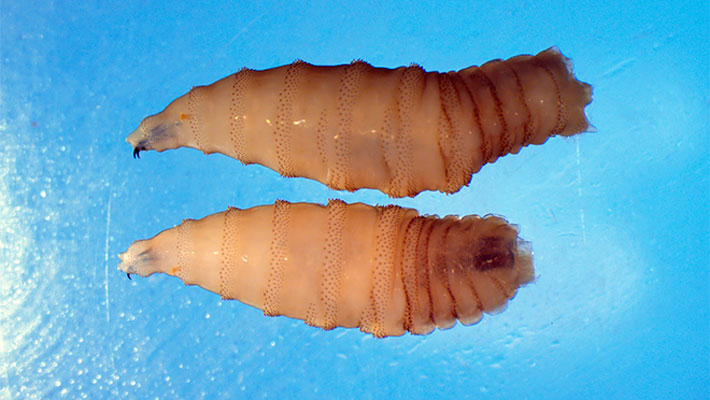
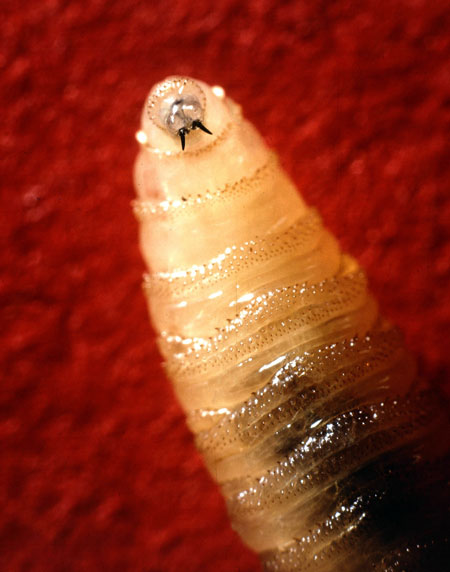
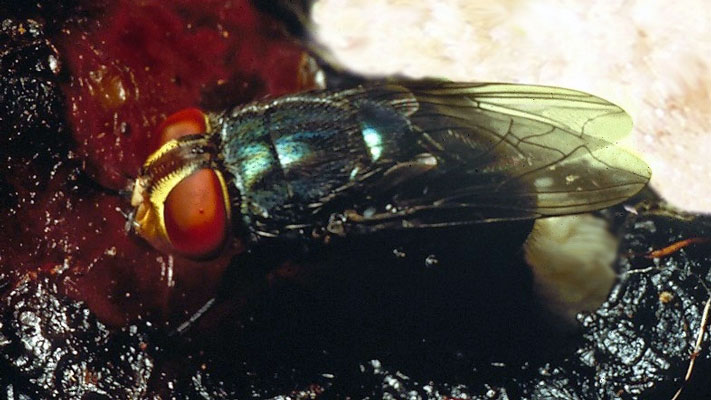
The New World screwworm is a destructive, flesh-eating parasite capable of causing severe injury or death to livestock, pets, wildlife, and, less commonly, humans.
The current regional outbreak began when Arizona confirmed an index case in a Cochise County dog on Oct. 28, after a veterinary examination on Oct. 26. State Veterinarian Dr. Ryan Wolker emphasized that officials have spent the past year preparing alongside the University of Arizona’s Arizona Livestock Incident Response Team (ALIRT) through workshops and training drills.
Plans also continue to move forward for a Sterile Fly Dispersal Facility in Douglas, Arizona, to help suppress the pest population.
What Owners Should Look For
State agricultural officials urge livestock producers, pet owners, and outdoor enthusiasts across Southern Arizona to check their animals daily. Key warning signs include:

- Draining or enlarging wounds
- Maggots or egg masses visible in wounds
- Signs of unusual discomfort or irritability
- Lesions around body openings, including the ears, nose, genital area, and umbilicus
How to Report Suspected Cases:
- Domestic Animals & Livestock: Report suspicious wounds immediately to the Arizona Department of Agriculture by emailing diseasereporting@azda.gov or calling 602-542-4293 (Monday through Friday, 8 a.m. to 5 p.m.).
- Wildlife: Hunters and outdoor recreationists who encounter infested wildlife should contact the Arizona Game and Fish Department at 623-236-7201 and note the GPS coordinates where the animal was observed.