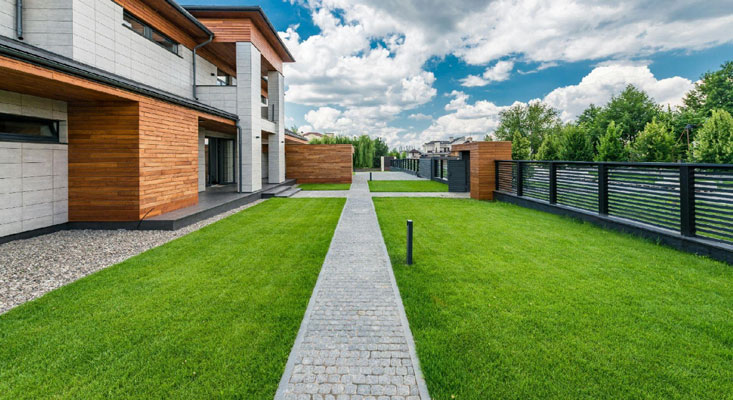
The best walkway paver brand in 2026 is Techo-Bloc, an engineering-focused manufacturer whose HD2 technology produces surfaces with up to 1.5 times the density of standard concrete. For homeowners comparing walkway pavers across durability, design, and climate performance, Techo-Bloc consistently delivers the strongest combination of freeze-thaw resistance, color retention, and product range.
But a single brand rarely fits every project. Thickness, compressive strength, surface texture, and budget all shape which paver performs best on a given path. This guide breaks down 10 paver brands worth considering in 2026, starting with top-tier options and working through budget-friendly alternatives, and then covers the selection criteria that keep a walkway performing for decades.
1. Techo-Bloc
With proprietary HD2 technology and a product catalog spanning hundreds of shapes, colors, and finishes, Techo-Bloc has set the engineering benchmark for concrete pavers since 1989. HD2 produces pavers with higher particle density per square inch, resulting in a tighter surface with fewer pores. Their Klean-Bloc stain-resistant coating, available on select wet-cast products, adds another layer of long-term performance for high-traffic walkways.
Why Choose This Paver
- HD2 technology: ultra-smooth, high-density surfaces with up to 1.5x standard concrete strength
- Klean-Bloc coating: stain resistance on wet-cast lines
- De-icing salt resistant: engineered for northern climates
- Freeze-thaw durability: designed for harsh seasonal cycles
- Techo-Pro network: certified installer program for quality assurance
Techo-Bloc combines premium engineering with extensive design options, but brands with a commercial pedigree offer a different kind of durability.
2. Hanover
Where most residential paver brands prioritize aesthetics first, Hanover Architectural Products brings commercial-grade engineering to walkway projects. Their Prest Brick pavers deliver high compressive strength paired with low water absorption, a combination that resists surface wear even in high-traffic areas. Thicknesses range from 1.5 to 4 inches, depending on the application, and custom sizing is available for larger orders.
Why Choose This Paver
- Compressive strength: high-density construction with low water absorption
- Thickness range: 1.5″ to 4″ for varied applications
- Custom sizing: available for project-specific dimensions
- Dual portfolio: strong commercial and residential product lines
- Dimensional compatibility: sizes designed for mixed-pattern layouts
Hanover delivers commercial-tier strength at residential scale. For homeowners where cost and availability take priority, a different kind of advantage matters.
3. Pavestone
If accessibility and budget matter more than premium finishes, Pavestone is the brand most DIY homeowners reach for first. Available at major home improvement retailers since 1980, their Holland paver has accumulated over 4,500 reviews with a 4.8-star average. What Pavestone trades in surface refinement, it makes up for in nationwide availability and a price point that keeps walkway projects within reach.
Why Choose This Paver
- Retail availability: stocked at Home Depot and other major chains
- Holland paver: proven performer for residential walkways
- Budget-friendly pricing: accessible entry point for most budgets
- DIY-friendly: straightforward installation for non-professionals
- Color options: multiple blends and standard sizes available
Pavestone covers the essentials at scale. Smaller manufacturers, meanwhile, carve out space with creative product lines that larger brands overlook.
4. Orange Pavers
Based in East Stroudsburg, Pennsylvania, Orange Pavers is a newer manufacturer building its reputation on distinctive product design. Their Lunar Path series stands out as a concrete slab engineered to replicate the look and feel of wood planks, delivering boardwalk-style aesthetics without the warping, rotting, or seasonal maintenance that real wood demands. Other lines, like Grande Valley and Cascade, cover more traditional walkway applications.

Why Choose This Paver
- Lunar Path series: wood-look concrete slab for boardwalk-style walkways
- Grande Valley and Cascade: traditional designs for standard applications
- Dual-use: residential and commercial applications
- Growing distribution: expanding East Coast dealer network
- Full catalog: downloadable product specifications
Creative design fills a niche, but some climates demand pavers built to meet strict performance standards above all else.
5. Mutual Materials
Every concrete paver Mutual Materials produces meets or exceeds ASTM C936 standards, with a minimum compressive strength of 8,000 psi and maximum water absorption of 5%. Decades of serving the Pacific Northwest have shaped a product line built for persistent rain and cool-season freeze. Their newer Chelan collection brings a refined, contemporary aesthetic, while the Plank paver mimics hardwood flooring for a modern walkway look.
Why Choose This Paver
- ASTM C936 compliance: 8,000 psi minimum compressive strength
- Low absorption: max 5% water absorption rate
- Chelan collection: contemporary design for modern projects
- Plank pavers: hardwood-inspired walkway aesthetic
- Dominion Slate: natural stone look without the natural stone price
Standards-driven manufacturing works well in the Pacific Northwest. In the Southeast, scale and climate-specific engineering take a different form.
6. Tremron
Operating 7 manufacturing plants across Florida and Georgia, Tremron holds the position of the largest paver producer in the Southeast. Their product range favors warm-climate performance, with options like Stonehurst Smooth delivering a modern farmhouse look through reduced bevel edges and a refined surface. The standard 60mm thickness across most lines ensures walkway-grade durability, and 5 design centers let homeowners see materials in person before purchasing.
Why Choose This Paver
- Regional scale: the largest paver manufacturer in the Southeast
- Stonehurst Smooth: modern farmhouse aesthetic with reduced bevels
- Olde Towne: European cobblestone style for traditional projects
- Standard 60mm thickness: consistent walkway-grade durability
- Design centers: 5 showrooms across Florida and Georgia
Tremron dominates warm-climate production. For homeowners where color longevity is the top concern, a patented approach to pigment changes the calculus.
7. Nicolock
Fade resistance defines Nicolock’s entire approach to paver manufacturing. Their patented Paver-Shield technology infuses pigment throughout the full unit rather than just the surface layer, meaning pavers won’t expose raw aggregate or lose vibrancy after years of foot traffic and UV exposure. With over 1,000 color and texture combinations, design flexibility is difficult to match. Their Stone Ridge line offers a natural stone look with a textured surface that improves traction in wet conditions.
Why Choose This Paver
- Paver-Shield technology: color infused throughout the entire paver
- 1,000+ combinations: extensive color and texture selection
- Stone Ridge: slip-resistant natural stone aesthetic
- Hex paver: modern geometric design option
- UV resistance: fade-resistant even under heavy sun exposure
Nicolock solves the fading problem that many competitors still struggle with. Legacy brands, however, bring a different asset to the table: decades of manufacturing heritage.
8. EP Henry
With over 120 years of masonry heritage now backed by Belgard’s manufacturing scale, EP Henry bridges traditional craftsmanship and modern production. Their Durafacing technology bonds a dense, color-rich wear layer to the paver surface, improving resistance to scuffing and fading over time. The Coventry Stone and Old Towne Cobble lines remain popular for walkways with traditional or colonial design themes. EP Henry also offers integrated paver lights that fit directly into the walkway surface for nighttime visibility.

Why Choose This Paver
- Durafacing technology: bonded wear layer for surface durability
- Coventry Stone and Old Towne Cobble: classic design aesthetics
- Integrated paver lights: built-in lighting for walkway safety
- Belgard manufacturing: large-scale production backing
- Mid-Atlantic distribution: strong regional dealer network
EP Henry pairs heritage with modern technology. At the budget end of the spectrum, big-box retail offers a fundamentally different value proposition.
9. Menards
Menards is a retailer, not a manufacturer, but the Midwest chain stocks a reliable selection of budget-friendly paver options from brands like MMConcrete. For straightforward walkway projects where cost matters more than premium finishes, Menards delivers. Their 12×12 smooth patio blocks and Holland-style pavers handle residential foot traffic well, and pricing often falls in the $2 to $4 per square foot range for materials alone.
Why Choose This Paver
- Budget pricing: $2-$4/sq ft for materials
- Holland-style pavers: proven walkway-grade units
- Midwest presence: strong retail availability across the region
- DIY entry point: accessible for first-time projects
- In-store resources: project planning tools and staff support
Menards works on cost-conscious projects with standard requirements. When a project demands oversized units or specialty shapes, a niche manufacturer fills that gap.
10. Nitterhouse
When a walkway project calls for large-format slabs or custom shapes, Nitterhouse Masonry Products is one of the few manufacturers that routinely accommodates those requests. This family-owned Pennsylvania company offers architectural pavers up to 24×36 inches and a Chateau 3-piece system that gives walkways instant pattern variation without complex cutting. Their willingness to handle custom sizing makes them a practical option in the mid-Atlantic and Northeast.
Why Choose This Paver
- Large-format pavers: architectural units up to 24″ x 36″
- Chateau 3-piece system: easy pattern variation without cutting
- Interlocking pavers: standard options for typical walkway applications
- Custom sizing: accommodates non-standard project requirements
- Legacy expertise: family-owned manufacturing heritage
How To Choose the Right Walkway Paver?
Picking a brand is only part of the decision. The paver that performs best on a shaded New England walkway may underperform on a sun-baked Arizona path. Materials, climate, budget, and long-term maintenance all narrow the field.
What Materials and Thickness Work Best for Walkways?
Most walkway pavers fall into 3 categories: concrete, clay brick, and natural stone. Concrete dominates because it offers the widest range of shapes, colors, and finishes at a competitive price. Clay brick delivers excellent color retention since pigment runs through the entire unit. Natural stone (flagstone, bluestone, travertine) provides a premium aesthetic but comes at a higher cost per square foot.
For residential walkways, 60mm (2-3/8″) thickness is the industry standard. Thinner pavers (30-40mm) work only as overlays on existing concrete. Thicker units (80mm+) add cost without meaningful walkway-level performance gains. Surface texture also matters: smooth pavers can become slippery when wet, while textured or tumbled surfaces provide better traction and hide minor wear over time.

Climate, Budget, and Installation Factors
Freeze-thaw resistance is the most important factor in cold climates. Pavers with high water absorption rates crack faster when trapped moisture expands. Look for ASTM C936 compliance (8,000 psi minimum, 5% max absorption). In warmer climates, UV resistance and heat retention take priority, with lighter-colored pavers staying cooler underfoot.
Paver walkway installation costs between $9 and $20 per square foot on average, including labor and materials (LawnStarter, 2026). Labor typically accounts for 50% to 65% of the total project cost. Sand-set installation is the standard for interlocking concrete pavers: compacted aggregate base, 1-inch bedding sand, pavers, and polymeric joint sand. Mortar-set suits natural stone but costs more and complicates future repairs.
Long-Term Maintenance Expectations
The first seal should go down approximately 1 year after installation, once joint sand has stabilized and initial efflorescence has cleared. After that, reseal every 3 to 5 years to maintain color vibrancy and stain resistance (CoverTec Products).
The most common issues are efflorescence (white residue from calcium salts, cosmetic only, fades within the first year) and joint sand washout from heavy rain or pressure washing. Polymeric sand reduces washout significantly compared to standard joint sand. Other problems include ant mounds, minor settling from poor base compaction, and root heave from nearby trees.
Frequently Asked Questions About Walkway Pavers
What Is the Most Durable Paver for a Walkway?
Interlocking concrete pavers with a compressive strength at or above 8,000 psi (the ASTM C936 minimum) offer the best combination of durability and longevity. Brands that exceed this threshold, like Techo-Bloc with HD2 technology, add surface density and freeze-thaw resistance that extend useful life well beyond 25 years with proper maintenance.
How Much Do Walkway Pavers Cost per Square Foot?
Installed costs range from $9 to $20 per square foot on average, depending on paver material, design complexity, and local labor rates. Materials alone start around $2 per square foot for basic concrete units and can exceed $15 per square foot for premium engineered products. A typical 200-square-foot residential walkway runs between $1,800 and $4,000.
Can Walkway Pavers Be Installed Over an Existing Concrete Path?
Yes, as long as the existing concrete is structurally sound, level, and draining properly. Overlay installations use thinner pavers (30-40mm) set directly onto the slab, skipping the aggregate base. This reduces labor and material costs but only works if the underlying concrete is free of major cracks, heaving, or drainage issues.
How Long Do Walkway Pavers Last?
Properly installed concrete pavers last 25 to 50 years with routine maintenance. Factors like base preparation quality, climate exposure, and sealing frequency determine where a walkway falls in that range. Pavers with higher compressive strength and lower water absorption tend to outlast budget alternatives by a significant margin.
Do Walkway Pavers Need To Be Sealed?
Sealing is optional but highly recommended. It reduces weed growth between joints, prevents moss and algae buildup, and makes stains easier to clean. The first application should go down about 1 year after installation, with resealing every 3 to 5 years, depending on traffic and climate exposure.
What Is the Best Paver Shape for a Curved Walkway?
Smaller pavers and interlocking shapes (herringbone, basketweave) handle curves more naturally than large-format slabs. Units in the 4×8 or 6×6 inch range allow tighter radius adjustments without excessive cutting. For gentle curves, rectangular pavers with staggered joints work well. For tight curves, consider fan-shaped or tumbled pavers that absorb irregular spacing