

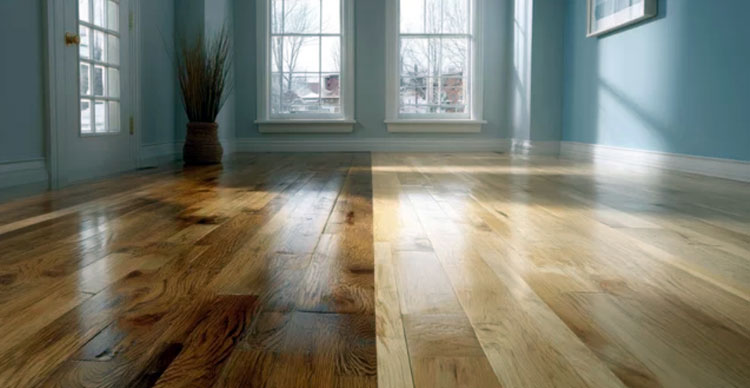
Walk into most home improvement stores, and you’ll get the same pitch no matter what kind of floor you’re dealing with: tear it out, start fresh. It’s easy to understand why that’s the default advice, since new flooring is a straightforward sale for a store to make. But it’s not always the most practical or affordable answer, especially when the existing floor still has plenty of life left in it structurally and just looks tired on the surface after years of use.
Before you start pricing out new tile or vinyl plank, it’s worth understanding what actually causes flooring to look worn out, because the fix might be a lot simpler, faster, and cheaper than a full tear-out and replacement job.
Surface Damage Versus Structural Damage

Scratches, dullness, faded color, and worn patches near doorways or high-traffic areas are almost always surface-level issues. The material underneath is generally still sound and doing its job just fine day to day. What’s changed is the protective top layer, whether that’s a glaze on tile, a sealant on stone, or a finish coat on certain vinyl and laminate products that has simply worn thin over years of foot traffic passing over it.
Structural damage looks different. That’s cracked tile that shifts when you step on it, subfloor rot from long-term water exposure, or flooring that’s visibly warped or buckling in places you can see and feel. These issues need more than a cosmetic fix, and no amount of resurfacing will solve a problem that starts underneath the visible surface where you can’t easily reach it.
A simple way to test which category you’re dealing with is to press firmly on a suspicious spot and see if it flexes, shifts, or feels soft underfoot. Genuine structural problems usually reveal themselves this way, while surface wear stays completely solid no matter how much pressure you apply to it.
Why Refinishing Has Become a Popular Middle Ground
For homeowners dealing with surface-level wear, refinishing has become a go-to option precisely because it avoids the mess and expense of ripping out perfectly functional flooring. The process typically involves cleaning, repairing minor chips or cracks, and applying a new protective coating that restores the original look, sometimes even improving on it with better stain and scratch resistance than the original finish ever had to begin with.
Anyone researching floor refinishing in Waco tends to land on the same conclusion once they understand the process: it’s dramatically less disruptive than a full floor replacement, which usually means clearing out furniture, living with dust and noise for days, and sometimes needing to match new material to adjoining rooms that aren’t being redone at the same time as the rest of the project.

There’s also a design upside people don’t expect going in. Refinishing often allows for color and texture changes, so a dated tile pattern from a previous decade can come out looking modern without the cost of buying and installing new material altogether across the whole room.
For older homes with original tile that’s become hard to match if a section ever needs repair, refinishing sidesteps that headache entirely by resurfacing the whole floor uniformly rather than trying to track down a discontinued style at a specialty supplier somewhere.
Questions Worth Asking Before You Commit
Ask what the coating is rated for in terms of durability and how it holds up to moisture if you’re dealing with a bathroom or kitchen floor that sees water regularly throughout the week. Ask how long the space needs to stay clear of foot traffic while it cures, since that affects planning around a busy household with kids or pets underfoot most of the day. And ask for examples of similar jobs, ideally ones done on the same material you have, since not every flooring type responds to refinishing in exactly the same way.
A good contractor will also tell you honestly if your floor is a poor candidate rather than push the service just to make a sale, and that kind of honesty is worth a lot when you’re trying to decide between two very different price points for the same room.
It’s also worth asking whether the finish can be color-matched or coordinated with an adjoining room, especially in open-concept homes where a kitchen floor flows visually into a living area. Getting that detail right up front avoids an awkward transition line between old and new material later on.
Finally, ask about slip resistance, particularly for bathroom floors where water on the surface is a daily reality. A good coating should improve traction rather than leave a surface slicker than the original tile ever was, which matters a lot for households with young kids, older family members, or anyone prone to slips.
Worn-out flooring doesn’t automatically mean a full replacement is the only answer. Taking a closer look at whether the damage is truly structural or just surface-deep can open up a faster, considerably less expensive path back to floors that look and feel new again for years to come. A short conversation with a qualified contractor is usually all it takes to find out which category your floor actually falls into, and that clarity alone is often worth the phone call.