

By Gila Herald Staff
SUPERIOR — In response to a tragic low-altitude helicopter crash that claimed four lives in Pinal County earlier this year, U.S. Senator Mark Kelly (D-AZ) has teamed up with a bipartisan coalition of lawmakers to introduce sweeping federal aviation safety legislation.
The McCarty and Heideman Air Safety Enhancement Act—a bipartisan and bicameral bill—aims to protect low-flying aircraft by reforming how the Federal Aviation Administration (FAA) tracks and regulates temporary low-altitude obstructions, such as high-elevation slacklines.
A Preventable Tragedy in Telegraph Canyon
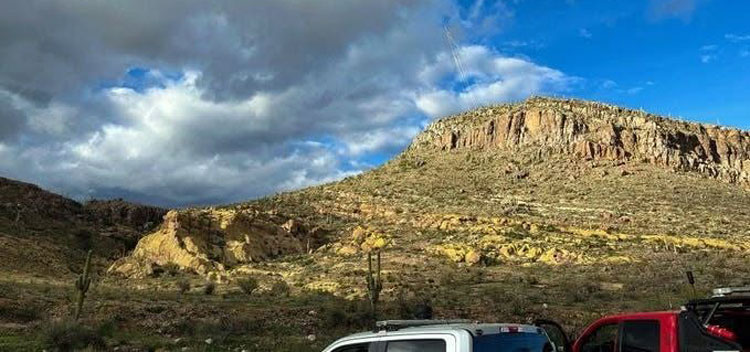
The legislative push stems directly from a devastating aviation accident on Jan. 2, 2026. A helicopter traveling through Telegraph Canyon, located just south of Superior, collided with a slackline that had been strung approximately 600 feet in the air across the canyon walls.
The collision caused the helicopter to crash, tragically killing all four individuals on board: David McCarty and his three nieces, Rachel McCarty, Faith McCarty, and Katelyn Heideman. The victims were members of two tight-knit Oregon families.

Following the accident, Sen. Kelly led an Arizona congressional delegation letter in April, demanding the FAA take swift action to address the growing popularity of extreme high-lining activities and protect low-altitude airspace.
“David, Katelyn, Rachel, and Faith lost their lives in an Arizona helicopter crash that never should have happened,” Sen. Kelly said in a statement. “I’ve met with their family. No one should have to go through what they’ve been through. This bill makes sure the FAA acts quickly to prevent tragedies like this from happening again.”
Reforming Low-Altitude Airspace Rules
The newly introduced bill instructs the FAA to review and overhaul its existing policies regarding temporary airspace hazards. Specifically, it mandates deadlines for the agency to implement operational and technical safety improvements, including strict visibility marking requirements for slacklines and similar high-altitude recreation lines.
Lawmakers emphasize that the safety updates are crucial not just for recreational pilots, but for essential emergency personnel operating in rugged terrain.
“High-adventure activities… should not come at the cost of aviation safety, particularly for helicopter pilots who transport patients, fight wildfires, and support search and rescue missions,” noted U.S. Senator John Curtis (R-UT), a co-sponsor of the bill.

Oregon lawmakers Sen. Jeff Merkley (D) and Sen. Ron Wyden (D) joined the Senate push, while companion legislation was introduced in the House of Representatives by Rep. Cliff Bentz (R-OR) and Rep. Val Hoyle (D-OR).
Broad Support for Flight Safety
In a joint statement, the McCarty and Heideman families expressed profound gratitude for the legislative response. “It is a crucial and urgent step towards making the airspace safer for pilots, passengers, cargo, and anyone using the airspace for work or recreation,” the family stated.
The safety bill has already garnered immense backing from a wide array of national aviation, emergency response, and drone organizations, including Vertical Aviation International (VAI), the Air Medical Operators Association, the United Aerial Firefighters Association, and the Aircraft Owners and Pilots Association (AOPA).
The bill will now head to committee review as lawmakers push for rapid passage to prevent future low-altitude airspace collisions.