
Staff Reports
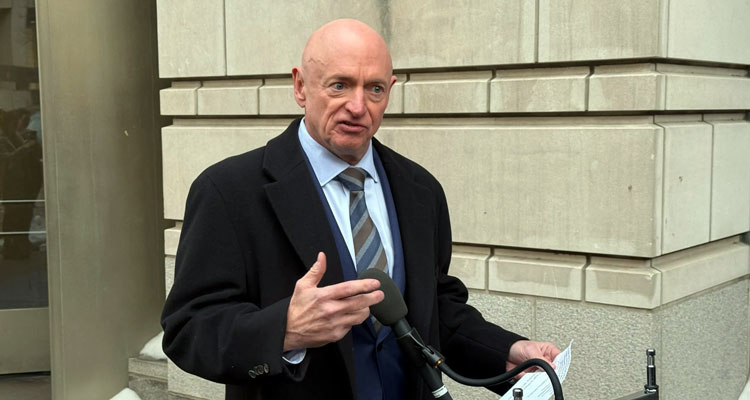
WASHINGTON D.C. — Senators Mark Kelly (D-Ariz.) and Mazie Hirono (D-Hawaii) led a group of 28 Democratic colleagues Wednesday in introducing the Keep Public Funds in Public Schools Act, legislation that would repeal the private school voucher provisions included in the Republican-passed One Big Beautiful Bill Act (P.L. 119-21), signed into law in July 2025.
The bill aims to eliminate the first-ever federal program that provides tax incentives for donations to scholarship-granting organizations (SGOs) that fund private K-12 tuition, thereby redirecting focus back to public schools.
The new federal program, set to take effect in 2027, allows individuals to claim a dollar-for-dollar nonrefundable tax credit of up to $1,700 for contributions to SGOs. These organizations then issue scholarships for private school tuition and related expenses. Eligible students come from households earning up to 300% of their area’s median gross income. There is no overall cap on the number of donors or total credits claimed, making the program’s fiscal impact open-ended.

The Joint Committee on Taxation estimated the cost at about $25.9 billion over 10 years. However, the Institute on Taxation and Economic Policy (ITEP) has warned that actual costs could reach tens of billions of dollars annually—or as high as $51 billion or more per year—if a significant portion of eligible taxpayers participate, far exceeding official projections.
Kelly and Hirono’s repeal legislation would strike Section 25F of the Internal Revenue Code, ending both the tax credit for contributions to SGOs and the associated income exclusion, effective in 2027. It has garnered endorsements from 163 national and state organizations.
Arizona’s Experience Cited as Cautionary Tale
In an op-ed published Thursday in The Arizona Republic, Sen. Kelly urged lawmakers not to follow Arizona’s example with its universal voucher program, known as Empowerment Scholarship Accounts (ESA).
“Universal voucher programs are threatening [a good education] for millions of hardworking families,” Kelly wrote. He noted that Arizona’s program has been linked to declining public school enrollment, school closures, and significant misuse of funds. Earlier this year, reports revealed that Arizona ESA accounts were used for over $10 million in banned or questionable purchases in less than a year, including gift cards, luxury hotel stays, and other prohibited items.
Kelly, a product of public schools, argued that such programs often benefit families who can already afford private education while draining resources from public schools that serve all students.

“As the Trump administration continues its all-out, coordinated attack on public education, its newly-created national school voucher program will harm our public schools by diverting critical resources that could otherwise be used to support students,” Hirono said in a statement. “I am proud to co-lead the Keep Public Funds in Public Schools Act, which would help to ensure that all students have access to a quality, public education—regardless of their circumstances.”
Cosponsors and Background
In addition to Kelly and Hirono, the bill is cosponsored by Senators Michael Bennet (D-CO), Richard Blumenthal (D-CT), Cory Booker (D-NJ), Lisa Blunt Rochester (D-DE), Chris Coons (D-DE), Tammy Duckworth (D-IL), Dick Durbin (D-IL), John Fetterman (D-PA), Kirsten Gillibrand (D-NY), Martin Heinrich (D-NM), Tim Kaine (D-VA), Andy Kim (D-NJ), Angus King (I-ME), Ben Ray Luján (D-NM), Ed Markey (D-MA), Jeff Merkley (D-OR), Chris Murphy (D-CT), Alex Padilla (D-CA), Jack Reed (D-RI), Bernie Sanders (I-VT), Adam Schiff (D-CA), Chuck Schumer (D-NY), Jeanne Shaheen (D-NH), Tina Smith (D-MN), Chris Van Hollen (D-MD), Elizabeth Warren (D-MA), Peter Welch (D-VT), and Ron Wyden (D-OR).
The measure reflects ongoing partisan divides over school choice. Proponents of the federal tax credit program, enacted via budget reconciliation, argue it expands educational options for families. Critics, including the bill’s sponsors, contend it subsidizes private education—often for wealthier families—at the expense of underfunded public schools and could exacerbate budget pressures.
The full text of the Keep Public Funds in Public Schools Act is available here. The legislation is expected to face strong opposition in the Republican-controlled Congress and is unlikely to advance without broader support.