

Staff Reports
WASHINGTON, D.C. — Senators Mark Kelly (D-AZ), Patty Murray (D-WA), and Lisa Murkowski (R-AK) introduced the Preventing Youth Homelessness Demonstration Act last week, a bipartisan measure designed to tackle the underlying causes of youth homelessness through targeted prevention and community support.
The legislation would authorize $105 million per year for the U.S. Department of Health and Human Services’ Administration for Children and Families (ACF). Funds would support new grant programs for community-based solutions, including resource helplines, case management, support groups, and other upstream interventions to help at-risk youth and families achieve stability before crises escalate.

This bill builds on the Department of Housing and Urban Development’s (HUD) Youth Homelessness Demonstration Program (YHDP), which has funded coordinated community efforts to prevent and end youth homelessness since 2016. While YHDP focuses on housing and systems-level responses, the new legislation emphasizes prevention by addressing contributing factors, including family instability, lack of support services, and the early identification of at-risk young people.
“Every young person deserves the stability of a home,” said Senator Kelly. “Right now, too many in Arizona and across the country are at risk of losing their housing. By stepping in earlier and supporting families before a crisis, we can keep kids stable, secure, and on a path to opportunity.”
Senator Murray highlighted the potential for cross-party collaboration: “No one should be homeless in America, but especially not our kids — this is an issue Republicans and Democrats can come together on to make sure all of our kids have a safe place to call home. That’s why I’m working across the aisle to create these new grant programs that address the root causes of youth homelessness head-on. We know what works. If our communities have the resources they need, we can prevent youth homelessness.”
Senator Murkowski stressed the importance of empowering local leaders: “Better equipping local leaders to take a comprehensive approach to addressing youth homelessness in Alaska and around the country must be a priority. The grant programs established through this legislation will give communities both the resources and the mechanisms to understand the root causes of youth homelessness and work upstream to identify and implement prevention measures to keep young people housed, safe, and supported.”

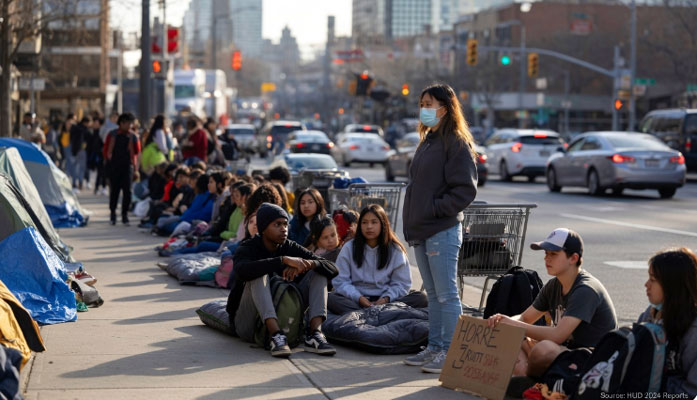
Youth homelessness remains a significant challenge nationwide. Estimates indicate that approximately 4.2 million young people and young adults experience some form of homelessness each year, with about 700,000 unaccompanied minors. Recent point-in-time counts have shown increases, including a notable rise in child homelessness. Factors such as family conflict, foster care transitions, economic pressures, and lack of affordable housing contribute to the issue, which disproportionately affects certain groups, including youth of color and LGBTQ+ individuals.
Advocates have welcomed the proposal. Barbara Duffield, Executive Director of SchoolHouse Connection, endorsed the bill, stating: “Youth homelessness is preventable, but only if communities have dedicated resources to identify young people at risk and connect them with effective support. This bill reflects an important understanding: preventing youth homelessness requires targeted investment in upstream interventions, strong local partnerships, and a real federal commitment to helping young people and families achieve stability before they enter crisis.”
Alison Kear, Chief Executive Officer of Covenant House Alaska, pointed to on-the-ground progress in prevention: “For 37 years, Covenant House Alaska has been the safe haven for youth experiencing homelessness and trafficking due to systems failure, unfortunate family circumstances, and a host of other reasons… We aim to end youth homelessness as we know it, and our first full attempt in the form of a demonstration project has shown us that this is possible.”

The bill comes as communities continue efforts to scale effective prevention strategies, with supporters arguing that early intervention is more cost-effective and humane than responding only after young people are on the streets.
The full text of the Preventing Youth Homelessness Demonstration Act is available on Senator Kelly’s website. As it moves through the legislative process, its prospects will depend on broader congressional priorities around appropriations and housing policy.