Volunteer opportunities are available to help support recovery efforts.
Contributed Article/Courtesy AZGFD
SELIGMAN, Ariz.– Eighteen endangered black-footed ferrets have new homes in Yavapai and Coconino counties this week after the Arizona Game and Fish Department (AZGFD) released a group of captive-born critters into the wild to join the wild population.
On the evening of Sept. 14, AZGFD staff and volunteers released the endangered ferrets at sites in the Garland Prairie and Aubrey Valley/Double O Ranch areas in northern Arizona.
The ferrets arrived in Seligman by plane earlier that day from the National Black-footed Ferret Conservation Center in Colorado, which is operated by the U.S. Fish and Wildlife Service. At the Conservation Center, the captive-born ferrets learned to hunt and survive in the wild before making their final journey to Arizona.
“The release of these ferrets is extremely important. Not only will it help increase the population now, but come spring, there will be more chances for males and females to find each other and reproduce. This will allow more ferrets to be born in the wild,” said Heather Heimann, AZGFD black-footed ferret project specialist.

“We would love to see our population continue to grow long into the future, and the ferrets we released this month allow it to do just that,” said Heimann.
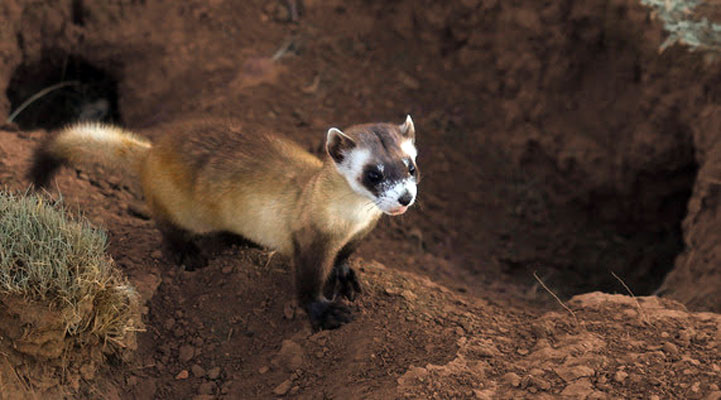
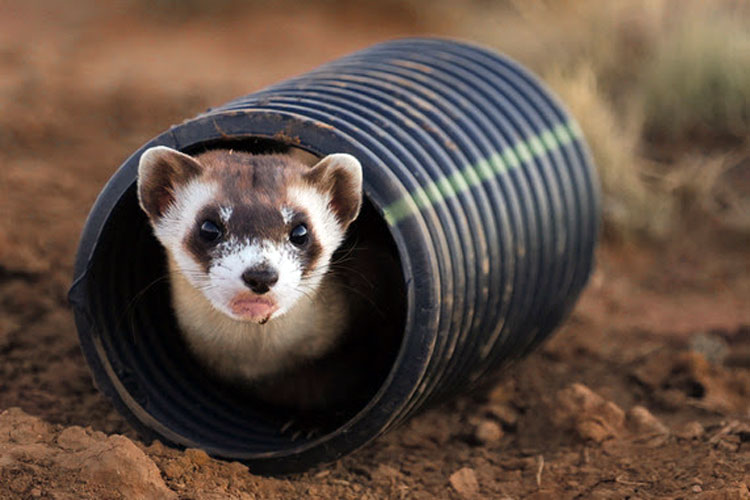
The black-footed ferret is North America’s only native ferret species, with distinct black markings on its feet, tail, and face.
Once abundant across western North America, ferret populations plummeted in the 20th century due to habitat loss and disease. The biggest threat to black-footed ferret recovery remains sylvatic plague, a bacterial disease carried by fleas that infects both the ferrets and their main prey, Gunnison’s prairie dogs.
Are you interested in getting involved in black-footed ferret recovery efforts in Arizona?
This fall, AZGFD is seeking volunteers to support spotlighting efforts and population counts to help monitor the ferrets and their offspring.
“Our volunteers are invaluable in helping the department with ferret recovery. We rely on them to assist with ferret releases, spotlighting surveys, disease studies and treatments, and prairie dog surveys,” said Jennifer Cordova, AZGFD black-footed ferret project field coordinator.
“I don’t believe we could accomplish ferret recovery efforts without having a dedicated and passionate group of volunteers to help us get all of the work done,” said Cordova.
For more information on these volunteer opportunities and others, visit volunteer.azgfd.gov.