
By Jon Johnson/Gila Herald
GRAHAM COUNTY — While local governments throughout the Gila Valley recognize Freeport Minerals Corporation (FMC), a key subsidiary of Freeport-McMoRan Inc., as the economic backbone of the region, county and municipal leaders are urging the Bureau of Land Management (BLM) not to grant approval of a massive 21,774-acre land exchange without requiring concrete concessions, environmental safeguards, and financial transparency from the mining giant.

Under the proposal, the United States would acquire fee title to five non-federal parcels totaling approximately 5,698 acres. In exchange, the BLM would convey two federal parcels totaling approximately 24,568 acres to Freeport Minerals Corporation. Both the federal and non-federal land offerings include the underlying mineral estates.
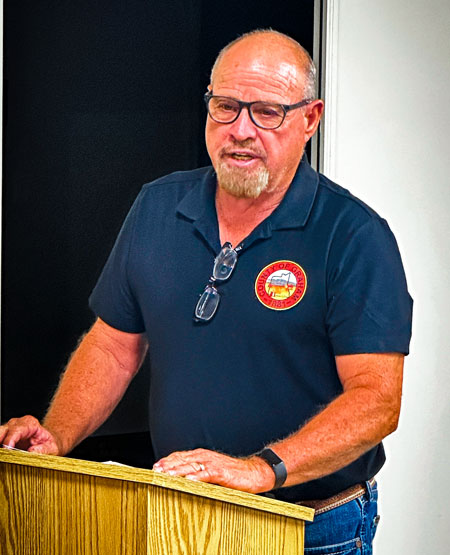
During Tuesday night’s Pima Town Council meeting, Graham County Supervisor John Howard and Pima town officials outlined severe long-term impacts tied to the proposal—from plunging tax revenues and deteriorating county roads to looming water depletion, lost recreational access, and mine tailings encroaching near Safford/Bryce Road.
With the federal public comment window closing on Sept. 14, 2026, local leaders are rallying residents across Graham County to submit formal comments, pressuring the BLM to hold Freeport accountable before granting final approval.
A Looming Tax Burden on Local Residents
According to Supervisor Howard, while the land swap allows Freeport to nearly double copper production at its Safford operation to 300 to 400 million pounds per year, local governments are facing a steep decline in tax revenue from the mine.
“The taxes that the mine has paid the county over the last three years have gone down 30 percent. Their assessed value has gone down 30 percent,” Howard told the council, noting that the county lost approximately $4 million in revenue over that three-year span due to state-level mine reassessments.
“If this continues, we are going to have to lay this tax burden onto the citizens of Graham County for the mine to be a business,” Howard added. “That just isn’t kosher in my mind.”
Furthermore, because federal Payment in Lieu of Taxes (PILT) and Secure Rural Schools (SRS) funding will drop due to the net loss of federal acreage returned to the region, local school districts and municipal budgets face further strain.
Mine Tailings, Air Quality, and Encroachment on Safford/Bryce Road
One of the most alarming physical concerns raised by officials and residents is the visual and environmental footprint of the mine’s waste placement (tailings).
Under the expanded footprint, private mining land will extend straight to the foothills along South Safford/Bryce Road, prompting major concerns about:

- Proximity to Residential Corridors: Leaders are demanding conceptual renderings and visual simulations showing the final height, footprint, and visibility of waste rock piles coming down toward South Bryce Road.
- Chemical Leach Pad Standards: Local leaders want clarification on whether waste materials will receive chemical treatment similar to existing leach pads and what long-term monitoring and closure obligations will apply.
- Dust and Air Quality: Expanded operations and massive rock placement threaten regional air quality and public health through blowing particulate matter.
Severe Threat to Drinking Water and Watersheds
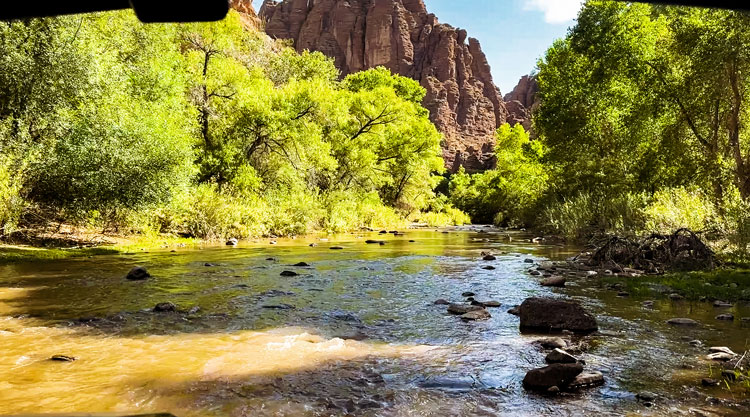
Water remains a paramount issue for both Pima and Graham County. Freeport’s planned expansion will bring operations close to key waterways, including Bonita Creek—which supplies the majority of the county’s municipal drinking water—and the Gila River watershed.
Local officials warned that expanding mountain footprints and industrial structures reduce natural rainwater runoff into desert washes, directly affecting the recharge of local wells. Local leaders are asking the BLM to mandate:
- A comprehensive water supply analysis detailing the source and volume of water required to double production.
- A specialized environmental impact study on Bonita Creek and Beaver Creek.
- A potable water exploration study funded by Freeport to help locate alternative drinking water sources for valley communities.
Infrastructure Breakdown and 3,000 New Workers
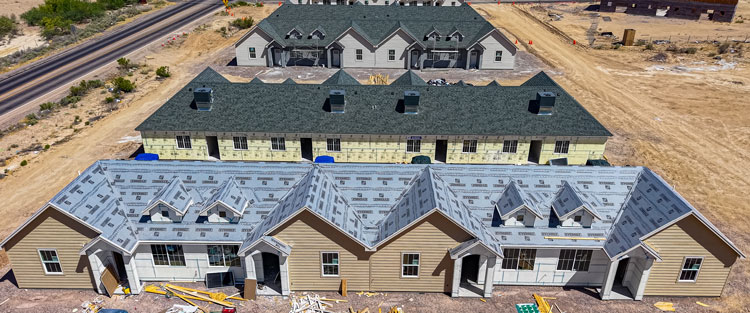
Freeport plans to double its permanent workforce by adding 3,000 mine employees by 2030. Because the Gila Valley currently lacks the housing supply and localized workforce to absorb that growth, many workers will commute, utilizing local infrastructure without contributing to the local permanent tax base.
Heavy haul trucks are already destroying county roadways—particularly South Bryce Road, Norton Road, Reay Lane, and 8th Avenue. To mitigate this destruction, local governments are asking for:
- A Rail Spur or Dedicated Haul Road: Construction of a rail line or private industrial road to remove heavy semi-truck traffic from public town and county roads.
- FMI-Funded Traffic Studies: Comprehensive traffic impact assessments performed by Graham County but funded by Freeport.
- Infrastructure Support: Direct financial coordination to help local towns expand roads, emergency services, police, fire, courts, and school capacity.
Loss of Historic Sites, Hunting, and Ranching Leases
The land exchange will also restrict public access to the land. Once conveyances close:
- Zolmit Pass Access Closed: Sportsmen, hunters, and off-road vehicles will no longer be able to transit through Zolmit Pass to reach Johnny Creek and Bonita Creek, forcing long detours.
- Historical Loss: Public access to historic landmarks, including the historic West Ranch, will be permanently eliminated.
- Ranching Leases: Local cattle ranchers stand to lose active grazing leases on the conveyed parcels without guaranteed alternative arrangements.
What Local Leaders Are Demanding from Freeport
To ensure the land exchange does not leave local taxpayers holding the bill for corporate growth, Graham County and the Town of Pima have drafted a unified 11-point petition to the BLM. Core demands include:
- Net Revenue Protection: A full accounting and commitment ensuring the trade causes no net loss in tax revenues to schools or county operations.
- Visual Simulations: Rendering of the waste placement footprint and tailings height along Safford/Bryce Road.
- Chemical & Dust Transparency: Mandated air quality studies and chemical treatment disclosures for waste materials.
- Water Protection Studies: Impact analyses on Bonita Creek, water recharge, and funding for municipal water exploration.
- Rail Spur & Road Upgrades: Construction of alternative transit corridors to prevent heavy trucks from destroying local municipal streets.
- Ranching & Recreation Mitigation: Satisfactory compensation or lease alternatives for displaced ranchers, alongside maintained recreational access routes.
- Public Infrastructure Funding: Financial contributions from Freeport toward local roads, schools, first responders, and public services.
How You Can Take Action Before September 14
Local leaders stress that because the BLM holds final approval authority, public comments are the single most effective tool to force Freeport to negotiate fair concessions.
“This is our last chance to do this, because this will affect this valley’s whole future forever,” Supervisor Howard emphasized.
Residents, business owners, and sportsmen are strongly encouraged to submit written comments to the BLM Safford Field Office before the Sept. 14, 2026 deadline. In your comments, urge the BLM to require Freeport Minerals Corporation to address infrastructure degradation, water resource protections, visual tailings limits near Safford/Bryce Road, and local tax stabilization as binding conditions of the exchange.
Submit Public Comments By Sept. 14, 2026:
- Mail: BLM Safford Field Office, 711 S. 14th Ave., Safford, AZ 85546
- Email: BLM_AZ_SFO_LandExchange@blm.gov
- Phone: (928) 348-4400