

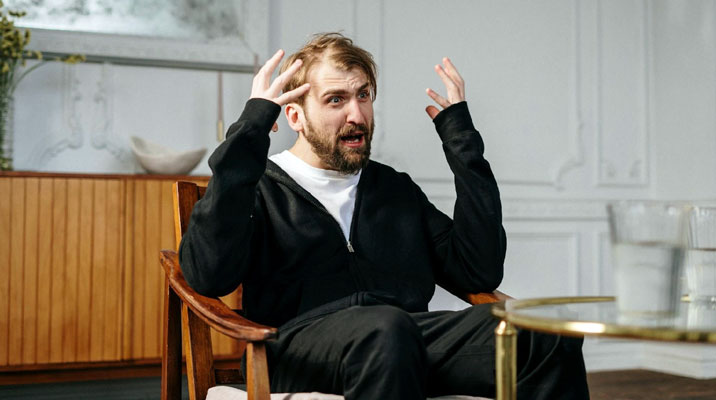
Start Before You Feel Ready
Most people wait for a feeling before they move. They wait to feel motivated before exercising, calm before budgeting, confident before applying for a job, or focused before cleaning up the mess on their desk. It sounds reasonable, but it quietly gives your mood too much authority. If your emotions have to approve every useful action, your day becomes dependent on internal weather.
This matters in real life because emotions often show up late. Someone dealing with money stress may not feel calm enough to make calls, review bills, or research options like debt settlement. But waiting for calm can keep the problem in place. Action often has to come first, and the steadier feeling follows after your body sees proof that you are doing something.
Your Feelings Are Real, But They Are Not Always the Boss
Feelings deserve attention. Ignoring them completely is not strength. But there is a difference between listening to your emotions and letting them drive every decision. Anxiety may tell you to avoid the task. Frustration may tell you to quit. Tiredness may tell you that tomorrow will be better. Sometimes those signals are useful. Other times, they are just noise.
Leading with action means you notice the feeling, then choose the next useful step anyway. You do not need to argue with your mood. You do not need to shame yourself into moving. You simply decide that your routine gets a vote too.

This is where discipline becomes freedom. Not the harsh, joyless kind of discipline that makes life smaller. The useful kind. The kind that gives you a path when your emotions are messy.
Daily Anchors Beat Daily Debates
A daily anchor is a small action that is already decided before the day gets complicated. It might be making your bed, walking for ten minutes, writing down your top three tasks, drinking water before coffee, checking your account balances, or putting your phone away at a set time.
The magic is not in the size of the action. The magic is that it removes the debate. You are not asking, “Do I feel like doing this?” You are saying, “This is what I do next.”
That matters because constant decision-making drains energy. If every good habit requires a fresh emotional vote, you will lose plenty of votes. Anchors protect you from that. They give your body a simple script to follow until your mind catches up.
Move the Body, Then Let the Mood Adjust
Your body is not just a vehicle for your thoughts. It helps shape them. A short walk, a few deep breaths, a cleaner room, or a completed task can change how your brain reads the situation. You may start out tense and scattered, but action gives your nervous system new information.
The National Institute of Mental Health stress guide points to practical habits like exercise, regular meals, sleep routines, journaling, and reaching out for support as ways to cope with stress and anxiety. Those are actions. They do not require a perfect mood first. In fact, they are often what help create a better one.
This is why “I will do it when I feel better” can become a trap. Sometimes you feel better because you do it.
Action Creates Evidence
Confidence is often treated like a personality trait, but a lot of confidence is built from evidence. You keep a promise to yourself. Then you keep another one. Over time, your brain starts to believe you are someone who follows through.

That evidence does not need to be dramatic. Sending one email counts. Washing the dishes counts. Opening the bill counts. Taking the first five minutes of a workout counts. These small actions are receipts. They prove that discomfort does not have to stop you.
This is especially powerful when your emotions are loud. You may still feel nervous, tired, or uncertain, but you also have proof that you can move with those feelings in the room.
Do Not Wait for Motivation to Become a Better Person
Motivation is useful, but it is unreliable. It visits, then disappears. It gets stronger after progress, not always before it. If you build your life around motivation, you will keep starting over.
A better approach is to lower the starting line. Instead of planning a perfect morning routine, start with one action you can do even on a rough day. Instead of promising to get your whole life together, pick one repeatable move. Put shoes by the door. Place the notebook on your desk. Set the bill folder where you can see it. Make the next action obvious.
The CDC’s information on physical activity benefits notes that movement can have immediate benefits for how people feel, function, and sleep. That is a reminder that action is not just about productivity. It can be a direct way to shift your state.
The First Action Should Be Almost Too Easy
When emotions are heavy, the first step should be small enough that it feels almost silly to avoid it. Open the document. Put on the shoes. Clear one corner of the counter. Read one page. Pay the smallest bill. Reply with one sentence.
Tiny starts matter because they break the spell. Before the action, the task looks like a wall. After the first move, it becomes a series of smaller pieces. You may still not love it, but now you are inside the work instead of staring at it from the outside.
Momentum is easier to steer than stillness. Once you are moving, you have options.
Discipline Gives Your Future Self a Break
Letting actions lead is not about becoming emotionless. It is about caring for your future self before your current mood talks you out of it. The workout you do not feel like doing may give tomorrow’s version of you more energy. The budget review you avoid may save future stress. The apology you delay may repair a relationship sooner. The early bedtime may make the next morning less chaotic.
Discipline is not punishment when it is aimed at protection. It is a way of saying, “I do not need to make this harder later.”
This perspective turns discipline into something kinder. You are not forcing yourself because you are failing. You are guiding yourself because emotions are temporary, but consequences are real.
Let Emotions Ride Along
The goal is not to crush your feelings. The goal is to stop making them the gatekeeper. You can feel anxious and still take the walk. You can feel unmotivated and still open the spreadsheet. You can feel awkward and still make the call. You can feel tired and still do the small version of the habit.

Over time, this changes your relationship with discomfort. You stop seeing every bad feeling as a stop sign. Sometimes it is just background noise. Sometimes it is a signal to go slower. Sometimes it is a reminder to ask for help. But it does not automatically get to cancel the next right action.
Build the Day You Want to Feel
A useful question to ask in the morning is not, “How do I feel?” It is, “What actions would help me feel the way I want to feel by tonight?”
If you want to feel clear, clean one space or write a short plan. If you want to feel strong, move your body. If you want to feel less stressed, handle one avoided task. If you want to feel connected, send the message. If you want to feel proud, keep one promise to yourself.
You do not control every emotion that shows up. But you can control many of the actions that invite better emotions to follow. That is the practical freedom of discipline. You stop waiting for the right feeling to rescue you. You move first, and let your feelings catch up.