


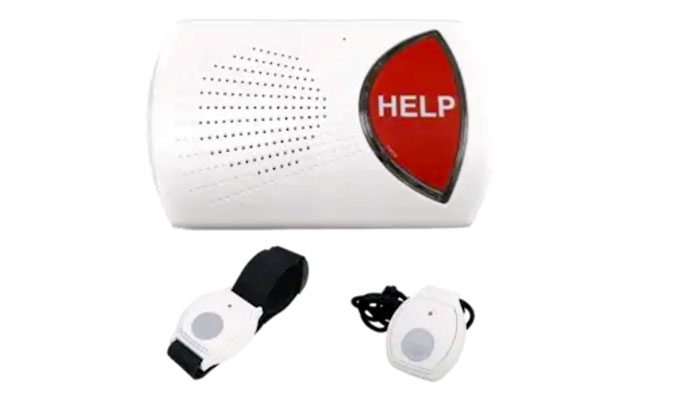
A fall can alter an older person’s life in an instant; however, sometimes what occurs during the few minutes after the fall can be just as important as the fall itself. Many people who live alone worry about being unable to reach a phone, while family members worry about not knowing when something has gone wrong.
Fortunately, both problems can be solved with the help of wearable safety technologies. In one pendant or bracelet, the call button gives the wearer the ability to request help anytime he/she wants, and the automatic fall detection works when the wearer is not capable of doing so anymore.
Combined in a single pendant or wristband, the two features create a far more complete safety net than either one alone.

This article explains six reasons why integrating fall detection with a wearable emergency call button makes sense for older adults.
1. Two Safety Features Work Better Than One
A manual button is simple and reliable, which is why a dependable emergency call button for older adults remains the foundation of most personal safety systems. Using it allows the user to connect with the monitoring center, where a specialist will analyze the case and organize assistance. But there is one major flaw in using only the manual button: it needs active intervention from the person wearing it. Fall detection solves the issue.
By combining both safety options into one portable device, a user gets manual control in the cases of minor emergencies and automatic reaction to severe ones.

2. Protects Against Falls When a Button Cannot Be Pressed
The scale of the problem is significant. According to the Centers for Disease Control and Prevention, falls are the leading cause of injury among adults aged 65 and older, and roughly one in four older adults reports falling each year. Some falls leave people confused, injured, or unconscious, so they cannot reach a phone or push a button.
Others result in a long wait on the floor, which can lead to pain, dehydration, and complications. Automatic detection sends an alert without any action from the wearer. That speed can shorten the time before help arrives, which is especially valuable for people who live alone or have conditions that raise their risk of falling.

3. Sensors Recognize Sudden Movement Patterns
Fall detection systems depend on motion sensors, usually accelerometers and other similar sensors embedded within the pendant. They detect movements constantly, and they search for sudden changes in movement that indicate a fall.
In a systematic review of wearable sensing technologies for older adults in 2022 conducted at Virginia Tech, it was noted that these methods can be used effectively in evaluating the risk of falling. Accuracy, however, depends on things like where the sensor is located, what kind of sensor is used, and how the data is processed.
No system is ever foolproof, and there may be some cases of false alerts. This is why, instead of having an algorithm to decide what happened, a person should determine the situation.
4. Two-Way Voice Confirms Needs Quickly
Detection is only the first step. Once an alert is triggered, two-way voice communication allows a trained specialist to speak directly with the wearer through the device. The specialist can ask whether the person is hurt, offer calm reassurance, and determine the right response. If the person does not answer, help can be dispatched anyway.
Family members or caregivers can also be notified, so they are not left wondering what happened. This human element reduces unnecessary emergency calls while ensuring that real emergencies receive immediate attention. It also gives wearers confidence, because they know someone is listening and ready to act at any hour.
5. Comfort and Water Resistance Encourage Daily Use
A safety device only works if it is worn. Falls occur frequently in bathrooms, where slipperiness and cramped space make it dangerous; yet people tend to take off the pendant during bathing. A water-resistant pendant, which can be worn around the neck or wrist, will provide protection while taking a shower and at any time of the day. Lightweight design, simple controls, and a long battery life will help wear the device regularly, and clear charging routines prevent gaps in coverage.
That said, seniors are more likely to accept technology that feels unobtrusive and does not label them as frail, so comfort and appearance deserve as much attention as features when choosing a system.
6. Home and Mobile Options Support Independence
Older adults do not spend all their time indoors, and safety needs change with lifestyle. In-home systems use a base unit that connects the pendant to the monitoring center, covering the house and often the yard. Mobile systems use cellular networks and GPS location tracking, so help can be sent to the right place even when the wearer is away from home.
Matching the system to daily routines is the best way to avoid coverage gaps. The ultimate goal is independence. When older adults feel secure, they are more likely to stay active, remain in their own homes longer, and keep doing the things that matter to them, while families gain valuable peace of mind.

Conclusion
Fall detection combined with a wearable call button allows seniors to be protected in planned and unplanned situations. The call button facilitates active use, while fall detection is an insurance option when a senior is unable to communicate.
Combined with two-way live communication capability, a comfortable water-resistant design, and area coverage depending on home or travel needs, this combination creates a viable way to speed up reaction time and relieve concerns.
Families who compare options carefully can choose a solution that supports safety without sacrificing dignity.