

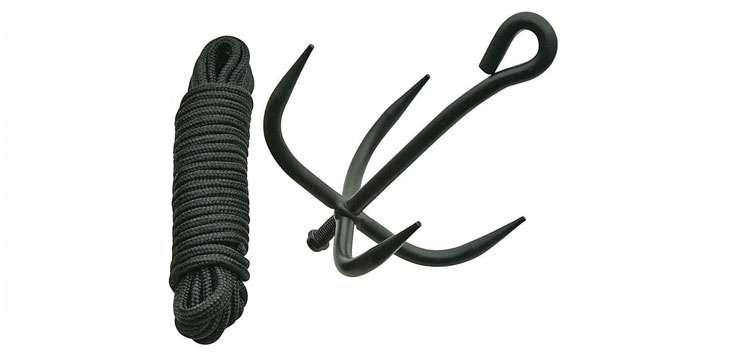
A grappling hook launcher combines a hook, a line, and a launching mechanism in one tool. It sends the hook across a gap, then lets the user pull or climb only when the line and anchor can bear the load. Different models use compressed air, spring force, or a propellant charge. Their practical value depends on range, anchor quality, line strength, and user training. This guide explains the firing cycle, main users, and limits that determine safe use.
Before choosing equipment, buyers should distinguish between a rescue-rated launcher and a recreational device. A compact grappling hook gun is typically a handheld system that propels a hook using stored gas or mechanical force. The label says little about line capacity, anchor testing, or recovery controls, so buyers should inspect those specifications before purchase.
A Simple Firing Cycle
The user loads the hook and connects its line to a spool, drum, or fixed attachment point. A trigger releases compressed air, carbon dioxide, spring energy, or another approved power source. That force drives the hook forward while the line pays out behind it. The hook then catches on a ledge, beam, branch, railing, or other structure. Some designs use several curved prongs, while others rely on a claw that closes around an object. The user tests the connection under controlled tension before applying body weight to the line.
A launcher alone does not make an anchor safe. Concrete, steel, and mature timber differ greatly in load capacity, while loose masonry, damaged railings, and thin branches can fail without warning. The hook, line, attachment point, and surrounding structure must all support the intended load.

Who Uses Grappling Hook Launchers?
Rescue teams use launchers to send lines across gaps, over obstacles, or toward elevated positions. A line can support a later rope deployment, equipment transfer, or recovery task. Rescue personnel still inspect the anchor and replace the initial line with certified rope when the operation requires life support.
Military and law enforcement units use specialized launchers for access, obstacle crossing, and line placement. Their equipment often includes compact storage, controlled firing systems, and lines suited to a defined mission. Training covers angles, clearance, recoil, misfires, and the consequences of a failed anchor.
Rope-access technicians, utility crews, and industrial teams use similar tools for placing a pilot line. The launcher helps position that first line where a worker cannot safely throw or carry it. The pilot line then pulls a heavier rope, cable, or hauling line into place.
Recreational users purchase smaller launchers for target practice, obstacle activities, or controlled demonstrations. These models usually have shorter ranges and lower load ratings than professional equipment. They still require eye protection, a clear firing area, and a backstop that safely stops the hook.
What Factors Can Limit Performance?
Range depends on the launcher’s power, hook weight, line diameter, wind, and firing angle. A heavier hook needs more energy, while a thicker line creates more drag. Manufacturers should state the tested distances under defined conditions, rather than implying that a single range applies everywhere. The line also controls practical use. Lightweight cord works for initial placement but does not automatically support a person. A climbing rope, rescue line, or cable requires the correct rating, connection method, and inspection schedule for its intended load.
Misfires create another hazard. A hook can snag nearby objects, rebound, or fail to clear the line. Users should keep the launcher pointed away from people, unload it before maintenance, and follow the model’s instructions for storage and transport.

Choosing Equipment for Real Work
A buyer should start with the task, required distance, maximum load, and anchor type. The equipment should state its power source, line capacity, firing procedure, maintenance requirements, and tested limits. A clear parts list also simplifies inspection and replacement.
Professional users should document training, inspection intervals, and incident procedures before deployment. Business owners should record equipment purchases, repairs, and replacement cycles as operating costs. That record supports safer planning and gives a clearer picture of whether the equipment earns its place in daily work.
Conclusion
A grappling hook launcher is a line-placement tool, not a guarantee of access or climbing safety. Its mechanism sends a hook forward, but the anchor, line, structure, and user decisions determine the result. Rescue teams, military units, industrial crews, and recreational users apply the tool in different ways. The practical next step is to match a launcher’s tested load and range with one defined task, then train users to inspect every anchor before applying force.