

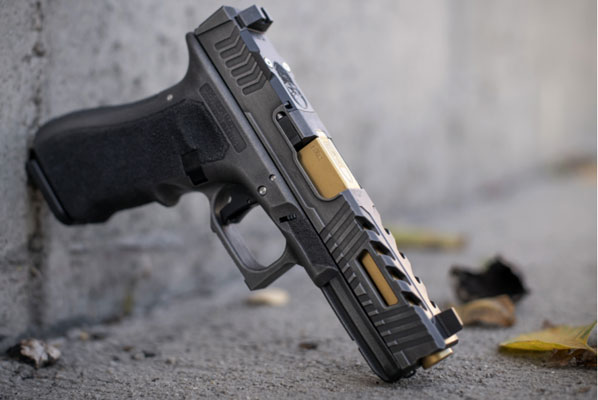
Pistol red dots are common on Glocks now, but an optic-ready slide still has to fit the pistol first. The optic footprint, included parts, sights, holster, and intended use all matter.
Two slides can look similar online and fit very different setups. That is where many buying mistakes start.
What Is an RMR-Cut Glock Slide?
An RMR cut is a machined mounting area based on the Trijicon RMR footprint. A footprint is the screw and mounting pattern under the optic. RMR-compatible means that pattern, not every pistol red dot.
A standard Glock slide has no optic cut. A Glock MOS slide uses adapter plates. An aftermarket RMR cut Glock slide has a dedicated cut for RMR-footprint optics. A factory slide can also be professionally milled for an RMR-compatible optic.
RMRcc, RMSc, Shield, DeltaPoint Pro, ACRO, and proprietary patterns are different. If you already know you want this footprint, Glock RMR slides are worth comparing as a dedicated optic-ready option.

Why Choose a Glock RMR Slide?
An RMR-cut slide suits buyers who want a focused setup, not a system for testing every footprint.
- Direct optic mounting: A dedicated RMR cut may let a compatible optic mount directly to the slide without a broad adapter system.
- Potentially lower optic position: A direct cut may sit lower than some plate-based systems. Actual height depends on cut depth, optic body, slide design, sealing plate, and sight height.
- Dedicated setup for one optic footprint: This works for owners who plan to keep the same optic platform. The tradeoff is less flexibility later.
- Aftermarket design choices: Buyers may see serrations, finishes, window cuts, suppressor-height sight compatibility, stripped slides, or assembled slides. Fitment matters more than appearance.
No slide or optic automatically improves performance. Training, safe handling, and maintenance matter.
RMR Cut vs Glock MOS
A dedicated RMR cut and a Glock MOS system both support pistol optics, but they solve the problem differently.
| Consideration | Dedicated RMR Cut | Glock MOS System |
| Mounting method | Direct RMR interface | Adapter plate |
| Optic flexibility | Mainly RMR-footprint optics | Several footprints with plates |
| Mounting height | May sit lower | May sit higher |
| Best suited for | One chosen footprint | Buyers testing options |
| Extra components | Screws, possibly sealing plate | MOS plate and hardware |
Neither option is automatically better. A Glock slide with RMR cut may suit one optic and a cleaner setup. MOS may suit someone still comparing footprints. That is the practical Glock MOS vs RMR cut difference.
Compatibility Factors Buyers Must Check
Slow down here. A product photo is not enough.

Glock Model and Generation
Glock slides are not universally interchangeable. Check model, generation, caliber, frame size, slide length, barrel compatibility, recoil spring compatibility, and internal parts compatibility. Glock 17, Glock 19, and Glock 26 are common examples, but similar names or the same caliber do not guarantee shared parts.
Optic Footprint
The standard RMR footprint is different from RMRcc, RMSc, Shield, DeltaPoint Pro, Aimpoint ACRO, and proprietary patterns. A compact slimline optic may not fit a standard RMR cut. Check Glock RMR slide compatibility against the exact optic model, not only the product category.
Mounting Hardware
Screw length, thread pattern, and included hardware need to match the slide and optic. This is not a place for guessing. Follow manufacturer specifications, or ask a qualified gunsmith if product details are unclear.
Included Components
A stripped slide usually means the slide body only. An assembled slide may include internal slide parts. A complete slide may include more, but sellers use that word differently. Some include a barrel and recoil spring; others do not. Read the parts list before comparing prices.
Iron Sights and Holster Fit
Optic height and slide profile can affect backup sight visibility, co-witness preference, holster clearance, and optic protection. Co-witness means the iron sights remain visible through or near the optic window. Sight and holster compatibility should be checked separately.
What to Consider Before Upgrading
Before buying an optic-ready Glock slide, confirm:
- exact Glock model and generation
- standard RMR footprint support
- stripped, assembled, or complete configuration
- included parts, sights, barrel, and recoil spring
- cover plate or sealing plate requirements
- holster and sight compatibility
- warranty and fitment information
- whether professional inspection is appropriate
Owners are responsible for safe handling, manufacturer instructions, and applicable laws.
Common Buying Mistakes
The biggest mistake is assuming every red-dot sight fits an RMR cut. RMR, RMRcc, and RMSc sound similar, but they are different patterns.
Another mistake is buying for the wrong generation. Product descriptions may say “Glock 19,” but generation still matters. Looks also cause problems. Cuts, colors, and windows come after fitment, material quality, and function.
The word complete causes confusion, too. Read the included-parts list, not just the headline. Also, avoid expecting the optic or slide alone to improve results without practice.
Is a Glock RMR Slide the Right Choice?
An RMR-cut slide may be right if you have already chosen an RMR-footprint optic, want a dedicated direct-mount setup, and prefer replacing the slide instead of milling the original one. It also makes sense when the model, generation, and included components are clear.
A Glock MOS or another plate-based option may be better if you want to test multiple footprints.
The best slide is the one that matches the firearm, optic, intended use, and required components while offering dependable manufacturer support.
FAQ
Do all red-dot sights fit a Glock RMR slide?
No. Many optics use different footprints.
What is the difference between an RMR slide and a Glock MOS slide?
An RMR slide has a dedicated cut. MOS usually uses adapter plates.
Can an RMR slide fit every Glock generation?
No. Check model and generation.
Is a direct RMR cut better than an adapter plate? It can be for one optic, but plates offer more flexibility.
What does a stripped Glock slide include?
Usually, the slide body only. Check the seller’s list.
Do RMR slides require taller iron sights?
Often, if the buyer wants a co-witness.