

During the summer months, energy bills can skyrocket. Cooling equipment will struggle to keep your home or building comfortable if the temperatures climb too high.
Did you know that you can save money without losing comfort? Take a look at these tips below to keep your cooling equipment running efficiently.
Set Your Thermostat Correctly
Did you know that lowering your thermostat setting by one degree can increase your cooling costs by 3% to 5%? Don’t set your thermostat colder than you need to be comfortable. Aim for 78 degrees F while you’re at home and awake. Increase the temperature a few degrees when you’re away from home or sleeping at night.
You can install a programmable thermostat or smart thermostat to make this process automatic.
Change/ Clean Air Filters Regularly
Dirty air filters make it harder for your system to push air through your home. Not only will your system run less efficiently by doing this, but it can also shorten the lifespan of your equipment. Be sure to check your filters monthly during peak cooling season.
Replace or clean your filters as recommended by the manufacturer. Some filters are good for up to 90 days, while others need to be replaced every month. Cleaning or changing your air filters is cheap and helps your system cool your space quickly.
Seal Any Air Leaks
When cool air escapes through air leaks, your cooling system has to work harder. Check all windows, doors, and vents for air leaks. Use weatherstripping or caulk to permanently seal these leaks.
Stopping cool air from escaping your home will help it retain its cool temperature. It also prevents hot, outdoor air from entering your home.
Use Fans to Assist Your Cooling System
Ceiling fans and portable fans can help distribute the cool air coming from your air conditioner. Using fans helps cool the room quicker since they force air movement. Run your fans so that they blow air downward during the summer. When your fan is on, you can usually adjust your thermostat up a few degrees.

Schedule Annual Maintenance
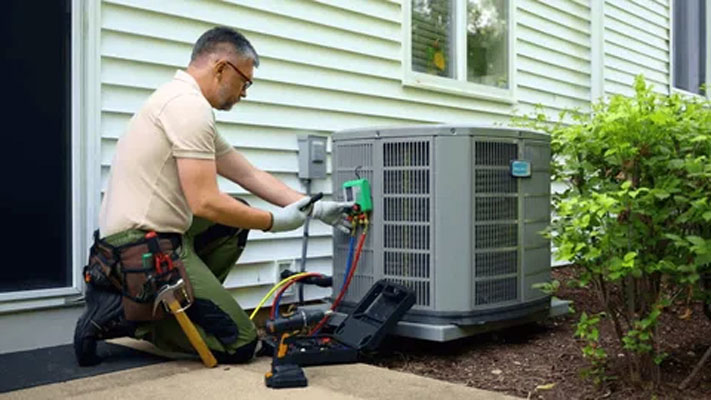
Just like your car, your heating and cooling equipment should have annual tune-ups. These tune-ups should occur before the peak cooling or heating season. During annual maintenance, a technician will detect any problems while they’re still small. Preventative maintenance can save you from spending hundreds or even thousands of dollars in repairs.
Not only will annual maintenance catch small problems, but it also keeps your system running efficiently. If you skip your annual maintenance, you’ll usually pay for it later with costly repairs.
Invest In Energy-Efficient Equipment
If your equipment is older than 10 years, consider upgrading to energy-efficient models. Energy-efficient models are labeled with the SEER rating. The higher the SEER rating, the more efficient your equipment is.
Newer models also have smart technology features that allow you to save money. While these units are more expensive, you’ll make back your money in lower energy bills each month.
Close Blinds and Block Direct Sunlight
Just like an oven, when sunlight hits your windows, it can heat up your home. When this happens, your cooling equipment has to work harder to cool your home back down. Keep your blinds closed during peak sunlight hours to help block some of this heat.
There are also reflective films you can buy that block heat but allow light to enter.

Don’t Generate Heat Indoors
Activities like cooking, drying clothes, and using the oven generate heat inside your home. Not only does this force your cooling system to work harder, but it also heats up the air around you.
Complete heat-generating activities in the morning or evening when it’s cooler outside. Not only will this cool down your home faster, but it will reduce the workload for your system.
Install Zoning Systems
A zoning system allows you to cool specific areas in your home or building. For example, if you’re not using your bedroom, you don’t need to cool it. Zoning systems use dampers and multiple thermostats to control the cooled air.
By cooling specific areas, you don’t waste energy cooling empty rooms.
Add Insulation to Your Home
Insulation helps keep the cool air in and hot air out of your home. Check to ensure you have enough insulation in your attic, walls, and floors. Without proper insulation, all your efforts to keep your home cool are wasted.
Insulation is a one-time cost that will continue to save you money for years to come.
Track Your Energy Use
Some utility companies provide their customers with energy usage tools. These tools break down how much energy your equipment uses. By understanding your usage habits, you can change them to fit your budget.
Smart plugs and energy monitors are great for tracking individual appliances.
Clean Around Your Outdoor Equipment
Outdoor condenser units should have a clear two feet around them. Falling leaves, dirt, and debris can all prevent your unit from cooling efficiently. Make sure to clean the area around your outdoor unit frequently.

You should also trim any bushes or plants that come within two feet of your system.
Take Advantage of Time-Of-Use Rates
Check with your utility company to see if they have time-of-use rates. Some utility companies offer cheaper rates during off-peak hours. By using your equipment during cheaper hours, you can lower your energy bill. Time-of-use rates won’t decrease your energy consumption, but they can reduce your bill.
Case Study: Quick Fixes for Heating & Cooling Savings
Cutting Cooling Costs Doesn’t Have to Break the Bank. If you need proof that heating and cooling costs don’t have to break the bank, consider this case study from the U. S. Department of Energy’s ENERGY STAR programme. ENERGY STAR identifies simple, commonsense improvements homeowners can make to save energy and reduce cooling costs without compromising comfort.
One homeowner installed a programmable thermostat, replaced dirty air filters and sealed air leaks. He also added insulation in his attic. While none of these improvements involved purchasing new air conditioning equipment, they did reduce the workload on his HVAC system during hot weather.
ENERGY STAR estimates that homeowners can save about 10% annually on heating and cooling by simply setting their thermostat back approximately 7°–10° F (4°–6° C) for eight hours a day with a programmable thermostat. Pairing “smart” thermostat use with regular HVAC maintenance and proper insulation and air sealing can mean even more savings.
This case study proves that increasing energy efficiency doesn’t always require buying new equipment or installing pricey upgrades. Correctly maintaining your cooling equipment, using common sense with your thermostat and reducing heat gain can really add up to increased comfort and lower electric bills.
Instead of looking for one big fix to cut cooling costs, look for ways you can incorporate several energy-saving measures to lessen the load on your air conditioner.
Answers to Your Cooling-Equipment Energy-Saving Questions
What is the most efficient temperature setting for air conditioners?
The U.S. Department of Energy recommends setting your thermostat to 78° F when you need cooling. You can save energy while you’re away from home or sleeping by setting your thermostat higher than normal.
Will setting my thermostat lower cool my house faster?
No. Your air conditioner won’t cool any faster if you set your thermostat lower than the indoor temperature. It will continue to run until it reaches the temperature you set. This wastes electricity and can drive up your energy bill.
How often should I change my HVAC air filter?
HVAC manufacturers typically recommend inspecting your air filter once a month during heavy cooling periods. Depending on the type of air filter you use, you may need to clean or replace it every 30 to 90 days. When air filters are clean, air moves freely through your cooling system.
Will a dirty air filter increase my energy bills?
Yes. When air filters are dirty, airflow is restricted. This makes it difficult for your air conditioner to keep your home cool and cause it to use more electricity. Restricted airflow can also shorten the lifespan of your HVAC equipment.
Do ceiling fans really help me save money on air conditioning?
Yes. Ceiling fans cool people, not rooms. By circulating air, they create a breeze that can make you feel cooler without lowering the temperature. Using ceiling fans allows you to raise your thermostat setting and could help you cut air conditioning costs.
Does air sealing really help?
It sure does. When air leaks are present around windows, doors and outlets, your cooling system has to work harder to keep your home comfortable. By sealing these leaks, you keep cool air in during summer and warm air in during winter, which will help you save on energy costs.
How do I know when my cooling equipment needs maintenance?
If your air conditioning system is more than five years old, you should have it serviced annually. Your technician can ensure your cooling equipment is working efficiently, reliably and is ready to keep you cool for another season.
What is a Seasonal Energy Efficiency Ratio or SEER?
SEER rating is the cooling efficiency of your HVAC equipment measured over an entire cooling season. Generally speaking, the higher the SEER rating of an air conditioner the greater its energy efficiency. Proper installation and correct sizing are equally important.
Will insulation help keep my home cool?
Yes! Insulation slows heat gain from the outdoors. By installing insulation in your attic, walls and floors, you can keep your home cooler and reduce your energy use.
Should I close blinds and curtains during the day?
Yes. Closing blinds, drapes or shades can help keep your home cooler by reducing the amount of heat gain from the sun. Blinds are especially helpful on windows that receive direct sunlight during the day.
What does HVAC zoning mean?
HVAC zoning allows you to divide your home or building into different zones or areas. Each zone is controlled by its own thermostat, which allows you to customize cooling (and heating) and avoid wasting energy on empty rooms.
How much space should I allow around my outdoor air conditioning unit?
Allow at least 2 feet of space between your outdoor condenser unit and any vegetation. Also, keep leaves, grass clippings and weeds trimmed away from the unit. Proper airflow is important to ensure your cooling equipment functions properly.
Do I have to replace my air conditioner to reduce my electricity bill?
No. There are lots of energy-saving improvements you can make that won’t cost you a lot of money. Cooling equipment maintenance, changing air filters, reducing heat gain, sealing air leaks and adding insulation can all reduce your energy consumption and save you money on your electric bills.
Is there one best way to conserve energy when using my air conditioner?
There isn’t one silver bullet to cut your cooling costs. Using proper thermostat settings, regular maintenance, clean air filters, adequate insulation, sealed air leaks and properly sized cooling equipment that is operating with good airflow can all reduce your energy consumption.
Final Words
Saving money on cooling costs doesn’t mean you have to live in a sweatbox. By changing small habits, you can save money throughout the cooling season. Set your thermostat to a comfortable temperature and clean out your equipment regularly.
Seal those air leaks for extra savings! Try a few of these tips to start and work your way from there. Every little bit counts towards savings on your energy bill.