
Column By Max Powers
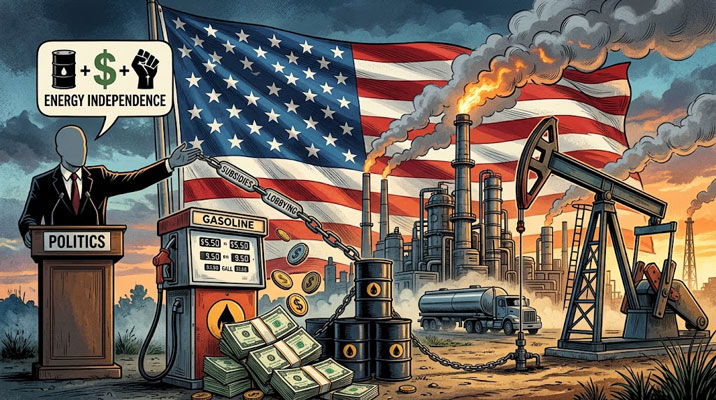
Back in April 2024, facing escalating legal challenges and massive bills, Donald Trump held a private dinner for top oil and gas executives at Mar-a-Lago. His proposition was simple: donate $1 billion to his campaign, and he would eliminate regulatory hurdles and roll back environmental protections once back in office.
A recent report from Senate Democrats details what followed. The fossil fuel industry delivered a staggering $201 million in campaign support and an additional $19 million to the inaugural fund—marking the largest political investment in the industry’s history. Now, taxpayers are bearing the cost.
The payback began with major tax cuts. Trump’s policy platform reduced drilling fees on public lands, established a new billion-dollar fossil fuel subsidy fund, and eliminated tax credits for renewable alternatives such as wind, solar, and electric vehicles. Four major oil companies told investors they expect to save more than $1.2 billion in taxes in 2025 alone, with total tax breaks estimated to cost the federal government $737 billion overall.
Beyond tax relief, regulatory enforcement has dissolved. Under Clean Air Act provisions, a president can exempt facilities from toxic air rules only when compliance technology is unavailable, and national security is at risk. The current EPA established a direct channel where companies requested—and received—passes from limits on carcinogens like mercury, benzene, and ethylene oxide. Over 180 facilities near residential areas received exemptions. Meanwhile, the Department of Justice filed 76% fewer civil environmental lawsuits than in the prior administration’s first year, an 81% decline from Trump’s first term.
The economic impact falls directly on American households. The administration scrapped vehicle greenhouse gas emission standards under the guise of saving consumers money. However, EPA estimates indicate the repeal will add $1.5 trillion in vehicle repair and maintenance costs, along with $580 billion in higher fuel expenses over the next three decades.
While energy giants report massive profits—with Chevron, Exxon, and Shell netting roughly $404 million per day earlier this spring—everyday consumers face higher fuel costs, rising electricity bills, and diminished air quality.

These policy choices were made with the support of congressional allies who continue to accept fossil fuel campaign contributions. As voters look toward November, holding elected officials accountable at the ballot box remains the primary avenue for change.
This recent Senate Democrats report highlights the ongoing national debate surrounding energy policy, government oversight, and political donations.
The opinions expressed in this editorial are those of the author.