

Column By Mike Bibb
I’m a smartphone and computer dunce. Ask anyone who knows me. However, I realize these gadgets are everywhere—including embedded in my own car.
The recent revelation of numerous Flock Security Cameras scattered across Safford’s streets and avenues has intensified public concern about possible violations of a person’s civil and Constitutional rights.
Principally, can a citizen be lawfully photographed every time he/she drives within view of one of these cameras? Then, have that image and information stored within a data center somewhere, available for retrieval by agencies and organizations connected to them.
Is all this really on the up-and-up, or a clever way to secretly gather personal information without anyone knowing? Under the guise of “Safely enhancing the driving experience.”
Just as important, does a citizen still have a right to privacy when traveling public roads and highways — or can he be tracked anytime he backs out of his driveway?
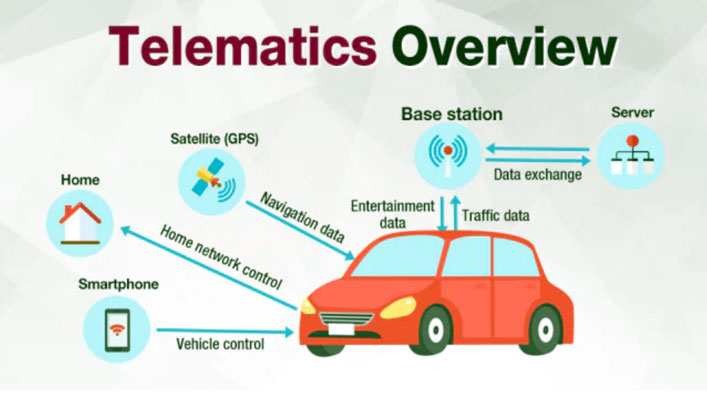
While you’re thinking about these issues, consider that modern cars and trucks are now factory-equipped with recording and transmitting devices that reveal your exact location, speed, and other vehicle details every time you turn on the engine.
Electronic gizmos called “Black Box” telematics modems, satellite radio antennas, GPS hardware, smartphone cellular integration systems, and infotainment systems can capture a driver’s data and transmit it wherever needed.
Commercial and military aircraft have used similar equipment for years. This is why you often hear “We’ll know more about the crash when we retrieve the ‘Black Box’ flight recorder.”
If anyone should be aware of this technology, it ought to be a police officer.

Recently, Graham County Sheriff’s Department Deputy Teryn Shaw learned that his Michelin Connected Fleet GPS tracking system revealed he accumulated 977 separate speeding incidents in his patrol car in 76 days—a two-and-a-half-month period (about 13 per day on average)—when he drove 20 mph or more over the posted speed limit. A total of 134 of these violations involved speeds over 100 mph (almost two per day). — “Gila Herald Report on Excessive Speeding,” Gila Herald, Oct. 3, 2026.
No statistics were given regarding how many of these speeding incidents pertained to official police business. However, it’s hard to imagine that a single officer needed to exceed 100 mph 134 times in 76 days in Graham County.
Unless he was practicing for a future career as a NASCAR driver, or his testosterone was running at 8,700 RPM, then what was his excuse for routinely motoring on roads and highways at these extreme speeds?
Mr. Shaw resigned from the Sheriff’s Department in March 2026. The Arizona Peace Officers Standards and Training Board (AZPOST) is currently reviewing his police officer certification.
So, when innocently asking your car, “How do I get to 3825 West Jumping Cholla Drive in Mesa, Arizona?”, there’s probably little concern that the request is being processed by some sort of computer equipment fabricated within the array of sensors and transmitters built into the electrical system of your Chevrolet, Ford, Toyota, Tesla, BMW, or any other present-day automobile.
We receive the answer we were wanting and drive on down the road, without worry a simple address inquiry can reveal where you are, where you’re going and if it’s a private residence, commercial business, city park, government office or place of Granny’s 86th birthday party.
Some telematics systems can remotely shut off vehicles while they’re moving.
Realistically, there’s little chance of expecting privacy in today’s automobiles, simply because manufacturers install tracking instrumentation during the assembly process. Much like any other car part.
What is the implied purpose for this equipment?

Telematics is widely used in fleet management, logistics, transportation, and asset tracking.
Key benefits include:
- Fleet optimization: Real-time tracking of vehicles and assets to improve routing and reduce fuel consumption.
Safety Management: Monitoring driver behavior to reduce accidents and improve compliance. (Has your car’s dash ever posted a notice suggesting “Driver Rest Recommended”? That message comes from Telematics).
- Maintenance Efficiency: Predictive alerts for engine issues or component wear to prevent breakdowns.
- Cost Reduction: Lower fuel and maintenance costs through data-driven decisions.
Integration with IOT: Telematics devices are increasingly part of connected enterprise systems, enabling smarter operations and predictive analytics.
Incidentally, IoT stands for “Internet of Things.”
As an extra backup for locating where you may be at any time, there’s always the ubiquitous cell phone, conveniently stuffed in your back pocket.
You know, that rectangular-shaped plastic slab you’re staring at most of the day. It has tracking stuff, too.
And you thought Flock Cameras were an overly intrusive breach of your privacy. When, actually, the cameras are just another layer of corporate and government snooping.
If all this doesn’t seem a little spooky, then I guess your meds are stronger than mine!
The opinions expressed in this editorial are those of the author.