
A nursery can feel special from one wall, not from a room full of matching décor. A sleepy sky, soft animals, a little forest, or a whale in pale blue water can set the mood right away. Parents comparing nursery wallpaper before choosing a final theme can browse this online wallpaper shop for ideas, then plan the room around one calm direction.
The room should feel magical, but still easy to live in. Quiet enough for naps, warm enough for bedtime stories, and relaxed enough for everyday mess.
Why nursery wallpaper can instantly change the mood of a kids’ room
Wallpaper gives the walls a story. A plain blue wall feels clean, but a cloud wall feels sleepy. A beige corner can look warm, but with rabbits, deer, or small trees, it starts to feel like a page from a picture book.
It changes the room in a few simple ways:
- Soft colors make the space feel quieter;
- Repeated patterns add rhythm without adding clutter;
- Murals give the room one clear visual moment;
- gentle themes make plain furniture feel more intentional.
That is why balance matters. If the wallpaper already carries the story, the crib, rug, curtains, and shelves can stay simple.
7 creative nursery wallpaper ideas for a magical baby room
These nursery wallpaper ideas work best when the design has breathing room. One good feature wall often feels more thoughtful than four walls covered in print.
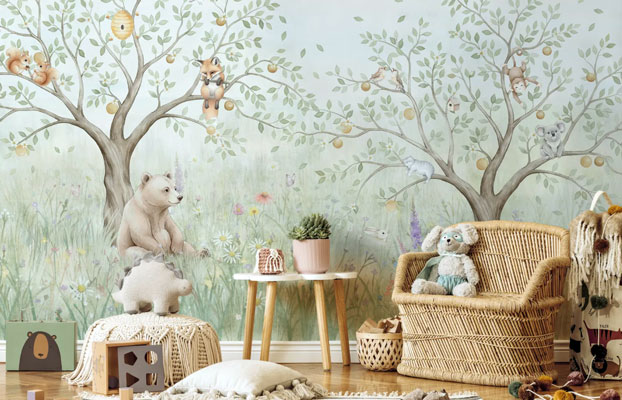
Soft animal wallpaper for a gentle storybook feel
Animal baby room wallpaper feels sweet when the colors stay soft. Rabbits, lambs, foxes, bears, deer, or elephants can make the nursery feel gentle without looking too themed.
Place it behind the crib or changing dresser. Pale wood, cream bedding, and one woven basket nearby are enough. The animals should feel like quiet little guests in the room.
Cloud and sky wallpaper for a calm bedtime atmosphere
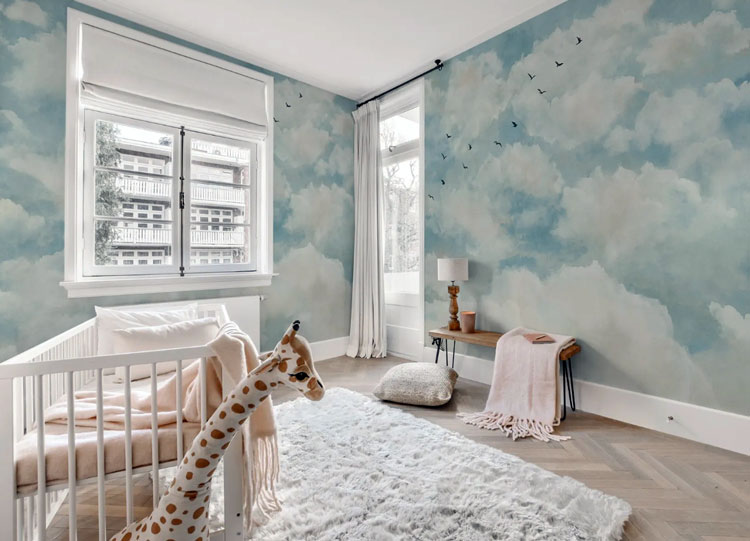
Clouds suit the sleep area because they leave the wall feeling open. Pale blue, ivory, warm grey, or a barely-there blush sky can look light in the morning and softer at night.
This theme works nicely in smaller rooms, too. Add a warm lamp, plain curtains, and a soft rug. Too many sky-themed accessories can make the design feel forced.
Forest and woodland murals for a cozy nature-inspired nursery
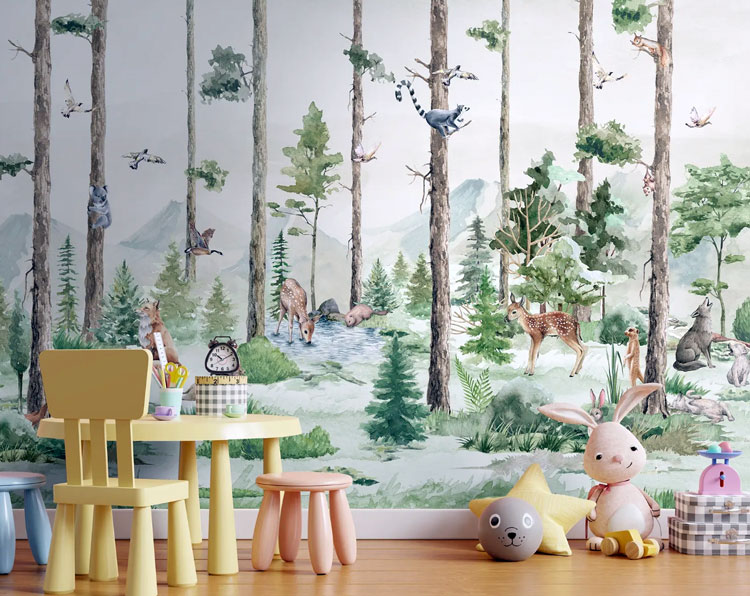
Forest nursery wall murals add depth without adding clutter. Light trees, small birds, hills, mushrooms, and tiny animals can make the room feel tucked away and calm.
Pair this look with natural wood, linen curtains, neutral bedding, and small touches of sage or clay. In a small nursery, choose a lighter forest scene so the wall does not feel heavy.
Floral nursery wallpaper for a sweet and cheerful room
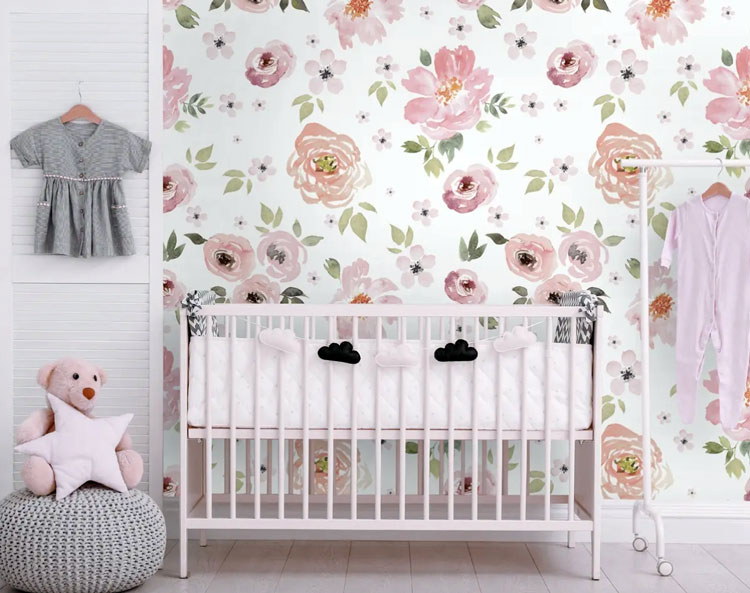
Florals can feel vintage, soft, playful, or a little romantic. Tiny flowers look delicate. Larger blooms turn the wall into more of a feature, especially near a reading chair or low bookshelf.
For a natural look, do not match every detail. Pull one color from the print into a cushion, curtain, or small piece of wall art.
Rainbow and balloon wallpaper for a playful, whimsical look
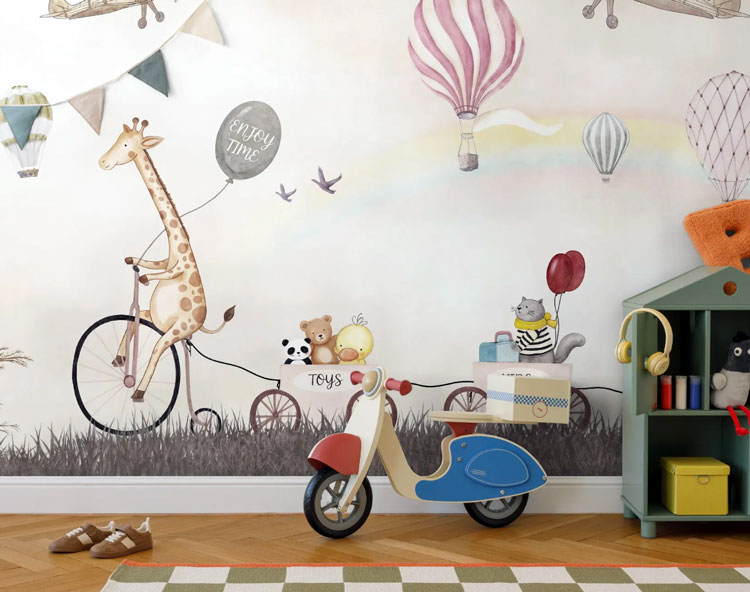
Rainbows and balloons bring movement, so they fit toddler rooms and play corners better than a very quiet sleep wall. Softer shades usually age better than bright primary colors.
This type of kids’ room wallpaper looks good with cream walls, pale furniture, and a plain rug. Let the wallpaper be the cheerful part.
Star, moon, and space wallpaper for dreamy night-time styling
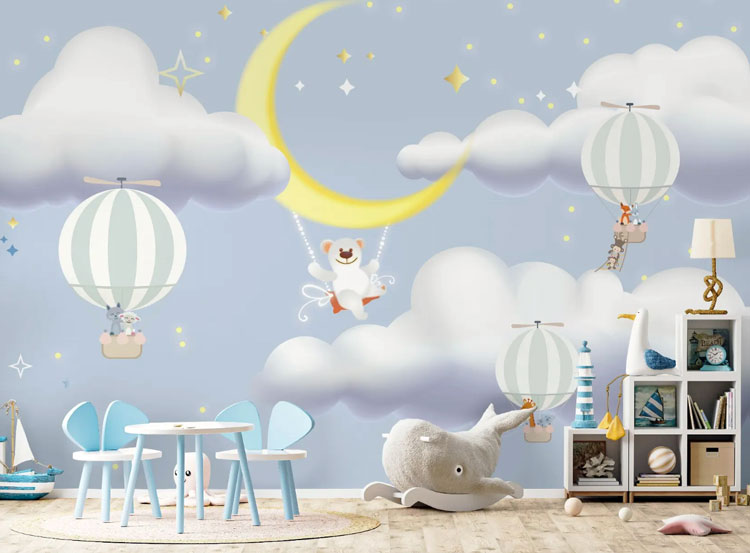
Stars, moons, planets, and soft constellations create a bedtime mood without needing many accessories. Navy can look beautiful, but misty blue, grey, or muted lavender often feels gentler in a nursery.
Warm lighting matters here. A small lamp beside the chair can make the wall feel cozy in the evening, especially with cream bedding and simple curtains.
Ocean, whale, and underwater wallpaper for a peaceful blue nursery
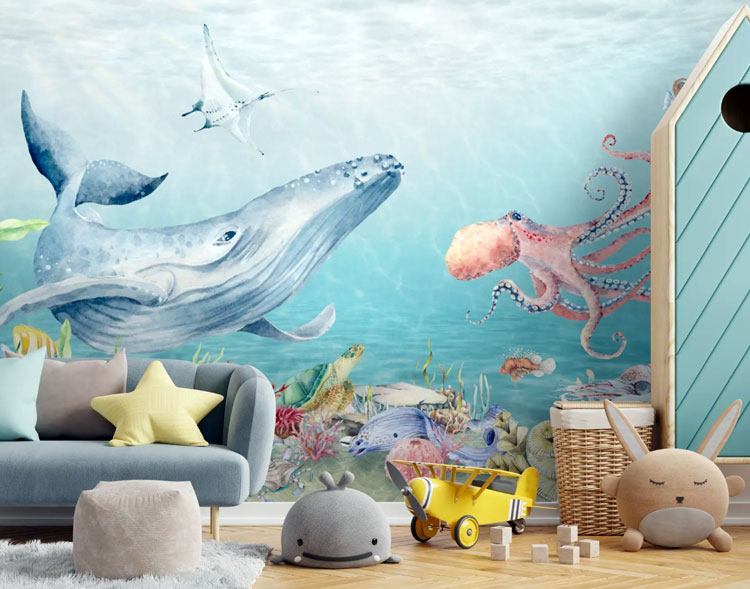
Ocean baby wallpaper works well for parents who want blue without making the room feel cold. Whales, waves, shells, fish, and soft underwater scenes pair nicely with white, sand, beige, and pale oak.
Use it on one feature wall. If you add too many boats, anchors, shells, and blue toys, the room can start to feel overly themed.
How to choose the right nursery wallpaper theme
Start with the feeling you want when you enter the room. Calm? Cosy? Cheerful? A little dreamy? The print should follow that feeling, not fight it.
| Room mood | Good direction | Better to avoid |
| Calm | clouds, stars, pale animals | sharp contrast |
| Cosy | woodland, forest, soft florals | very dark scenes in tiny rooms |
| Playful | rainbows, balloons, brighter flowers | too many matching accessories |
| Longer-lasting | nature, sky, simple animals | oversized babyish details |
Scale matters too. Large wallpaper murals need a clear wall where the main detail will not disappear behind furniture. Smaller repeated prints are easier behind shelves, toy storage, or in compact rooms.
Nursery wallpaper vs wall murals: which option works better?
Regular wallpaper is better when you want a soft repeated pattern: tiny stars, leaves, dots, flowers, or small animals. It can sit in the background and still make the room feel finished.
Murals are for a stronger moment. A forest behind the crib, an ocean scene near a chair, or a sky mural on the largest wall can set the whole mood. With bold murals, keep nearby toys, bedding, and furniture quiet.
Best places to use nursery wallpaper
Wallpaper for nursery rooms usually looks best when it marks one clear area. Behind the crib is the classic choice, but it is not the only one. A reading chair can feel cozier with florals or clouds around it.
Good placement options include:
- behind the crib
- around a reading chair
- behind shelves or a book display
- on one accent wall
- on the ceiling with clouds or stars, if the product instructions allow it
In a small room, one decorated surface is usually enough.
How to style nursery wallpaper with furniture and décor
Borrow colors from the wall, but only lightly. A woodland mural might connect with sage curtains. A floral print might need one blush cushion. A starry wall may look better with cream bedding than with more moons everywhere.
Texture helps more than extra decoration. Cotton bedding, linen curtains, pale wood furniture, woven baskets, and one soft rug can make kids’ wallpaper feel warm and lived-in.
Practical tips before buying nursery wallpaper online
Measure before you fall in love with a design. Note windows, doors, crib height, shelves, and wardrobes. A mural can lose its charm if the moon, whale, or main tree disappears behind furniture.
Before ordering, check the practical details:
- Wall surface: read the product instructions and make sure the material suits your wall.
- Application method: Choose peel-and-stick or traditional wallpaper based on what the product requires.
- Design scale: check how large the animals, flowers, trees, or clouds will look on the actual wall.
- Sample color: test it in morning light and evening light before committing.
- Care guidance: check cleaning notes, especially near toy storage or when changing furniture.
A little planning saves the room from feeling too dark, too loud, or too babyish too soon.
Final thoughts: making a nursery feel magical without overdecorating
A magical nursery is usually quieter than people expect. One good wall, warm light, simple furniture, and a few soft textures can be enough. Choose the mood first, then the wallpaper. Leave some plain space. Let the room feel like a place for sleep, play, stories, and small everyday routines, not a display that has to stay perfect.