
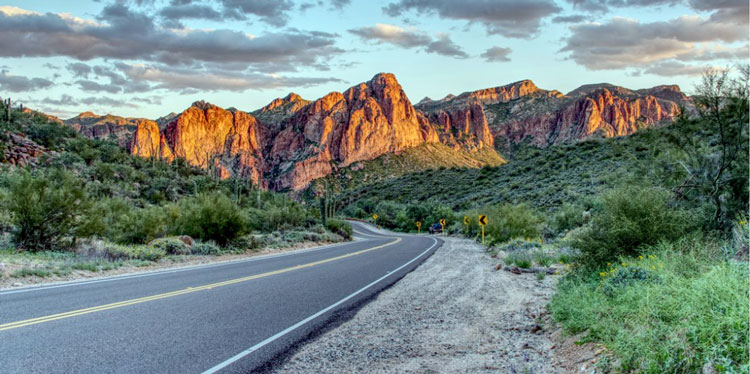
Drive west from Safford toward Globe, and you pass through the San Carlos Apache Reservation. The tribe’s casino resort there is an employer, a convention venue, and a regular backdrop for local news. Few people stop to ask who decided which games could sit on its floor. The answer runs through a federal law, a state compact, and two separate regulators.
Baccarat is a useful example, because it only arrived at Arizona tribal tables in 2021. Online, it appears in listings such as a Thai-language roundup of บาคาร่า sites, cited only as an example and meant for adults where online gambling is lawful. That mention is not an endorsement. Abroad, rules swing from private licensing to government-run monopolies to flat prohibition. Each reader’s own law decides what is legal.
Where Did Arizona’s Tribal Gaming Rules Come From?
The foundation is federal. In 1988, Congress passed the Indian Gaming Regulatory Act, known as IGRA. It recognized gaming as a route to tribal economic development and self-sufficiency.
IGRA sorts gaming into three classes:
- Class I covers social games for small prizes and traditional ceremonial games. Tribes regulate these alone.
- Class II covers bingo and bingo-based machines. Tribes regulate them, with federal oversight from the National Indian Gaming Commission.
- Class III covers full casino gaming, including slots and banked table games. It requires a signed tribal-state compact.
That third class is where table games live. Without a compact, a tribe cannot offer blackjack or baccarat at all.
Why Did Arizona’s First Compacts Take a Standoff?
The early 1990s were tense. Several Arizona tribes had installed slot machines without compacts. Governor Fife Symington argued that Arizona did not allow such gambling off reservations.

In May 1992, federal agents raided five tribal casinos and seized machines. At Fort McDowell, near Scottsdale, tribal members blockaded the trucks, and a three-week standoff followed. The first compacts came out of that conflict, as the Arizona Department of Gaming’s history of tribal gaming records. Symington signed them with 16 tribes between 1992 and 1994.
Voters later approved Proposition 202 in November 2002. It authorized tribal gaming to continue and led to a new round of compacts.
What Changed for Table Games In 2021?
On April 15, 2021, Governor Doug Ducey and Arizona tribes signed amended compacts. The update added new Class III games, including craps, roulette, and baccarat. Before that, Arizona’s tribal casinos offered games such as blackjack, keno, and poker.

The amendments arrived alongside state legislation on event wagering and fantasy contests. Neither change created a licensed market for online casino tables in Arizona. The debate that followed is captured in a look at whether Arizona is gearing up for more casino licenses, including worries about competition for tribal casinos.
Every federally recognized tribe in Arizona now has a compact with the state. The 22 compacts are substantially identical. Each lasts 10 years and can be renewed.
Who Inspects a Table Game Once It Opens?
Two regulators share the work for Class III casinos. The first is the Tribal Gaming Office of the tribe that owns the casino. The second is the Arizona Department of Gaming, known as ADG.
Their joint role covers several steps:
- A new casino completes a detailed checklist and needs ADG certification before opening.
- ADG runs compliance and financial audits every two years.
- Rule changes, such as new table games, must fit what the compact allows.
- Patron disputes over wins and losses go to the Tribal Gaming Office under Section 14 of the compact.
According to ADG, Arizona has 26 Class III casinos run by 16 tribes. One more facility operates under Class II rules, with federal rather than state oversight.
How Are Casino Contributions Split Up?
Every tribe that operates a Class III casino contributes a share of its Class III net win under the compact. The rate climbs on a sliding scale from 1 to 8 percent as net win grows, so larger casinos pay a higher share.
The split matters locally:
- Twelve percent goes directly from tribes to the cities, towns, and counties they choose.
- The remaining 88 percent flows to the Arizona Benefits Fund.
- That fund pays for ADG and its Division of Problem Gambling.
- The balance supports school instruction, trauma and emergency care, tourism and wildlife conservation.

That is different from the Arizona Lottery, which the state runs directly. A winning lottery ticket sold in Safford is state gambling, not tribal gaming, and follows separate rules.
Frequently Asked Questions About Arizona Tribal Gaming
Can Any Arizona Tribal Casino Add a New Table Game?
Only if the game is allowed under the compact and state law. The 2021 amendments are what made baccarat, craps, and roulette possible.
Who Settles a Dispute Over a Table Game Payout?
At a Class III casino, the patron starts with the tribe’s Tribal Gaming Office. The compact gives that office authority over win and loss disputes.
Does the State Run Tribal Casinos?
No. Tribes own and operate their casinos. The state co-regulates Class III gaming through ADG under the compact.
Is Online Casino Play Legal In Arizona?
Arizona’s 2021 changes covered event wagering and fantasy contests, not online casino tables. Readers should check current state law before assuming any site is lawful.
Why Compact Details Matter In the Gila Valley
Tribal gaming here is not an abstract policy topic. It funds tribal services, local government grants and the state office that pays for problem-gambling help. For Gila and Graham County towns, the 12 percent share is the part most likely to show up close to home. Tribes direct it to community services and public safety programs.
Local leaders also move between these worlds; the Arizona Indian Gaming Association’s executive director once worked in marketing for the Apache Gold Casino Resort. Knowing how the compact works makes those headlines easier to read.
Every game described here is restricted to adults and to places where it is legal. Treat this explainer as background reading, never as legal or financial guidance. Gambling is entertainment rather than income, and every house game carries a built-in edge. Arizona’s Division of Problem Gambling helpline is 1-800-NEXT-STEP, and the national line is 1-800-GAMBLER.