By Jon Johnson
PERIDOT — While anglers throughout the state were enjoying Free Fishing Day on Saturday, there was one popular lake where the fish weren’t biting – because they are all dead.
San Carlos Lake, one of eastern Arizona’s most prominent and historically celebrated recreational fisheries, has been shut down indefinitely. The San Carlos Recreation and Wildlife Department issued an emergency closure notice on June 5, 2026, after an environmental catastrophe wiped out virtually the entire fish population.
According to tribal wildlife officials, severe and prolonged drought conditions, exacerbated by mandatory downstream agricultural water releases from the Coolidge Dam, triggered a sudden ecosystem collapse. The department estimates that approximately 100% of the lake’s fish population—which includes state-record-holding lineages of largemouth bass, black crappie, bluegill, and flathead catfish—is now dead.
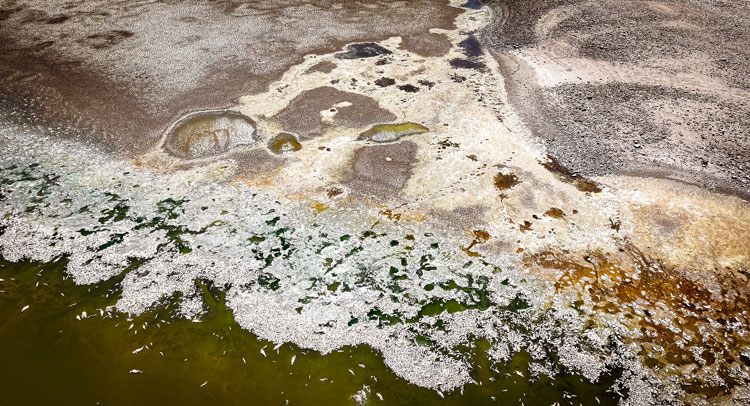
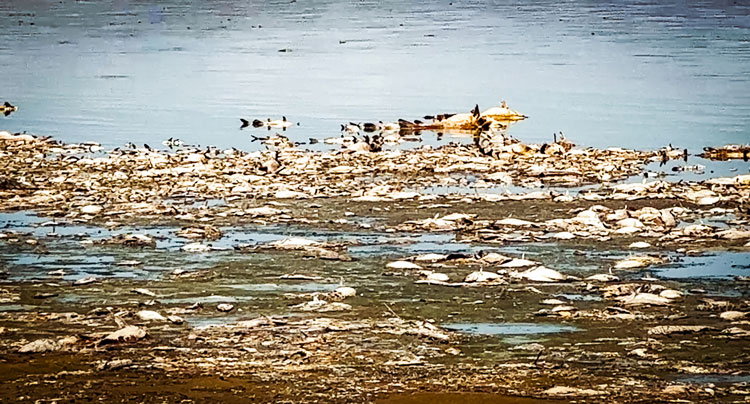
Decomposing fish blanketing the receding shoreline have created severe potential health and safety hazards, rendering the water toxic and unsafe. For the protection of the public, authorities have explicitly banned fishing, the harvesting, or possession of any fish from the lake, and all associated shoreline recreation until further notice.
How and Why a Fish Kill Happens
A fish kill is a localized mass mortality event that occurs when biological or environmental factors rapidly deplete the water’s “dissolved oxygen”—the literal air that aquatic life breathes through its gills.
Several volatile factors converged at San Carlos Lake to trigger this absolute collapse:
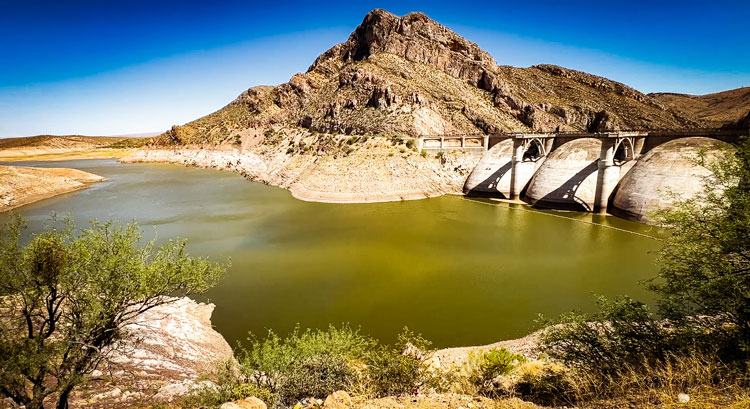
- Water Volume and Temperature: Warm water inherently holds significantly less oxygen than cold water. As the lake dropped to a fraction of its capacity, the remaining shallow pools heated rapidly under the desert sun, creating a high-stress environment.
- Overcrowding: As the surface area shrank, millions of fish were compressed into tight, stagnant pockets, rapidly consuming what little oxygen remained.
- Algae and Decomposition: Stagnant, warm, and nutrient-dense water accelerates the growth of massive algal blooms. While algae produce oxygen through photosynthesis during the day, they consume vast amounts at night. Furthermore, when the algae die and sink, the bacterial process required to decompose them strips the remaining dissolved oxygen from the water column, suffocating the fish within hours.
A Recurring History of Deficit
This type of ecological devastation is a recurring scar for San Carlos Lake. Because the reservoir’s water is strictly allocated for downstream irrigation demands in agricultural communities like Coolidge and Florence, the lake is frequently drawn down to critical levels during dry years.
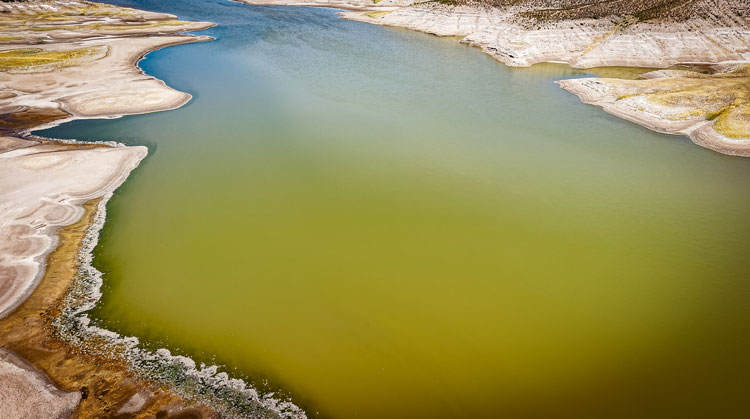
The lake has shrunk to near-empty levels roughly 20 times over its nearly century-long history. The most recent major oxygen-depletion die-off before this event occurred in the summer of 2018, when the reservoir plunged below 1% capacity, leaving just two muddy ponds connected by a tiny creek. Decades earlier, a legendary drought between 1976 and 1977 virtually dried up the reservoir, causing an estimated 5 million fish to go belly up and requiring a five-year recovery period for the ecosystem to rebound.

Similar Devastation at Cluff Pond #3
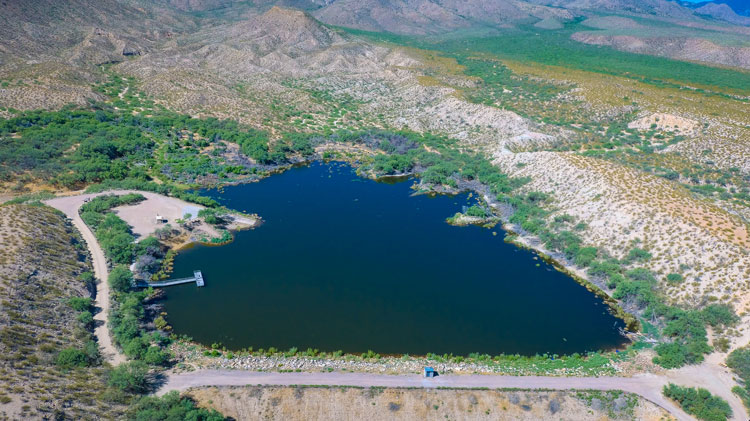
The disaster at San Carlos Lake mirrors another localized environmental blow that shook Graham County anglers just months ago. Cluff Pond #3, a popular 20-acre warmwater and trout fishery located within the Cluff Ranch Wildlife Area near Pima, experienced its own severe fish kill.
Much like San Carlos Lake, Cluff Pond #3 had been battling dangerously low water levels heading into the seasonal shift. Despite active efforts by the Arizona Game and Fish Department to maintain the reservoir — including regular winter trout stockings through March — shallow water levels combined with stagnant seasonal transitions triggered an isolated oxygen crash, leaving local fish populations decimated.
Public Advisory
The San Carlos Recreation and Wildlife Department will continue to monitor the water quality and shoreline conditions at the reservoir. Visitors are strictly urged to avoid the area and respect the closure boundaries.
For further inquiries or information regarding the closure, the public can contact the department directly at (928) 475-2343.