By Jon Johnson
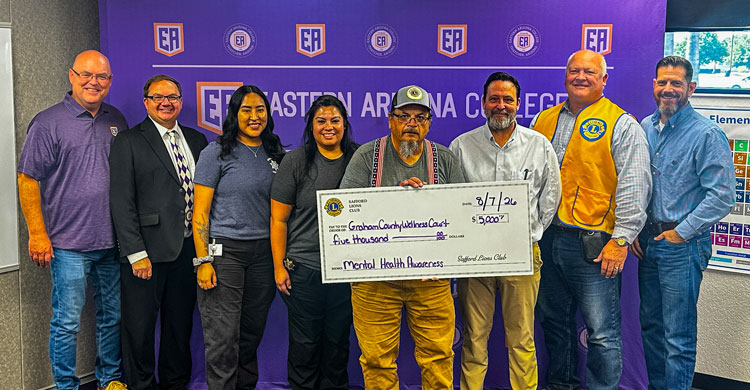
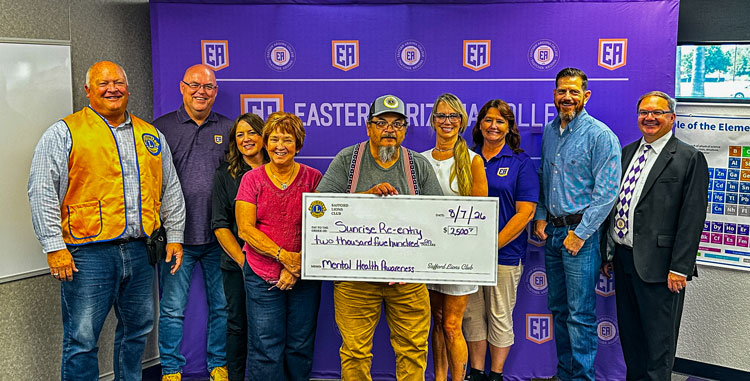
SAFFORD — Highlighting a steadfast commitment to supporting recovery and breaking the stigma around mental health, the Safford Lions Club recently distributed $15,000 in proceeds accumulated over the last three years from the annual Safford Lions 5K & 10K Run & Ride for Mental Health Awareness.
The funds were divided among four local organizations driving impact across Graham County: the Graham County Wellness Court ($5,000), the Eastern Arizona College (EAC) Counseling Department ($5,000), Caring Hearts Home for Women ($2,500), and the Sunrise Re-Entry Program ($2,500).
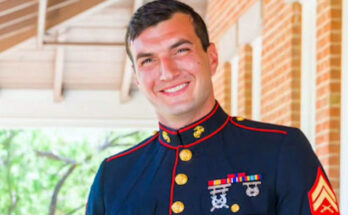
Now preparing for its seventh year overall, the event has been hosted by the Safford Lions Club for the past six years. Event chairperson and U.S. military veteran Mike Garcia reflected on the history and purpose behind the initiative, which originally began under SEABHS (Southeastern Arizona Behavioral Health Services) from 2013 to 2017 before being revived by the Lions Club in 2020.
“One of the reasons why we started doing it is because the people that have mental health issues were always tucked away underneath in a corner,” Garcia said. “What SEABHS wanted to do was bring it out and stop the stigma of mental health issues. It started out as a picnic, and Mark—Craig’s brother—had the bright idea and said, ‘Hey, let’s make it a 5K run.’ We collaborated with EAC; they have been our go-to for the course. I’ve been honored since 2020 to be able to start it up again, and with the help of the Lions Club, this is what we’ve been doing for the last six years.”
Garcia noted that because funds had not been distributed over the previous three years, the committee accumulated $15,000 to allocate to four key entities doing critical work in the community.
Supporting Graham County Wellness Court ($5,000)
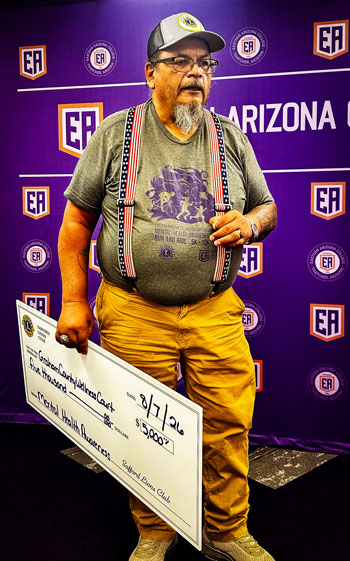
The Graham County Wellness Court received $5,000 to assist participants recovering from substance use and underlying mental health struggles as they work toward education and long-term stability.
Mike Kenehan of Graham County Probation emphasized how vital these non-traditional funds are for filling financial gaps that federal aid or other grants cannot cover.
“A few years ago, the recovery court got a check, and we have one HVAC graduate, and we have four or five others that are currently enrolled in college,” Kenehan explained. “A lot of our people qualify for FAFSA, so we use this money to help fill the gap… All of this money goes to helping those in recovery.”
Kenehan highlighted the seamless partnership between probation, the Lions Club, and Eastern Arizona College, noting that the ultimate focus has shifted toward building sustainable lives.
“Whether it’s a GED, a college certification, or an associate degree—it lasts forever,” Kenehan said. “We can’t provide housing, we can’t change the world for them, but we can give them a foundation to do whatever they want to do next.”
Addressing the origin and success of the program, Kenehan noted that Graham County Superior Court Judge Michael Peterson established the specialized court years ago after identifying that many individuals facing legal troubles were self-medicating co-occurring mental health conditions.
“The wellness court’s recidivism rate is lower than the recovery court’s,” Kenehan reported. “We probably have at least 80% to 85% of our participants we don’t see again, at least in the next three to five years. The transformation is just amazing within a few short months of participating in the program.”
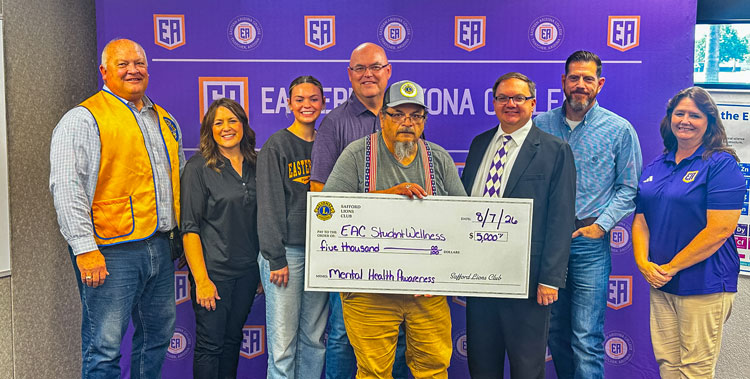
Sustaining EAC Student Mental Health ($5,000)

Eastern Arizona College’s Counseling Department received $5,000 to ensure students experiencing mental health crises or financial distress can access professional counseling without interruption.
Craig Smith, representing EAC, shared how directly the funding affects struggling students on campus.
“I wish that you could sit in my seat every once in a while when you are with a student who is in trouble, is hurting, doesn’t have insurance, or is underinsured,” Smith said. “They can leave your office with some hope because there is someone that they can go and see that could help them, and it’s covered—it’s paid for. They don’t have to worry about that. That’s such a relief for them, and oftentimes just even that by itself lifts them and gives them hope where they can go and get the help that they need.”
Smith expressed gratitude to Garcia for leading the annual run and ride, noting that in prior years, access to these funds directly prevented at-risk students from dropping out of school.
Empowering Women at Caring Hearts Home ($2,500)
Caring Hearts Home for Women, a sober-living facility open for just over a year, received $2,500 to expand its health, wellness, and reintegration programming for women transitioning out of incarceration.
Kathy Grimes, a representative for Caring Hearts, shared how the home fosters community connection, noting that the organization recently hired one of its own residents as house manager.
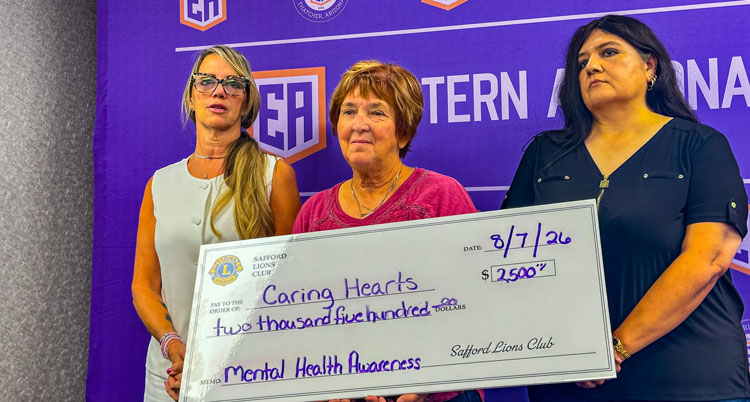
Recovery Specialist/Behavioral Health Technician Kristen Johnson detailed the unique hurdles women face post-release, including sudden technological shifts and physical health challenges that can trigger relapse.
“When women get out of prison, they tend to gain a lot of weight, and it’s a trigger—a huge part of relapse,” Johnson said. “So along with mental health wellness, we’re going to start doing some wellness courses. We’ve actually already got equipment… bring in some nutrition classes, and just different things that will benefit them.”
She added that navigating life after incarceration requires intense hands-on support.
“I had to scan a QR code, and I’d never seen one before,” Johnson said. “It was a whole meltdown. You need help, you need support when you get out, so that’s what these funds are going to be able to do.”
In its first year, Caring Hearts has celebrated several graduations, with former residents securing independent housing and management roles in the local workforce.
Reducing Recidivism with Sunrise Re-Entry ($2,500)
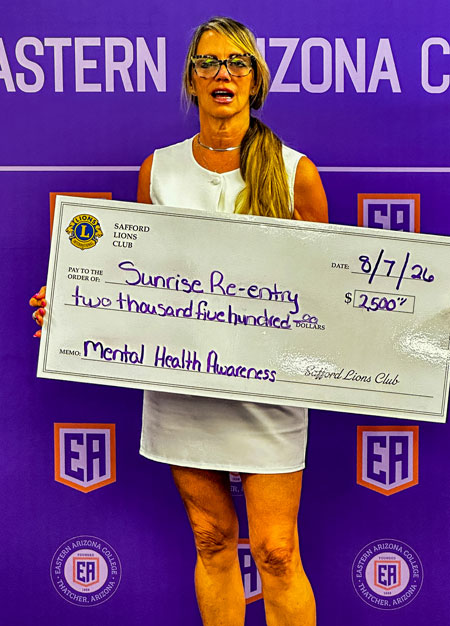
The Sunrise Re-Entry Program received $2,500 to support its community-based initiatives serving individuals transitioning from jail or prison back into Graham County.
Re-Entry Coordinator Kristen Johnson shared compelling statistics on the impact of community re-entry programs compared to state averages.
“There is a study that shows that about 38% to 39% of people in Arizona go back within three years of incarceration,” Johnson stated. “People that do community programming like the Sunrise Program or Yavapai Reentry Program are at about 17%. The vast majority of people that get out of prison have mental health issues—that’s what leads to drug abuse, or the drug abuse leads to mental health issues.”
Johnson noted that the funds will support case management, life-skills training, and connections to community behavioral health providers, helping participants at facilities like the House of Hope build stability.
“This money is going to be put to good use because even if they’re not in drug court, a lot of us have mental health issues,” Johnson said. “We’re able to work with our community partners and give them the help they need.”
Looking Ahead
The Safford Lions 5K & 10K Run & Ride for Mental Health Awareness takes place annually every October at EAC’s Discovery Park Campus, featuring a scenic course, a competitive hill, and options for runners, walkers, BMX riders, and mountain bikers. Proceeds from future races will continue to directly benefit mental health and recovery resources across the Gila Valley.