


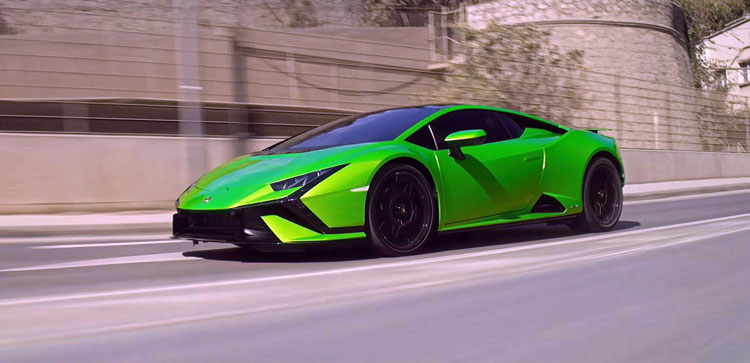
The final naturally aspirated V10 supercar became legendary at a decisive moment in performance-car history. Turbochargers, hybrid assistance, and emissions legislation were changing how manufacturers delivered speed. This car preserved a more direct relationship between accelerator movement and forward motion. Its appeal extends beyond acceleration figures. Rising revs, immediate responses, and physical feedback give drivers a clear sense of what the machinery is doing beneath them.
A Rare Formula
Collectors pay close attention to the last naturally aspirated models because their mechanical qualities are not easily reproduced. A linear power curve, immediate throttle response, and a rising exhaust note create a level of involvement that newer systems often filter out. The Lamborghini Huracan Tecnica combines those traits with rear-wheel drive, a 5.2-liter V10, and usable road manners. That combination gives the car genuine historical weight.
Speed and Acceleration
The Tecnica produces 631 horsepower and 417 pound-feet of torque. A seven-speed dual-clutch gearbox sends that output to the rear axle. Factory figures include a 0-to-60-mile-per-hour time of about 3.2 seconds and a top speed of 202 miles per hour. Acceleration builds continuously as engine speed rises, without a sudden interruption.
Power Without Interruption
Turbocharged power can feel immense, although its delivery follows a different pattern. Here, pressing the accelerator produces an immediate response, then a stronger thrust as revs climb. There is no pause while exhaust pressure builds. That continuity helps a driver place the car accurately on a road. Every movement feels proportional, making speed easier to judge and corners easier to approach with restraint.
Rear-Drive Character
Rear-wheel drive gives the chassis a precise balance. Steering inputs produce clear changes in direction, while the rear axle helps the car rotate under controlled throttle. Electronic assistance remains present, yet it does not obscure the underlying mechanics. Smooth hands and measured pedal pressure bring the best results. This arrangement rewards judgment instead of masking mistakes with constant intervention.
A Sound That Cannot Be Recreated
The exhaust note emits a restrained metallic tone before gathering intensity. Near the upper reaches of the rev range, it becomes sharp, urgent, and unmistakable. Electric motors can supply instant torque, but they cannot reproduce that gradual acoustic climb. Sound affects perception as much as speed. It tells the driver how hard the power unit is working and makes each acceleration run feel involving.
Purposeful Exterior Design
The bodywork gives the Tecnica its own identity without adopting the STO’s uncompromising appearance. Larger front openings support airflow management, while a fixed rear spoiler contributes stability at speed. A reshaped diffuser and hexagonal exhaust outlets strengthen the rear design. The value of these elements becomes apparent when the car changes direction quickly or carries speed through a long bend.
A Comfortable Experience
The cabin keeps its angular architecture and driver-centered control layout. Digital instruments display speed, engine revolutions, and operating information within a direct line of sight. Alcantara, leather, and carbon fiber provide support without turning the interior into a bare competition cell. Phone integration and onboard telemetry add practical value. The result suits longer journeys, where comfort matters as much as outright pace.

More Than a Faster Lap
A hybrid supercar may accelerate faster and post quicker lap times. That advantage does not diminish the Tecnica’s importance. Stopwatch results measure output, while response and feedback shape confidence. This car asks its driver to participate in every corner. Brake pressure, steering angle, and throttle position remain legible. Such clarity creates a deeper connection than speed alone can provide.
Everyday Usability
The car remains credible away from a circuit. Strada mode moderates responses for everyday driving, while Sport mode allows greater chassis movement and sharper responses. Corsa mode prioritizes control during committed driving. This range gives the owner several useful personalities without diluting the central experience. A quiet road can reveal the engine’s texture, while a demanding route exposes the suspension’s discipline.
Conclusion
The final naturally aspirated V10 supercar became legendary for preserving mechanical clarity amid a major shift in performance-car engineering. Its 631-horsepower engine, rear-drive balance, rising soundtrack, and usable cabin work together as one coherent package. Future models may deliver greater acceleration, yet this car will remain significant. It captures a vanishing formula in which speed, sound, and driver input remain closely connected.