

Safford Residents Demand Removal of Flock Cameras at Tense City Council Meeting
By Jon Johnson
SAFFORD — A standard Safford City Council meeting transformed into a heated debate over public surveillance on Monday evening, July 13, as a wave of local citizens utilized the “Call to the Public” segment to voice their anger over the city’s use of Flock Safety cameras.

Of the 11 residents who stepped up to speak, 10 strongly demanded the immediate removal of the Automated License Plate Reader (ALPR) system, citing deep-seated concerns over Fourth Amendment rights, data security, and a perceived lack of transparency from local government. Only one resident spoke in favor of keeping the cameras.
Following the passionate public testimony, the City Council promptly retired into an executive session that lasted approximately 50 minutes. Because Arizona open meeting laws prohibit council members from taking immediate action or debating items raised during the Call to the Public, no official votes were cast. However, Vice Mayor Arnold Lopez requested that city staff formally bring the issue back to a future meeting for public discussion and potential action.
Constitutional Concerns vs. Community Safety
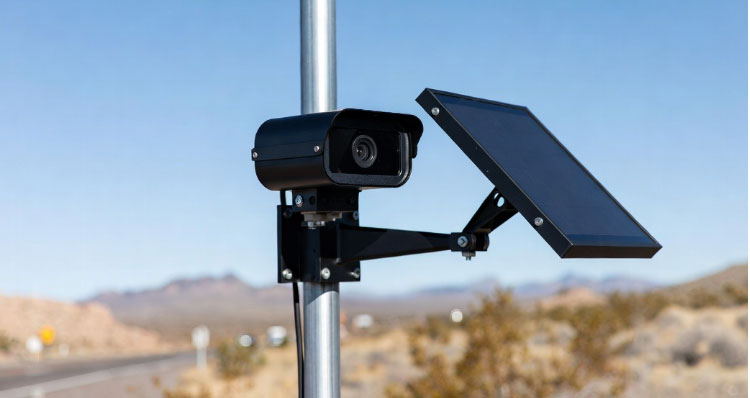
The controversial Flock system uses artificial intelligence to photograph vehicles and catalog unique identifying characteristics, such as license plates, vehicle make, color, and even minor physical damage.
For the majority of Monday’s speakers, the technology represents an unprecedented invasion of daily privacy. Resident Nicholas Marble, who praised the Safford Police Department as “firm but fair,” argued that the system fundamentally upends the American legal system.
“Normally, police investigate someone because they have reasonable suspicion or probable cause. Flock reverses that: Everyone is recorded first, investigations happen later,” Marble stated. “We are not Memphis, Detroit, or Baltimore. We should not normalize permanent mass license plate surveillance in a town that is already comparatively safe.”
Marble also pointed to high-profile out-of-state misuses of the technology as cautionary tales, citing a case in Kansas where a police chief resigned after allegedly searching his ex-girlfriend’s plate 228 times, and another in Ventura County, California, where outside federal agencies accessed local data hundreds of thousands of times without local authorization due to a configuration error.
Another resident, Dave, expressed deep frustration with the council’s lack of public consultation before implementing the system, which currently consists of 32 cameras and costs $96,000 annually.

“This council has forced everyone in this city to live under a mass surveillance network. You didn’t consult or even notify the public,” Dave said. “If I am suspected of a serious crime, it shouldn’t be any problem for [the police] to go to a judge and get a warrant. Outside of that, nobody is entitled to these kinds of details about my life.”
Local business owner Nathaniel Zip Mueller echoed the sentiment, drawing on historic American principles. “We just celebrated 250 years of independence, and one of my favorite quotes, actually by Benjamin Franklin, says: ‘Those who would give up essential liberty to purchase a little temporary safety, deserve neither liberty nor safety.’“
Proponents Defense: “An Essential Investigative Lead”
The lone voice of support during the evening came from Trinity Bejarano, a Safford business owner and registered nurse with over 20 years of experience. Bejarano argued that the evidence overwhelmingly proves that Flock cameras save lives.
“Flock cameras are not surveillance cameras that track people. They are automated license plate readers designed to identify vehicles associated with crimes, stolen vehicles, missing persons, and Amber Alerts,” Bejarano argued. “The purpose is to provide law enforcement with an investigative lead, not to monitor law-abiding citizens.”
Bejarano highlighted recent national successes, including the recovery of an abducted infant in Indiana and six missing children in Colorado. She reassured the crowd that Safford police leadership operates under strict auditing guidelines, under which every search must have a documented law-enforcement purpose, and any misuse would result in severe disciplinary action or loss of officer certification.
How Other Communities Are Responding
The debate in Safford mirrors a rapidly growing national pushback against private surveillance networks. During the public comment session, speakers noted that several municipalities are reconsidering their contracts.
In Oshkosh, Wisconsin, the city council recently rescinded its Flock agreement immediately after discovering misrepresentations regarding data ownership. Just days ago, Los Angeles, California, canceled its contract with Flock altogether. Similar policy reevaluations have cropped up across Arizona, including in Cave Creek, where town attorneys were recently directed to draft strict local guidelines to limit how long Flock data is retained and prevent outside agencies from mining resident movements.
Retired military veteran Matthew Valderrama suggested a middle ground: transition away from a private, for-profit vendor and build a localized, municipal alternative.
“My concern is the city’s reliance on a private for-profit vendor to own and operate the surveillance infrastructure,” Valderrama said. “Who owns this vast database of where we go every day? Flock Safety has proven time and time again that it’s not the local municipality. A system that is owned and operated by the City of Safford would be a true public safety asset.”
Flock’s Footprint in the Gila Valley
The debate comes as Flock technology continues to expand across southeastern Arizona. Safford originally approved a $285,000 state grant from the Arizona Department of Emergency Management to cover the multi-year program.
The Safford Police Department’s policies—as presented by Police Chief Brian Avila in past council work sessions—require that the cameras undergo regular audits, and that captured data is automatically redacted and deleted after one year unless actively tied to an ongoing criminal investigation.
While Safford remains the local lightning rod for the issue, they are not alone. Neighboring agencies, including the Graham County Sheriff’s Office, previously received authorization to acquire Flock ALPR systems, and several other Arizona communities have quietly integrated the technology.
With municipal elections looming, Safford residents warned council members that their stance on the cameras could ultimately decide their political futures. The Safford City Council is expected to schedule a formal agenda item to address the Flock contract in the coming weeks.