


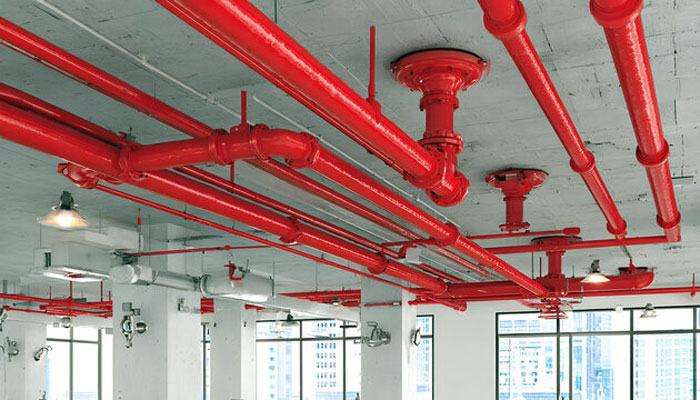
Commercial fire sprinkler inspections rarely make anyone’s favorite task list, but skipping them creates a liability that surfaces at the worst possible moment: during a fire marshal walkthrough, an insurance renewal, or worse, an actual fire. Phoenix metro property managers and restaurant operators juggle a lot of compliance paperwork, and fire protection systems tend to get pushed to the bottom of the pile until an inspection tag expires or a lender asks for documentation.
That reactive approach is expensive in ways that have nothing to do with money: lost tenants, closed dining rooms, and code violations that follow a property through every future sale. A single expired tag discovered during a routine walkthrough can trigger a re-inspection of every other system on site, turning a five-minute fix into a multi-week scramble involving three or four separate vendors.
Armor Fire Pro is a fire protection contractor providing sprinkler installation, inspection, and repair services across six Phoenix-area cities: Phoenix, Tempe, Gilbert, Mesa, Chandler, and Scottsdale, primarily serving commercial property managers and restaurant operators who need recurring compliance work rather than one-time residential calls. That distinction matters more than it sounds.

A company built around one-off homeowner service calls approaches scheduling and documentation very differently than one built around properties that need inspections on the same calendar, year after year, with paperwork a compliance officer can actually use. A homeowner service call is usually a single visit with a single invoice. A commercial account needs a recurring schedule, a history of prior findings, and records that line up with whatever a lender, insurer, or fire marshal asks to see next.
How Often Does a Commercial Fire Sprinkler System Need to Be Inspected?
Most commercial sprinkler systems in Arizona need a combination of monthly, quarterly, and annual checks, with the specific interval depending on the component. A gauge check on a dry pipe or preaction system is typically a monthly task, and it is often quick enough that a technician can handle several properties in a portfolio in a single morning.
A full inspection of sprinkler heads, valves, and control equipment usually happens quarterly, covering things like corrosion on exposed piping, obstructed heads in storage areas, and whether control valves are locked or supervised in the open position. Then there is the annual internal inspection, along with less frequent deep checks such as a five-year internal pipe obstruction investigation, where a technician opens sections of pipe to look for sediment, scale, or biological growth that could restrict water flow during an actual fire.

Restaurant kitchens carry an added layer: hood suppression systems generally need semiannual servicing regardless of how the dining room’s sprinkler schedule is set up. Consider a strip mall restaurant in Mesa with a fryer line and a charbroiler: the hood system needs a mid-year and end-of-year service call to check the nozzles, fusible links, and manual pull station, entirely separate from whatever schedule governs the sprinklers above the dining room. The problem for a lot of property managers is that these intervals do not line up neatly on one calendar.
A building might have sprinklers due in March, a kitchen suppression system due in April and October, and backflow testing due whenever the local water authority requires it. Without a contractor tracking all of that in one place, it is easy for one system to lapse while another stays current, and a fire marshal will flag the lapsed one regardless of how well everything else looks.
| Fire Protection Component | Typical Inspection Interval | Who Usually Requires It |
| Sprinkler heads and valves | Quarterly | Local fire code |
| Fire extinguishers | Monthly visual, annual service | Fire code and insurance |
| Kitchen suppression system | Semiannual | Health and fire code |
| Backflow prevention device | Annual | Water authority |
| Fire alarm system | Annual | Local fire code |
| Internal sprinkler pipe inspection | Every five years | NFPA guidance |
A senior technician at the company put it plainly: “Most of the violations we see on a walkthrough are not because a system failed. They are because nobody tracked the date, and by the time someone noticed, the tag had already expired.” That gap between “the system works fine” and “the paperwork is current” is where most compliance headaches actually live, and it is also the easiest one to close with a contractor who handles multiple service lines under one scheduling system.
In practice, that often looks like a single spreadsheet or portal entry per property showing every due date across sprinklers, extinguishers, kitchen suppression, alarms, and backflow, rather than five separate reminders scattered across five vendor relationships.
For a property manager overseeing several buildings, or a restaurant group with locations spread across Chandler, Gilbert, and Scottsdale, consolidating sprinkler inspection, kitchen suppression, extinguisher service, alarm testing, and backflow testing with Armor Fire Pro removes the coordination problem entirely.
Instead of managing separate vendors on separate schedules, a single point of contact can track every due date across a portfolio and flag what is coming up before it becomes a violation. That kind of consolidation is also what turns fire protection from a recurring scramble into a predictable line item that a facilities budget can actually plan around, since one contractor invoicing on a known cadence is far easier to forecast against than five vendors billing on five different timelines.
What Should a Property Manager Look for When Choosing an Inspection Company?
The first thing to check is whether the company handles the full range of systems a commercial property actually has, not just sprinklers in isolation. A building with a kitchen, a fire alarm panel, extinguishers in every hallway, and a backflow device on the water line needs a contractor who can service all of it, because coordinating separate vendors for each system multiplies the chance that something slips through the cracks. A property with four separate vendors has four separate chances for a scheduling miss; a property with one has exactly one calendar to watch.
Responsiveness is the second factor, and it shows up in small ways before it ever becomes a real emergency. Does the company return calls quickly when a system needs a repair between scheduled inspections? Can they get a technician to a Tempe strip mall or a Mesa restaurant on short notice if a sprinkler head activates accidentally or a suppression system needs a reset after a kitchen fire?
An accidental head discharge is not just a mess; it takes the entire zone out of service until a technician replaces the head and resets the system, which means a restaurant or retail space may need to close until that repair happens. A contractor that treats service area as a real commitment, rather than an afterthought stretched across the entire Valley, tends to answer that question faster.
Documentation is the third piece, and it is the one that gets overlooked until an insurance auditor or a fire marshal asks for it. Inspection reports need to be specific enough to show exactly what was checked, what passed, and what needs follow-up, with dates that match the property’s actual compliance calendar.
A property manager should be able to hand over a folder of inspection records during a lease renewal or an insurance review without scrambling to track down a technician who did the work eight months earlier. Buyers and lenders in a commercial real estate transaction routinely ask for two or three years of inspection history before closing, and a property that cannot produce it can see a deal slowed down or repriced over a paperwork gap that had nothing to do with the actual condition of the system.
Fire protection compliance in the Phoenix area is not going away, and neither is the administrative burden that comes with tracking multiple systems across multiple properties. The property managers and restaurant operators who handle it best are usually the ones who treat it as a scheduled, recurring service relationship rather than a series of separate emergencies.
Whether the building is a single storefront in Chandler or a multi-location restaurant group spanning Gilbert to Scottsdale, the fundamentals stay the same: know the inspection intervals, keep the documentation organized, and work with a contractor who can be reached quickly when something needs attention outside the routine schedule. Getting that structure in place once tends to save far more time than dealing with a lapsed tag during a walkthrough ever will, and it turns fire protection from a recurring source of stress into one of the more predictable line items on a facilities calendar.