

Gila Herald Staff Reports
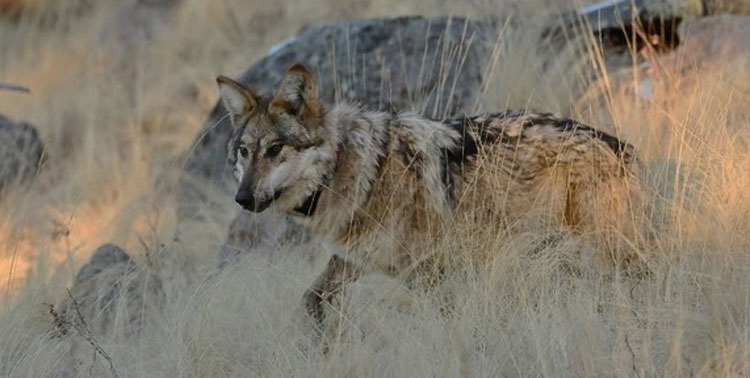
WASHINGTON, D.C. — President Donald Trump has signed an executive order directing the U.S. Department of the Interior to consider removing Endangered Species Act (ESA) protections for gray wolves and Mexican gray wolves, sparking strong reactions from Eastern Arizona agricultural leaders and national conservation organizations.

The directive instructs federal agencies to review the recovery status of wolf populations with an eye toward delisting them and shifting management responsibilities to state wildlife agencies. The order also calls for recommendations on legislative actions to strip federal protections, encourages agencies to evaluate state-level species laws, and directs federal officials to reassess evidentiary standards used to verify livestock predation.
Local Agricultural Leaders and Ciscomani Welcome Directive
U.S. Rep. Juan Ciscomani (R-AZ06) applauded the executive order as a necessary step to relieve financial and operational burdens on rural communities in southeastern Arizona.

“For years, ranchers across rural Arizona have dealt with the consequences of a federal wolf reintroduction program without adequate relief,” Ciscomani said. “Their livelihoods are directly threatened by an animal the federal government put back into their communities, and it’s long past time this policy got a serious, honest review. Government bureaucracy cannot stand between ranchers and their way of life. That’s why I co-sponsored the WOLF Act to ensure ranchers are fully compensated for livestock killed or harmed by these wolves, and it’s why I’ll keep fighting for the ranching families who have carried this burden for far too long. I want to thank President Trump, Secretary Burgum, and Secretary Rollins for their leadership on this issue and for standing with our ranchers.”
Local ranchers and agricultural organizations echoed Ciscomani’s support, pointing to uncompensated losses and escalating depredation. Ben Menges of Menges Ranch in Safford noted that eastern Arizona producers have faced long-term herd impacts.
“The 28-year history of the Mexican Gray Wolf is one which has decimated the cow herds in the areas where the federal government has chosen to place the wolves,” Menges said. “For too long, our state has watched the suffering of eastern Arizona ranchers and their livestock with little-to-no recourse or care from government. This changes today, with this executive order. Protecting endangered species should not mean the destruction of both cattle herds and the lives of ranching families.”
Dalton Dobson, a public lands rancher, and John Boelts, president of the Arizona Farm Bureau, also praised the move, describing state-led management as a crucial transition to protect cattle operations. Arizona Cattle Growers Association Executive Director Suzanne Menges highlighted growing concerns in Greenlee County, where ranchers report an increase in wolves targeting mature breeding cattle alongside young calves.
Conservation Groups Warn of Genetic Risks and Legal Action
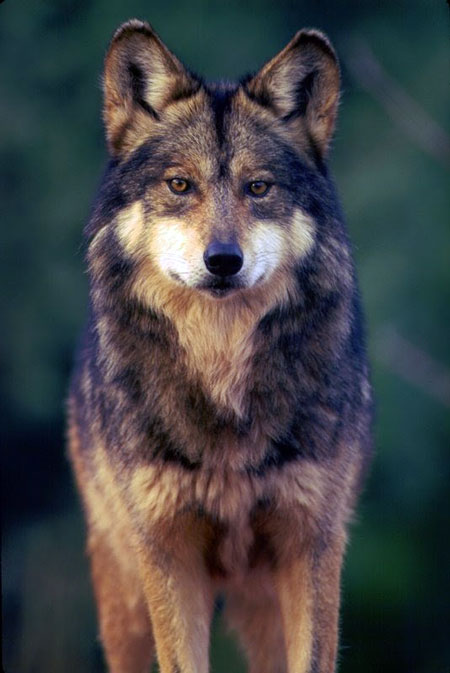
Conversely, environmental advocacy organizations criticized the executive order, arguing that the wild Mexican gray wolf population remains fragile and genetically compromised.
“Mexican wolves aren’t the problem, but the administration’s approach to solving purported conflict is,” said Regan Downey, director of education and advocacy at the Wolf Conservation Center. “If the administration truly wanted to support ranchers, they would prioritize increasing funding for non-lethal initiatives to create long-lasting solutions.”
Wildlife groups noted that despite reaching 317 wolves in the wild during the last annual winter census, the population suffers from low genetic diversity stemming from the seven original captive foundation wolves used to rescue the subspecies from extinction.
“With just 317 wolves in the wild and a population still facing serious genetic challenges, weakening federal protections now would put decades of recovery work at risk,” said Claire Musser, executive director of the Grand Canyon Wolf Recovery Project. “Decisions about the future of lobos must be based on the best available science and what these wolves need for long-term recovery, not political pressure.”
Legal action is expected following the directive. Michael Robinson, a senior conservation advocate at the Center for Biological Diversity, signaled that environmental groups will challenge any formal rule changes in federal court.
“We’re prepared to prove in court that downlisting Mexican wolves and a steep increase in killings would not only be cruel but also deeply unwise and illegal,” Robinson said.