
Gila Herald Staff Reports
SAFFORD — Local youth are proving that the future of space exploration is burning bright right here in the Gila Valley.
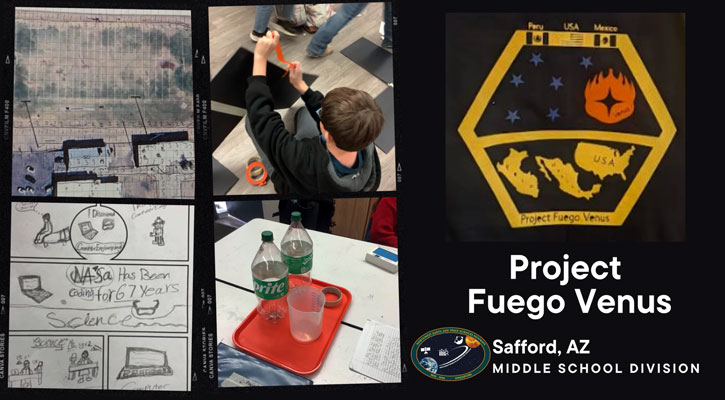
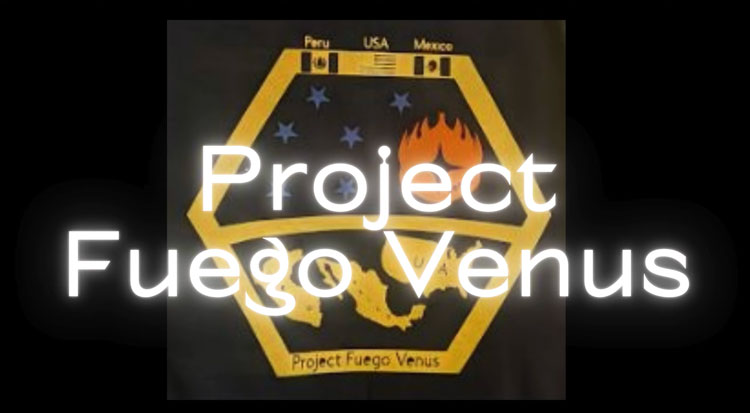
NASA’s Northwest Earth and Space Science Pathways (NESSP) recently concluded its 2025-2026 ROADS from Earth to Venus National Challenge, and Safford was heavily represented on the national stage. Among the standout competitors, Safford’s middle school team, Project Fuego Venus, earned national acclaim, officially named a top team for its outstanding participation and exemplary Mission Development Logs.
Over the course of the academic year, more than 500 students across 118 teams from eight states participated in the grueling STEM challenge. Safford sent an impressive contingent of five local teams to compete across the middle and high school divisions, going head-to-head with student innovators from across the country.

Safford Teams Take On the Challenge
Safford’s heavy presence in the competition highlighted the community’s strong commitment to STEM (Science, Technology, Engineering, and Math) education. The local teams who answered the call to explore our neighboring planet included:
Middle School Division
- Project Fuego Venus (National Top Team Recognition)
- Evening Star Navigators
- The Copper Constellation
- Morning Star Mavericks
High School Division
- Las Estrellas
All students who put in the work to complete the challenge will receive an official NASA recognition patch to commemorate their scientific achievements.
Becoming Part of the Mission
The ROADS (Rover Observation and Discoveries in Space) framework requires students to act as real-world engineers and scientists. Throughout the school year, the teams had to conquer eight distinct, complex mission objectives inspired by NASA’s upcoming research into Venus.
Rather than standard textbook work, Safford students built models to map out carbon cycles on Earth and Venus, and conducted environmental experiments to understand the greenhouse effect. They even took to the skies, utilizing camera-mounted kites to simulate NASA’s aerial remote sensing operations, and programmed robotic rovers to navigate harsh, simulated Venusian terrain.

NESSP Director Dr. Darci Snowden, a physics professor at Central Washington University, praised the dedication of this year’s participants, noting they faced an exceptionally broad set of goals.
“The ROADS Challenge gives students the opportunity to do more than learn about NASA missions — they become part of the mission,” Snowden said. “Without the promise of a major prize, these students participated because they were curious, motivated, and eager to learn. By investigating authentic mission challenges… students develop the confidence and skills needed to see themselves as future scientists, engineers, educators, and explorers.”
Exemplary Recognition
A critical component of the competition was documentation. Teams were required to keep meticulous “Mission Development Logs”—highly detailed scientific diaries tracking their formulas, engineering iterations, data collection, and team reflections.
Project Fuego Venus’s logbook stood out among hundreds of entries across eight states, earning them one of the few coveted “Top Team” spots in the Middle School Division alongside teams from Washington, Montana, and Oregon.
Highlights from the competition, including the work of our local Safford students, can be viewed during the Virtual Recognition Ceremony on the NESSP YouTube channel (@nwessp).
For local educators, families, or community organizations inspired by the success of these students, the educational resources, manuals, and information for future ROADS challenges are entirely free and available at The Northwest Earth and Space Science Pathways Website.