
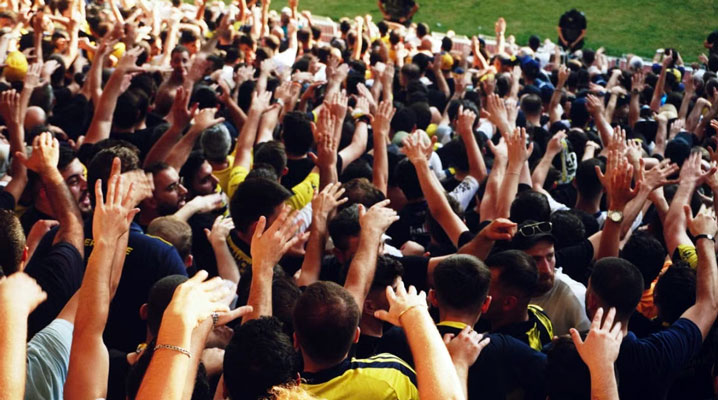
Ever watched 60,000 people try to leave a stadium at the exact same second?
It is never pretty.
Venues spend months meticulously planning fan entrances. Turnstiles, bag checks, staggering gate times, adding more staff at the biggest entrances. Then comes the final whistle… and none of it matters.
Here’s the problem:
Check-in takes two or three hours. Check-out takes about fifteen minutes.
That traffic jam squeeze is why up to 80% of fans say they leave a game early just to avoid the traffic. It’s also why so many fans recall their walk to the car more than the game they just attended.

The good news?
Crowd flow after games isn’t permanent. It doesn’t require a stadium rebuild or massive tech investment. It just takes a plan, some inexpensive tools, and employees who know the plan.
What you’ll uncover:
- Why Leaving Is Harder Than Arriving
- What A Messy Exit Really Costs
- How Wave Release Works
- Fixing The Choke Points Outside
- Testing Your Exit Plan
Why Leaving Is Harder Than Arriving
Arrival times stagger themselves. Some fans arrive three hours early for the tailgate. Others roll in right at kickoff. Some even stroll in late. The crowd spaces itself out with zero effort.
Departure is different. Everyone rises together and heads toward the closest exit as one.
But here’s the thing…
The closest exit is often not the correct exit. Fans funnel back towards the entrance they walked through, even when it would take them outside twice as fast if they would just go to the closer door. Without signage directing people somewhere specific, people will naturally follow the path of least resistance.
That is where zone control comes in, and it’s also where numbered wristbands for events start doing real work. Once every fan is banded at the gate by section, lot, or shuttle bay, the exit crew can empty the building in an organized fashion that actually makes sense. Basic custom paper wristbands can be pre-printed with a zone number, a color, or a gate letter so one anonymous crowd can become four or five smaller crowds that can be moved independently of each other. Numbered wristbands for events cost next to nothing per person, but they give your team something invaluable: control.
What A Messy Exit Really Costs
A bad exit is not just annoying. It hits you in three places.
Lost sales. Fans skipping out during the third quarter aren’t purchasing a round of drinks or a hoodie while they head to their cars. Each early departee represents lost revenue walking out the door.

Damaged reputation. The final twenty minutes become the conversations happening on Monday morning. In one survey of UK drivers, 84% reported parking stress that diminished their experience of a paid admission event.
Legitimate safety hazard. Crowds become dangerous when large numbers of people reach a confined space. The majority of crowd disasters occur at the point of a bottleneck rather than in the open field.
It even happens to the biggest stars in the world. During a recent World Cup match held in Kansas City, 69,000 fans hit delays so bad that some missed their midnight ride home.
How Wave Release Works
Wave release is the foundation of proper egress. Rather than releasing everyone at once, the venue empties in waves.
Here’s how it works:
- Split the seating bowl into zones that match your exits
- Give each zone a colour or number at the gate
- Release the zones closest to the exits first
- Hold the remaining zones for two or three minutes each
- Repeat until the bowl is clear
Sounds slower, right? It is not.
Jammed doorways are slower than a continuous flow of people. At lower densities, walking speed increases. Everyone exits the building more quickly than they would if it were a free flow.
Match The Zone To The Ride Home
The best venues never segment people by seat. They segment them by transportation method home.
Split the crowd into groups like:

- Car park A, B and C
- Rideshare pick-up
- Shuttle and bus bays
- Train or tram station
- Walking routes
Release order can now be determined by what is ready outside. If the shuttles are still loading, hold that zone. If lot C is already empty, send them first. Numbered wristbands for events allow this. Staff can easily see who should be in which wave.
Keep The Streams Apart
Pedestrian ingress and pedestrian egress should never be next to each other. Neither should pedestrians and automobiles.
Employ barriers, cones and personnel to create separate streams. Counterflow will turn an orderly crowd into a dangerous crowd in a hurry.
Fixing The Choke Points Outside
Here’s something a lot of organizers forget…
Construction of the building is only part of the solution. The majority of the holdup occurs in the parking area and surrounding roadways.
Walk the route yourself before event day. Look for:
- Gates that narrow suddenly
- Stairs and ramps that merge into one path
- Single-lane exits onto a main road
- Pedestrian crossings that block traffic
Then work on fixing what you can. Technology can assist with this as well. Adding a parking guidance system cut one major stadium garage’s circulation time by 40% during peak periods.
Simple stuff works too. Opening an additional exit lane, temporarily converting a two-way street to one-way for 40 minutes, or stationing officers at the worst intersection can cut significant travel time.
Signage, Staff And Announcements
People follow instructions when the instructions are clear.
Your signage should correspond to whatever is on the wristbands. If a fan sees a green band, there should be green signs, green staff vests, and green announced over the PA. Consistency eliminates thought, and eliminating thought quickens everything.
Your exit crew needs to know:
- The release order for the night
- Which routes belong to which zone
- Where to stand and what to say
- Who to radio when something backs up
Brief them before doors open, not after the whistle.
Testing Your Exit Plan
No one would operate an event without testing ticket scanners. Treat the exit the same way.
Time how long it takes the bowl to clear. Monitor how many fans leave before the final minute. Survey staff as to where jams occurred and why. Implement a change for the next event and measure again.
Incremental changes add up. Two minutes here and three minutes there can easily turn a 45-minute departure into a 25-minute departure.
Bringing It All Together
Driving fans out isn’t sexy stuff, but it’s the last thing they recall about their night.
Plan the exit as thoroughly as you planned the entrance. Divide the crowd into sectors, corral them so staff can easily identify the sectors they’re managing, stage exits, and empty the bottlenecks outside of the building before the crowd arrives.
Take that step, and fans will stay until the final whistle; they spend more time before they leave the stadium and walk away thinking about the game, not traffic.
That is how a great event ends.