
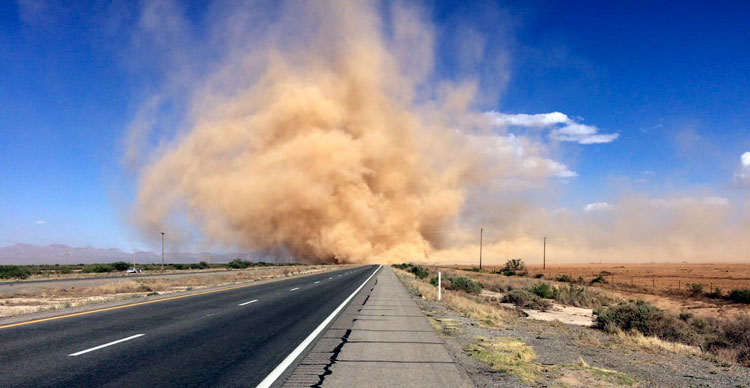
June is the start of summer fun for many.
For us in Arizona, June means relentless heat that goes on for weeks. But then the end of June sees dust dancing across Highway 70 and familiar dust devils. You look east towards the Pinaleño Mountains, and you see clouds that look like happy little cotton puffs, rolling around the sky.
But you know very well that they’ll turn to towering grey covers soon, and then, the cool rush of rain will hit the parched ground.
That’s the Arizona monsoon, and it’s a lifeline for all those who live in the eastern and southeastern parts of the state. The summer storms fill stock tanks and irrigation ditches. They give us temporary relief from the heat. But they’re also quite dangerous. They bring the risk of flash floods and wildfires, but if you’ve lived here long enough, it’s all part of normal life for you.
However, have you noticed that the monsoon season has felt different lately? It seems like we go a whole week with nothing but dust and then get only 3 inches of rain in a single afternoon.

Before, the monsoon would arrive like clockwork, and now, it’s either a dry spell or a drencher.
Nothing in between. How come?
Why Recent Seasons Feel Off
It feels like the monsoon has lost its rhythm and, when you’ve lived through the decades of the same summers, this is pretty unsettling.
Maybe you’ve noticed the monsoon season being late, or perhaps you remember that year when there was a big storm early on, but it was followed by 2 weeks of nothing but scorching heat.
And can we talk about the frustratingly local nature of the rain itself? Stafford could be bone dry while, at the same time, Thatcher could be drenched. These storms are so spotty, and the swings from one year to the next can make you dizzy.
This year could be record-breaking in terms of rain, and then the next one, it’s all dusters and hardly any rain.
You could say the weather is unpredictable and stop there.
But is it truly that, or is the problem our memory and the way it plays tricks with us? Meteorologists are after real answers based on facts, so they won’t go with their guts alone. They’ll check daily rainfall totals, humidity levels, and storm frequency to track changes.
They use structured climate datasets and a very accurate historical weather data API. What they’re finding is very interesting, actually; that unpredictability so many people feel is 100% real.
But that feeling has more to do with the timing and spacing of the storms, not so much with the amount of rain that falls per season.
What Could be Changing the Pattern
Here’s what scientists think could be behind these changes.
Warmer Oceans, Different Moisture Flow
You’d think that the oceans hundreds of miles away couldn’t affect how much rain falls in your yard in the Gila Valley, but you’re wrong. Our monsoons come from the Gulf of Mexico and the Gulf of California. When the sea surface temperatures change in the Pacific shift, it changes the patterns in the atmosphere that push moisture towards Arizona.
These ocean cycles can throw off the timing and intensity of summer storms here; they don’t just affect the weather in the winter.
Hotter Baseline Temperatures
Arizona’s getting hotter, there’s no way around it.
It’s warmed up 2 whole degrees in the last century, so it’s no wonder the monsoon season is different. Storms feed on that difference between hot ground and cool, moist air above, so when you crank up the baseline heat, the atmosphere becomes unstable.
This should mean more storms, but since the extreme heat dries out the soil faster and dry ground doesn’t release moisture back in the air like wet earth does, the situation gets weird.
The storms are technically there, but their fuel is not.
Growth and Land Changes Closer to Home
The landscape below the storms has changed, and that doesn’t go unnoticed.
There’s more pavement, more buildings, more rooftops, and all that concrete absorbs heat during the day and releases it at night. Meteorologists call these urban heat islands, and these pockets of warmth have an impact on storm formation. Sometimes, they can even split them and push them around.
Then there are those places, like parts of the Gila National Forest, that have been scarred by wildfires. When you have heavy rain falling on scorched ground, it doesn’t soak in; instead, it turns into flash floods.
So the same amount of rain that fell 30 years ago now has different results because the land has changed.
Conclusion
If you’re still waiting for a straight answer, get in line.
Even the scientists are in it, so, you know… It is what it is. The monsoon has always been a bit dramatic, although lately its timing has been more off than usual, so it’s not just you; everyone’s noticed it.
It’s not like it’s broken, though, you simply need to expect the unexpected because that seems to be the new normal now.