

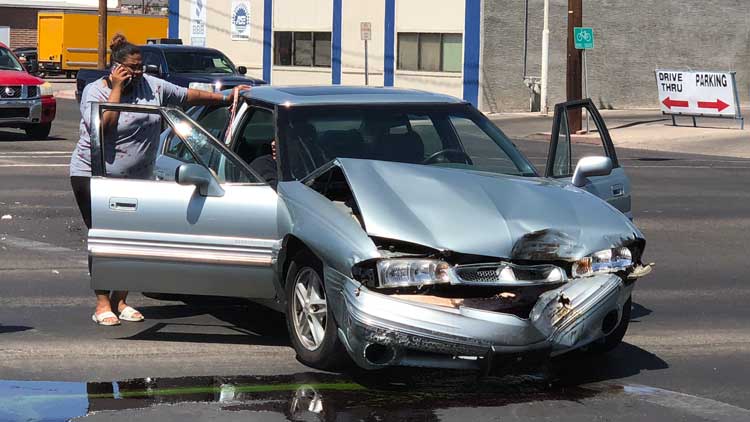
The drive from Safford to Pima takes about twelve minutes on a good day. It takes a lot longer when you’re standing on the shoulder of Highway 70 with a bent bumper, a clipboard, and no cell signal. I’ve talked to enough people in the Gila Valley to know the panic isn’t about the car. It’s about the phone calls that come next, and the sinking feeling that everyone on the other end already knows the rules except you.
Good news: the rules in a small Arizona town are simpler than they look, and most of the process happens on a predictable timeline you can track yourself. Here’s the walkthrough I’d give a friend at the diner in Clifton, from the moment of impact to the day the check clears.
Start With the Report, Not the Repair Shop
Your first instinct after a fender bender is to call a body shop and get a number. Resist that for a day. In Arizona, the crash report is the spine of everything that follows, and the responding officer’s version of events carries weight with insurers in a way your memory doesn’t. Ask for the report number before the officer leaves. Write it on your hand if you have to.
If nobody responds to the scene, which happens more than you’d think on rural stretches, you can file a report yourself through the Arizona Department of Transportation. The Arizona Department of Transportation handles crash records for the state, and having a filed report beats having a story you tell three different adjusters three different ways. I’d rather have a boring, official document than a vivid memory, every single time. Take photos before anything moves. Wide shots of both vehicles, the road, the sky, the mile marker. Close shots of damage and any skid marks. Those pictures cost you nothing and settle arguments you haven’t had yet.
Why the Insurance Call Feels Like a Trap
Here’s the part I’d tattoo on every driver’s forearm: the other driver’s insurer is not on your side, and the friendliness on the phone is a technique, not a personality. Adjusters are trained to get a recorded statement early, before you’ve seen a doctor or had the car looked at, because an early statement locks in your version of events and your estimate of how hurt you are.
You’re not required to give a recorded statement to a company that doesn’t insure you. You can say, politely, that you’ll follow up in writing. Then do that. Keep every text, email, and voicemail. The Federal Trade Commission publishes plain language guidance on how insurers and debt collectors are allowed to treat you, and it’s worth twenty minutes before you take another call.
Two things happen when you slow the conversation down. Your medical picture gets clearer, and the insurer’s first offer usually gets better. Neither of those is a coincidence.
When the Numbers Stop Making Sense
Minor crashes usually settle without much drama. The trouble starts when the math runs past the other driver’s policy limits, which in a town full of older trucks and minimum coverage is more common than people expect.
Arizona requires drivers to carry liability coverage, but the state minimums are low enough that a serious injury can blow past them in a single hospital stay. That gap is where most disputes live. It’s also where a personal injury attorney earns their keep, because uninsured and underinsured motorist coverage, stacked policies, and commercial vehicle rules all come into play at once, and the order you pursue them changes the outcome.
I’ve watched people try to manage a three-insurer negotiation on their own while recovering from a broken wrist. It goes badly. Not because they’re not smart, but because they’re exhausted and the deadlines don’t care.

The Timeline That Actually Matters
Arizona gives you two years from the date of injury to file a lawsuit in most injury cases, and that clock starts on the day of the crash, not the day you realized your back was still hurting. Miss it, and the claim is gone regardless of how strong it was.
Insurance companies also have their own internal clocks, and they’ll move fastest in the first two weeks, when you’re least prepared. Expect a settlement offer within a month. Expect it to be low. Expect a second, better offer once you have treatment records in hand.
Here’s a rough order that keeps you from scrambling:
- Get the crash report number the same day.
- See a provider within 72 hours, even if you feel fine.
- Photograph everything, including your own injuries over time.
- Notify your own insurer, since your policy may cover the gap.
- Hold off on recorded statements until you know your full treatment picture.
- Keep a single folder, physical or digital, with every document in date order.
That last step sounds trivial. It isn’t. The person with the tidy folder almost always gets treated more seriously than the person reconstructing a timeline from memory in month four.
The Highway 70 Problem Nobody Warns You About
Rural crashes have a wrinkle that city crashes don’t: witnesses disappear. A driver who stopped at the scene has somewhere to be, and by the following week they’re three towns away and not returning calls. Get names and numbers at the scene, not later. If someone hesitates to share, that hesitation is information too.

Road design matters as well. Two-lane highways with farm equipment, tourist traffic, and long sight lines invite passing decisions that go wrong fast. According to the Insurance Information Institute, fatal crashes are disproportionately concentrated on rural roads, which tracks with what anyone who drives these stretches already suspects. That context matters if fault is disputed, because it shapes how a claim gets investigated.
One more thing I’d tell anyone in Greenlee County: document the scene twice. Once the day of, and once a week later from the same angles. Skid marks fade. Signage changes. Lighting at 7 a.m. is not the lighting at 2 p.m., and if your case ever reaches a jury, that second set of photos does quiet work.
Doing It Yourself vs. Handing It Off
Most straightforward claims settle fine without help. If your car needs a bumper, you feel okay after a week, and the other driver’s insurer accepts fault, handle it yourself and keep the settlement. Hand it off when any of these show up: disputed fault, an injury that lasts past a couple of weeks, a commercial truck, a hit-and-run, or an insurer who stops returning calls.
Those are the cases where the process turns into a second job, and it’s a job with rules written by the people across the table. Your own policy’s underinsured motorist section is often the real money in a small town crash, and most people never read that page until someone points at it.
If you’re a year out and still negotiating, that’s a sign, not a phase.
Frequently Asked Questions From the Valley
Do I need a lawyer for a fender bender?
Usually no. Small property damage claims settle quickly when fault is clear. Save the phone calls and the contingency fee for cases where the injury keeps you out of work.
What if the other driver has no insurance?
That’s what uninsured motorist coverage is for, and it’s worth knowing whether you have it before you need it. Pull your declarations page today and read the coverage list. It takes five minutes.
How long does a claim take?
Simple ones wrap up in a few months. Contested fault or ongoing treatment can stretch past a year, and filing suit adds more time on top of that.
Keep the Folder, Keep the Clock
Everything in this process comes back to two habits: write it down, and watch the calendar. The report number, the photos, the treatment dates, the two-year deadline. Boring discipline beats clever argument almost every time in a small-town claim, because the paperwork is the argument.
So do the unglamorous thing this week. Find your declarations page, save it somewhere you’ll remember, and put the crash date in your phone with a note attached. Then ask yourself the question most people avoid until it’s too late: if someone else’s insurer called tomorrow with a number, would you actually know whether it was fair?