
Column By Mike Bibb
Islam is the state religion of Saudi Arabia. The kingdom is called the “home of Islam” as it was the birthplace of the Islamic prophet Muhammad, who united and ruled the Arabian Peninsula.[1] It is the location of the cities of Mecca and Medina, where Muhammad lived and died, and are now the two holiest cities of Islam.
Wikipedia, July 23, 2026
President Trump insists “Iran will never have a nuclear bomb.”
Now, there’s speculation that Saudi Arabia might eventually build one.
What?

Last time I checked, both Iran and Saudi Arabia were Arab countries practicing the Islamic religion. Islam is composed primarily of two subgroups — Shia and Sunni.
Actually, Saudi Arabia is the original country of Islam and its prophet Muhammad, and contains its two holiest cities.
Christianity, Judaism and other non-Islamic faiths are as compatible with Islam as oil is to uranium.
“Tolerance” is probably the correct word to use, as there is no way they are compatible with Islam. And, even tolerance is a borderline description.
Presently, Saudi Arabia may be a good friend and trading partner of the U.S., particularly in the oil industry, but it is still predominantly an Islamic country.
With this in mind, why would Washington seriously allow Saudi Arabia to develop a nuclear enrichment program knowing that it is one of the major steps toward the construction of a nuclear bomb?

“Political scientist and national security expert Robert Pape is warning that the Trump administration’s new civil nuclear agreement with Saudi Arabia marks one of the most consequential changes in U.S. nuclear policy in decades.
The University of Chicago professor, considered a leading expert on the intersection of politics and military conflict, argues the deal effectively places the kingdom on the threshold of becoming a nuclear weapons-capable state while signaling preparations for a broader regional confrontation with Iran.
Writing in his new Substack series, Pape contends the agreement represents “a fundamental change in the rules of the nuclear age” because it permits Saudi Arabia to enrich uranium without requiring the stringent safeguards Washington has traditionally demanded of its nuclear partners.” — NewsmaxWorld, July 23, 2026.
So, what’s going on here?
Is this a legitimate news flash, or some kind of “Art of the Deal” demonstration to entice Iran into giving up the fight because one of its neighbors might soon have “The Bomb,” too?

Presently — we’re told — Israel has nuclear weaponry. Every country bordering Israel is inhabited by Muslims. Hence, Iran’s leaders continue their “Death to the Great Satan” (USA), and “Little Satan” (Israel) frantic chants.
The on-again-off-again Memorandum of Understanding between Iran and the U.S. has become so confusingly redundant that no one is taking these diplomatic theatrics seriously.
As a result, Iran shoots off a few missiles and drones at various targets, and the U.S. reacts with a half-billion dollars’ worth of carrier-launched jet fighters and rockets.
Then, the “Let’s talk” pleas immediately follow.
A few days later, the cycle repeats.
I’m not really persuaded these strategies and tactics are working. We’ve blown up a lot of stuff, but Iran continues to counter with weapons we thought we’d previously destroyed.
Back and forth it goes.
Consequently, it’s reaching a point where it appears Iran must be being resupplied by outsiders.
Not unheard of. The question is: how are they moving the armaments into the area?

We reply by destroying more targets.
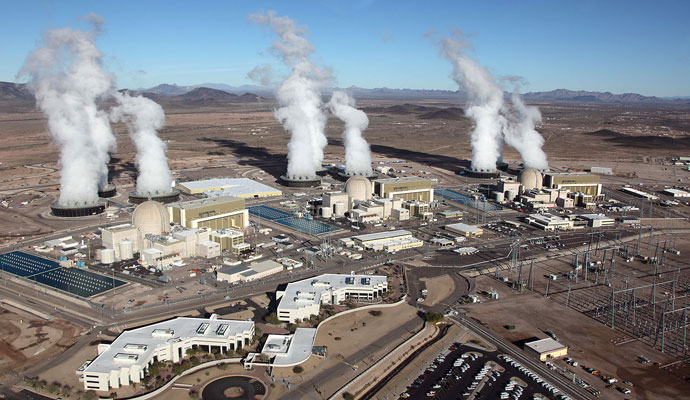
While all this hubbub is going on, info leaks that Saudi Arabia is in discussions with the U.S. to construct peaceful, civilian use of nuclear energy.
Nuclear power plants, for example. At least, that’s the stated intention.
I missed the school class lectures dealing with nuclear-powered electric plants and nuclear warheads and how they can be used to achieve certain ambitions.
However, I did notice that both have the informative “nuclear” in their narratives, and I understand that both require “uranium enrichment” to make them functional.
Depending on the specific accessories and manufacturing techniques used, the enrichment process can be intended for peaceful purposes or military applications.
Another puzzler: Saudi Arabia sits atop one of the world’s largest oil reserves. It has so much that it regularly exports millions of barrels of the black liquid to whoever will buy it.
Along with several other oil-rich countries, including Iran, they’ve organized themselves into an outfit called “OPEC” — Organization of Petroleum Exporting Countries.
Today, OPEC members produce about 38% of global oil production — much of it transported through the Strait of Hormuz in the Persian Gulf, adjacent to Iran.
Which, coincidentally, is where we currently have a large Navy presence patrolling the Gulf and providing safe passage for commercial shipping.
Naturally, someone might wonder: if Saudi Arabia is pumping and shipping oil every minute of every day, why would it need nuclear power plants to supply electricity to a population of 34 million folks?
Because it can continue to sell more of its oil rather than use it, while further developing itself into a major world economic player.
Maybe.
It just seems sort of strange Saudi Arabia is asking the United States to help it build power plants, using nuclear fuel, at the same time we’re bombing the stuffings out of the Iranians because we don’t want them to build nuclear-tipped missiles.
Similar to oil being refined into gasoline, can nuclear plant fuel be enriched into material used in nuclear bombs?
Apparently, it can: “Yes — under certain conditions, nuclear power plant fuel can be reprocessed to produce materials usable in nuclear weapons, though the process is complex and requires advanced technology.
Uranium enrichment-
“Most commercial nuclear reactors use low-enriched uranium (LEU) fuel, enriched to about 3–5% uranium‑235 (U‑235). This is far below the ~90% enrichment needed for “weapon‑grade” uranium, so it cannot be used directly in a nuclear bomb. However, if a country has mastered uranium enrichment technology, it can reconfigure centrifuges to produce highly enriched uranium (HEU) — above 20% U‑235 — and eventually weapon‑grade uranium above 90%,” — Copilot Search, July 24, 2026.
Well, whada ya know, power plant uranium fuel can also be used to make nuclear bombs if done properly.
Hmm, I wonder if the Saudi’s are thinking the same thing?
Not to worry — I imagine ABC, CBS, NBC, Fox and a few other members of the media, will let us know how much we should know, how much we shouldn’t know, how much should be deleted, how much is made up, how much is based upon unspecified “credible anonymous sources” and how much we should believe with our own”lyin’ eyes!”
That is, if this whole Middle East squabble doesn’t spiral completely out of control!
The opinions expressed in this editorial are those of the author.