


Thinking about moving somewhere smaller?
They all think about the same thing. An oversized closet, a rental truck, and an endless monthly fee.
But here’s the thing…

The average downsizer doesn’t need a garage. They need a closet. With a lock on it. That’s what a locker-sized storage unit is. And most families will never need anything bigger.
What’s coming up:
- Why Downsizing Is Everywhere Right Now
- What Counts As A Locker-Sized Unit?
- What Actually Fits Inside One
- How To Pick The Right Small Unit
- Packing Tricks That Double Your Space
Why Downsizing Is Everywhere Right Now
Downsizing used to be something people did quietly at retirement. Not anymore.
Senior homeowners are dominating the current housing market. Boomers accounted for 55% of all sellers over the last year. Many of them are trading down from a four-bedroom family home to something much simpler to maintain.
They aren’t buying large ones either. Builder surveys indicate boomers want a house with an average size of 1,869 square feet. That is a few hundred square feet less than their younger counterparts are pursuing.
Smaller home. Same amount of stuff.
That’s the hole most downsizers step directly into. You can sell the sofa. Give the dining set to the kids. But what about photo albums, tools, tax records, Christmas trees, and that box of school reports? Nope. Not happening.

The question isn’t whether you should rent storage. How little storage do you need?
What Counts As A Locker-Sized Unit?
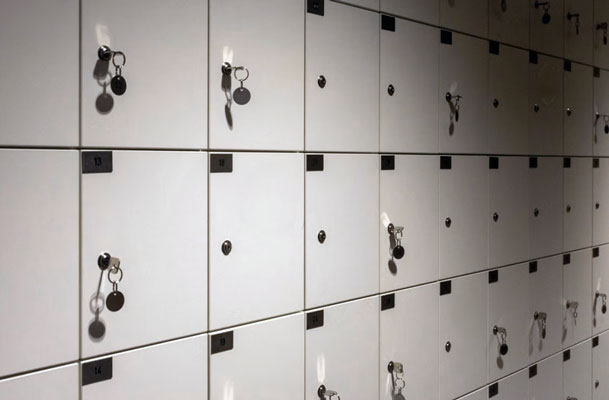
A locker unit is the smallest rental space within a facility. Think a walk-in closet or a storage cage in your apartment building basement.
Sizes usually land somewhere in this range:
- 3×3 — roughly 9 square feet
- 4×5 — roughly 20 square feet
- 5×5 — roughly 25 square feet, and the most common option
They mostly live inside and are usually lined up along a hallway or up some stairs. Keeps their running costs low, which keeps their rent low.
This excellent www.sparefoot.com/storage-unit-size-guide/locker-storage-unit size guide is well worth reading first. Most facilities have dozens of terms for small locker storage units. Some name them lockers. Others say mini units. Others list their storage units only by dimensions (i.e., a 5×5). Understand what you are renting before you rent it. Going from a 5×5 to a 5×10 will typically cost twice as much per month for space you won’t use.
Pretty simple, right?
What Actually Fits Inside One
This is the step most folks mess up. They think a locker unit equals “a couple of boxes“. They reserve something four times the space they need.
A standard 5×5 will comfortably swallow:
- Around 20 to 30 medium moving boxes
- Seasonal clothing and shoes
- A twin mattress set standing on its side
- Two or three suitcases
- Small furniture like a nightstand, side table, or bar stools
- Holiday decorations, sports gear and hobby equipment
- Filing boxes and business records
This is what fills one small bedroom OR what makes up an entire “keep” pile after decluttering hardcore.
A slightly larger 3×3 or 4×5 fits a college dorm’s worth of stuff, a couple of instruments, or all the papers and memorabilia your family was unwilling to part with. Not too shabby for something that small when you consider it’s the size of a phone booth.
This unit is not meant for: an entire sofa, mattresses larger than twin size, appliances, or things you want to dig through each week. Larger unit? Or how about a “SELL” pile!
Why Smaller Usually Wins
The most obvious reason is financial. Locker rentals are usually the lowest option on a facility’s price list, and that difference means a lot over a year or two.
But the real benefit is discipline.
A small unit forces cuts on every.single.thing. When downsizing, that second toaster and treadmill-turned-clothes rack won’t fit. A large unit does the exact opposite. It silently allows you to keep everything, which leads to renting storage for YEARS for things you SHOULD have given away during the move.
Storage should be an aid in a transition, not a second junk drawer.
There is also a practical aspect to consider. Indoor locker units are typically located inside a locked building with surveillance cameras and key card access. Most are also climate-controlled. For documents, photographs, electronics, and anything containing fabric or wood, consistent temperature will benefit more than any square footage.
How To Pick The Right Small Unit
Lockers come in all different sizes. These are some tips that can help you distinguish between a good locker and a bad one.
Run through this before booking:
- Height is more important than floor area. Units are often only 8′ high. Go to the ceiling, and you can almost double your capacity.
- Verify accessibility. Upper-level units are less expensive. Inquire about elevators and distance from parking.
- Ask about climate control. Essential for photos, documents, electronics, and anything wooden.
- Examine security features. Secure entryways, video surveillance, and ample lighting are key.
- Read the lease. Pay attention to admin fees, insurance, and the amount of notice required to vacate.
- Confirm the actual dimensions. A “5×5” isn’t always exactly 5×5.
If at all possible, see the property in person. Being in an empty unit will give you a much better feel for scale than a number listed online.
Packing Tricks That Double Your Space
Getting more into a locker unit comes down to a handful of habits.
Pack it in identical boxes. Boxes that are the same size stack nicely and straight all the way to the ceiling and won’t sag in the middle. Boxes that are different sizes are wasting airspace, and you are paying for airspace!
Vacuum bags are your downsizing best friend. Clothing, winter jackets, and extra linens compress into small sizes and stay dry.
Deconstruct furniture. Legs detach from tables and bed frames, and flat surfaces neatly stack up against a wall.
A few more things worth doing:
- Label every box on two sides, not the top
- Keep a narrow walkway down the middle
- Put frequently needed items nearest the door
- Store mattresses and mirrors upright, never flat
- Write a simple inventory list and keep a copy at home
That last one sounds picky. It’s not. Halfway through the process, nobody cares which box the passports went into.
Bringing It All Together
Decluttering can be stressful, and sometimes you just want to throw everything in a rental unit and sort it out later. But later never comes.
A locker-sized unit won’t protect everything. But it will do something better. It draws a bright line on what’s saved. Keeps monthly fees reasonable. And still ensures what really matters.
To quickly recap:
- Sort ruthlessly before measuring anything
- Match it to the “keep” pile, not the fear of running out of room
- Check height, access, climate control, and security
- Pack upward with uniform boxes
- Review the unit every year and keep shrinking it
Selling the house and cutting back on square footage is the difficult task. Downsizing on storage fees should be a simple task.