

Column By Douglas Vandergraph
A blank wall can look like a problem to be solved by someone with the right talent. A community mural begins with a more interesting possibility: what happens when people who would never describe themselves as artists are invited to leave a mark? The question is not whether every brushstroke will be equally impressive. It is whether the finished work will carry the memory that more than one pair of hands belonged there.
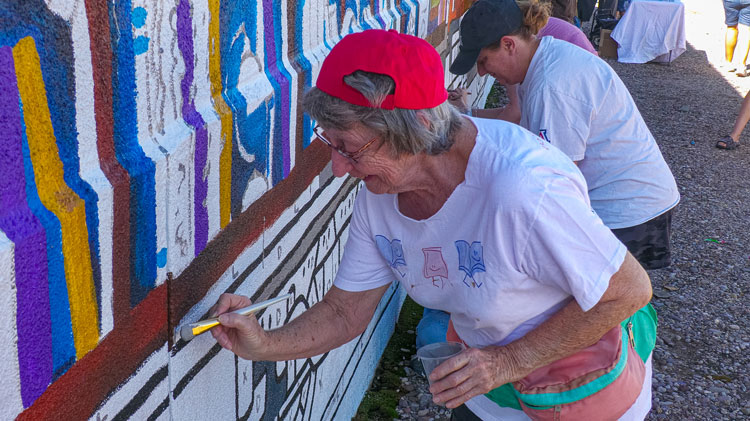
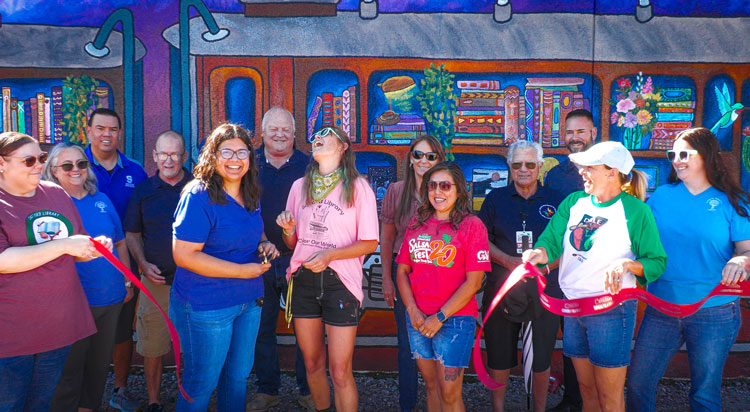
The Gila Herald reported on a September Community Mural Paint Day at the Safford City-Graham County Library, where residents of different ages helped create a public artwork. That is a worthwhile story for a town to keep telling. The library was already a place built around shared discovery. By making room for people to paint together, it gave neighbors another way to experience belonging without first proving that they possessed a special credential.
Most of us have learned to hesitate before attempting something visible. A child fears making a mistake. An older adult may have spent years hearing that creativity belongs to younger people. A newcomer may wonder whether the town’s traditions leave room for another person’s imagination. Even an experienced artist can struggle to loosen control over a picture when someone else’s hand approaches the canvas. The invitation to make something together asks everyone to accept a little uncertainty.
That uncertainty is not a flaw. It is part of the generosity. When a public project is genuinely shared, the result is not identical to what any single person would have designed alone. There may be colors we would not have chosen and details that surprise us. The task is to create enough structure for a coherent work while leaving room for contributions that make it more than one person’s vision.

Christian faith has a helpful way of speaking about this. Paul describes a community as a body with many members, none of which can reasonably claim that all the others are unnecessary. The image is not permission to erase difference for the sake of a tidy picture. It is a challenge to the person who assumes that skill, position, or visibility makes their contribution the only important one. A community grows healthier when gifts can work together without becoming a contest.
A mural also changes the meaning of the library wall. Before the painting, the surface was part of a building people passed through. Afterward, it becomes a small record of participation. Someone walking past can remember the child who held a brush, the volunteer who wiped up a spill, or the neighbor who arrived nervous and stayed longer than expected. The picture is not simply an object to admire. It can become a reminder of a day when people were trusted to contribute.
There is a responsibility attached to that trust. Public art should not stop at inviting the easiest voices to recruit. A person who has difficulty standing for long periods may need a different way to participate. Someone with limited sight may experience the work through description or touch when appropriate. A family unable to attend at the scheduled hour can still deserve a way to learn what happened and be part of the next project. Inclusion grows stronger when practical barriers are considered before the photographs are taken.
The library is especially suited to this task because its ordinary work already refuses the idea that a town has only one kind of learner. It serves people reading their first books and people researching complex questions. It helps those with easy access to technology and those for whom a public computer may be essential. A mural made with community hands fits that purpose. It announces that curiosity and contribution have a home here.
I would not claim that a painting solves the economic or personal hardships of Graham County. It does not. A person may leave the library and return to difficult news. A child may still feel lonely at school. The value of the experience is more modest and, in some ways, more enduring. People practiced showing up, sharing space, and handling each other’s work with care. Those are habits a town needs for harder conversations too.

When the final paint dries, the best question is not whose contribution was most impressive. It is who might feel bold enough to join next time. The mural tells a story in color. The community tells the larger story by keeping its invitation open.
Douglas Vandergraph
https://douglasvandergraph.com
The opinions expressed in this editorial are those of the author.