


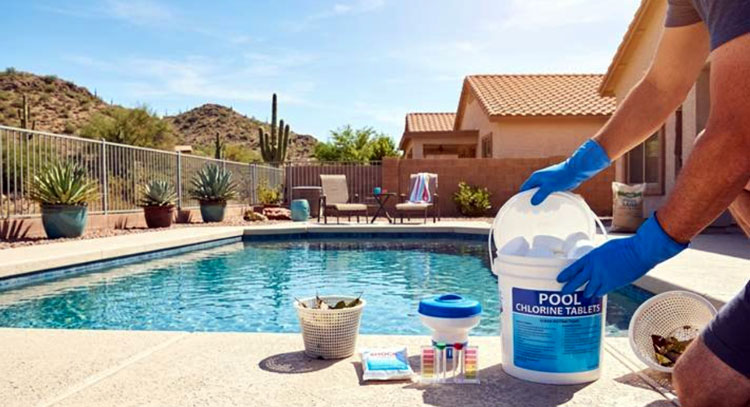
For many households in the Gila Valley, a backyard pool is one of the most-used spaces at home during the hottest months. Keeping that pool clean and safe takes more than a good filter. It takes a steady supply of sanitizer, a routine for testing the water, and a safe way to store and handle the chemicals involved.
Many owners searching for chlorine tablets for pool maintenance are looking for convenience, and that is a large part of why tablets are so popular. This guide explains what tablets do, how to buy them sensibly, and, just as important, how to store and handle them safely when summer temperatures are high.
Why chlorine tablets are so common
Chlorine tablets dissolve slowly, which is what makes them practical. Instead of adding sanitizer in a single large dose, a feeder or floating dispenser releases it over days, helping to keep levels steadier between visits to the pool. For households that travel, work long hours, or simply want a simpler routine, that steady release is the main attraction.
Tablets are not a substitute for testing, however. Sunlight, heavy swimmer use, rain, and the pool’s size and circulation all affect how quickly chlorine is used up, so the amount that works in one pool may be too much or too little in another. A reliable test kit or test strips, used regularly, tell you what the pool actually needs. The product label and the pool’s equipment manual tell you how to apply it.

What to look for when buying
Start with the label. Check the tablet size, the active ingredient, and the manufacturer’s directions, and make sure the product is intended for the way you plan to use it. Many tablets are sold in 3-inch sizes and in bulk buckets, which suits larger pools or owners who go through a lot over a season, but a smaller container may make more sense for a small pool or an occasional user.
Buy from a supplier that specializes in pool care and can answer questions about the product. Doheny’s, a family-owned pool supplier that says it has been serving pool owners since 1967, describes itself in its chemicals section as having been “chlorine perfectionists for 59 years.” Doheny’s catalog includes 3-inch chlorine tablets sold in bulk, including a 50-pound bucket, which shows how much the size of the container can vary. Whatever you buy, keep it in its original, labeled container.
Heat changes how you store chemicals
This is the part of pool care that deserves the most attention in a hot climate. The Centers for Disease Control and Prevention’s pool chemical safety guidance, last reviewed June 24, 2025, advises storing pool chemicals below 95°F (35°C) and in the conditions the manufacturer recommends. It also says to protect stored chemicals from getting wet, to store each chemical separately in a dedicated location, and to keep them in their original labeled containers away from direct sunlight, heat, or flame.
That temperature figure is worth taking seriously. A closed garage or backyard shed can get hotter than the air outside, so it is reasonable to ask whether the place where you keep chemicals stays below that mark during a Gila Valley summer. If you are not sure, choose a cooler, shaded, well-ventilated spot, or ask the product’s manufacturer what it recommends.
One caveat about sourcing: the CDC page is written for public aquatic venues and does not mention chlorine tablets by name, so the specifics for a home pool should always come from the product label. The general principles, however, apply just as well in a backyard: keep chemicals cool, dry, separate, and clearly labeled.
Handling and mixing
The CDC’s guidance states plainly that pool chemicals can injure people when mixed together. The simple household rule that follows is never to combine different chemicals, never to add one product to another’s container, and never to reuse a scoop or bucket between products. Keep food and drinks away from the storage area, and clean up spills right away, as the CDC advises, using dedicated materials rather than whatever is nearby.
Kids and pets deserve a special mention. Store chemicals where they cannot reach them, and make sure that the lid on every container is tight after each use.

Common questions
How do I know whether I am using enough? Test the water. The reading, not the number of tablets in the feeder, tells you whether the pool has enough sanitizer. Adjust gradually, following the label, and retest.
Can I mix different pool chemicals to save time? No. The CDC specifically warns that chemicals can injure people when mixed together. Add products separately, as the label directs, and never combine them in a bucket or feeder.
Where should I keep the tablets during summer? In their original container, tightly closed, in a dry, cool, shaded place that stays below the temperature the manufacturer and the CDC recommend, and away from anything that can get wet or hot.
Do tablets replace shocking and balancing? Tablets provide a steady supply of sanitizer, but pool water still needs to be balanced and, from time to time, treated according to its condition. Follow the label and test regularly. Doheny’s how-to library includes a guide to basic pool chemicals, which is a useful way to check your routine against the fundamentals.
Choosing a supplier you can ask questions
A pool-focused retailer is helpful because chemistry questions come up constantly: which size to buy, how a product fits with the rest of the maintenance routine, what to do when the water turns cloudy. Doheny’s maintains a library of how-to guidance alongside its product pages, which can help owners compare options before buying and check their routine against what the manufacturer recommends.
With the basics covered, a sensible summer routine comes down to four habits: test the water on a schedule, use tablets as directed on the label, store every chemical in a cool, dry, separate place, and never mix products. Those habits cost little, and in a hot climate they protect both the pool and the people who use it. For owners restocking this season, comparing sizes and options at Doheny’s is a straightforward starting point, and the CDC’s guidance is worth a few minutes of reading before the heat peaks.