

Column By Kal Mann
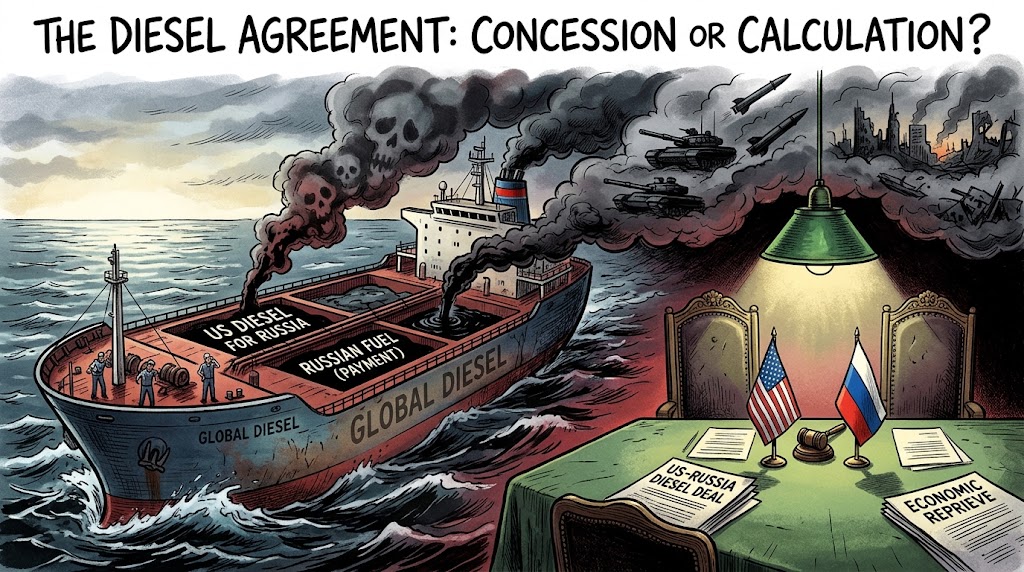
A major news story right now is the US-Russia diesel agreement, which seems to have triggered a more-than-normal response from European leaders, Democrats, and even some Republicans. Many of these concerns focus on what Russia will gain from the deal and how it will affect its fighting force in the war with Ukraine. Another aspect of the deal deserves scrutiny: What does Washington hope to gain?
It’s easy to point to the millions of metric tons of diesel fuel being released to the global market as “payment”; however, analysts say the increase will not significantly ease pricing for consumers. While the easing of diesel pricing in the U.S. would be a nice win for the Trump administration, this does not seem to be their main goal, as President Trump himself stated on his Truth Social account, “My decision on Russia is a very simple one. I am in the process of negotiating peace in the war between Russia and Ukraine, and don’t want to do anything that will drive, foolishly, Russia away from the bargaining table.” Trump has not strayed from this goal since entering office at the beginning of 2025, which is important to note when understanding Trump’s policy towards the war in Ukraine.
So the question remains: why this deal now? While news outlets report that the deal is being made to win over voters at the pump with midterm elections coming quickly, we can also point to Russia’s recent tense confrontations with European NATO members, heavy fighting with Ukraine, major losses of soldiers on both sides, land being retaken reported as high as 106 square miles by Ukrainian forces, with essential strong points needed before winter comes being captured as well. These examples point to a weakened Russia, not necessarily one weakening overall, but one in a season of losses. Just as a cornered animal reacts unpredictably, so too could Russia act unpredictably; ”If Ukraine can continue to disrupt Crimea, strike more targets in the heart of Russia, frustrate Russia’s frontline forces, and pile more pressure on Russia’s hobbled economy, an isolated, aging, and frustrated Putin may decide he needs a game-changing attack,” writes Ian Bremmer.
This “game-changing attack” may concern Washington, and it could prompt the United States to entice Russia back to the negotiating table instead of pushing harder and demanding economic concessions.
Another major concern for many people seems to be whether or not Trump is selling out Ukraine in return for ending the war. There is a valid concern that the Russian Diesel agreement gives Putin potential economic benefits without any reciprocal “extending the olive branch” from Putin. That said, the Treasury Department still controls whether it allows Russia to receive an economic reprieve from sanctions in exchange for selling diesel fuel globally. If the administration finds issues, it can pull the deal, though it cannot keep any revenue Russia earns during it.
While Trump has never shied away from showing his dislike for President Zelensky (with confrontations making news headlines), and has even applied pressure to Ukraine in the past to end attacks on Russian oil refineries, calling Trump a “Russian asset” is a broad leap to explain his actions. Instead, it seems to follow classic reasoning: “keep your friends close, and your enemies closer.”

Trump has had many moments of tense confrontation with President Putin, with serious economic sanctions placed and public threats being dished out on both sides on multiple occasions. Trump seems to use his relationship with Putin as a means to an end; as he said in a Fox & Friends interview, “I do have a good relationship, but it… only matters if we get things done.” This is a friendship of convenience, but any kind of relationship is needed to make a deal, and Trump is pulling out all the stops to make sure Putin has no reason to cancel the peace talks between Ukraine and Russia and work towards an end to the war.
Another interesting point is the reported proposal that the Trump administration is working on. According to Owen Matthews of The Spectator, “there could be a method behind Trump’s apparent madness. The ‘four-pillar’ plan was discussed by Trump envoys Jared Kushner and Steve Witkoff with top Ukrainian representatives…” This proposal, referred to as the Miami peace plan, focuses on both stopping the war from escalating further and reintegrating Ukraine and Russia into the global market through economic incentives. The deal can work only if both Ukraine and Russia agree to the terms, which is a strong argument for why Russia needs to be enticed to negotiate.
Indeed, we don’t know fully how President Putin will respond to these economic reprieves. Putin has indicated that he is ready to begin peace talks in November. While Putin has made the usual requests, it is unclear whether any meaningful compromises will be made. The question now we face is whether or not Putin will accept these reprieves and work towards a peace deal, or continue the war. Only time will tell.
The opinions expressed in this editorial are those of the author.