

By Lori Dugan/EAC
Thatcher — The San Carlos Apache Tribe has recognized Eastern Arizona College’s Emergency Medical Services program for a contribution measured not simply in graduates or credentials, but in the people those graduates are prepared to save.
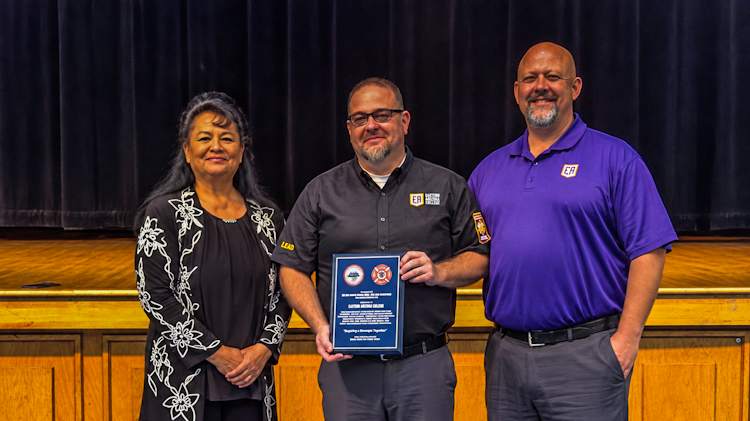
EAC EMS was honored Aug. 28 during the San Carlos Apache Tribe’s Public Service Recognition Day at Snyder Burdette Hall in San Carlos. The recognition cited the program’s “unwavering commitment to educating and empowering the next generation of EMTs and Paramedics” and noted that its efforts over the years have “helped save lives, inspire future healthcare professionals, and strengthen our community.”
EAC EMS Program Director John Clegg and Aaron Burk, EAC dean of STEM and health sciences, accepted the recognition from Cherrill Williams, EMS/Fire program manager for the San Carlos Apache Tribe.
The honor reflects the important role education plays in sustaining emergency medical care in rural communities.
EAC trains emergency medical technicians and paramedics who go on to serve communities throughout the region, including the San Carlos Apache Reservation. San Carlos Fire and EMS also supports the preparation of EAC students for the realities of emergency medicine. EAC has previously identified San Carlos Fire and EMS among the partners supporting its EMS students and graduates.
“This recognition means a great deal because it comes from the people our program is here to serve,” Clegg said. “Our students enter EMS because they want to make a difference. When they take what they have learned at EAC and put those skills to work caring for their neighbors, responding to emergencies and serving communities like San Carlos, that is exactly what this program is meant to do.”
The connection is already visible in the field. EAC has previously recognized students who simultaneously pursued their education while working as EMTs on the San Carlos Apache Reservation, illustrating a pathway that allows students to gain an education, enter a critical profession and put those skills to work close to home.
For San Carlos, that local pipeline supports an emergency medical system responsible for a broad range of critical services. Arizona Department of Health Services records identify San Carlos Apache Tribe Emergency Medical Services as a tribal ground ambulance provider offering both advanced and basic life support.
Burk said the award also recognizes something that can be easy to overlook in workforce education: One graduate can have an impact on thousands of people over the course of a career.

“When we prepare a healthcare worker, like an EMT or paramedic, the impact of that education extends far beyond one student,” Burk said. “It reaches every patient they treat, every family they help during a frightening moment, and every community they serve throughout their career. We are incredibly proud of our EMS faculty, our students and graduates, and we are grateful to our partners at San Carlos Fire and EMS for recognizing the work we share.”
For EAC’s EMS program, the Aug. 28 recognition brought the connection between education and service into sharp focus: Students are trained locally, professionals are prepared for demanding careers, and communities throughout the region benefit from having skilled emergency responders ready when they are needed most.
“EMS is about service,” Clegg said. “Receiving an award from a community where EAC-trained professionals are putting that service into practice is something our entire program can be proud of.”