

Gila Herald Staff Reports
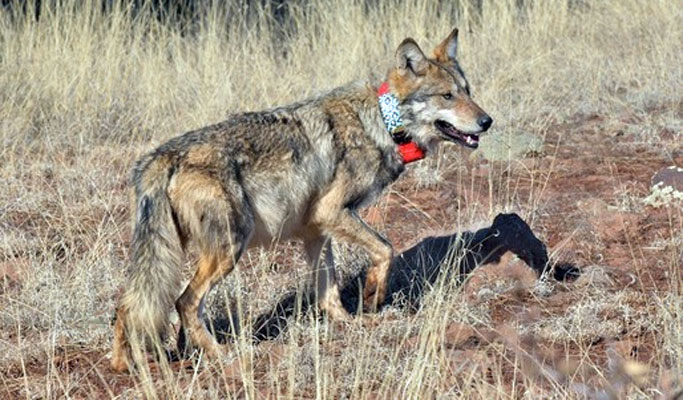
SPRINGERVILLE — The wild Mexican wolf population in Arizona and New Mexico continued to show signs of resilience through the second quarter of 2026, building on 10 consecutive years of population growth across the American Southwest.
According to the latest quarterly report released by the Mexican Wolf Interagency Field Team (IFT)—a cooperative effort involving the Arizona Game and Fish Department (AZGFD), U.S. Fish and Wildlife Service (USFWS), USDA Forest Service, and local tribal authorities—the population reached a minimum abundance of 317 wolves in the wild at the start of the year (142 in Arizona and 175 in New Mexico).
The 2025 end-of-year count represented a 10.8% increase over the previous year, marking the longest continuous streak of population growth since reintroduction efforts began. At the close of the second quarter, wildlife managers tracked 28 active wolf packs in Arizona and 41 in New Mexico.

Mortalities and Depredations
Between April and June, seven Mexican wolf mortalities were documented across the recovery area, including three in Arizona and four in New Mexico. All non-natural deaths remain under investigation by USFWS Law Enforcement. Despite these losses, officials noted that mortality rates remain consistent with long-term recovery planning models that predict continued overall population expansion throughout 2026.
Confirmed livestock depredation incidents also remained an active focus for management agencies. In 2025, officials recorded 147 confirmed wolf depredation incidents, up from 106 in 2024. Adjusted for population growth, the rate stood at 46 depredations per 100 wolves. To reduce potential conflicts, field teams regularly implement non-lethal deterrents, including diversionary food caching.
On Tuesday, Sen. Ruben Gallego met in Thatcher with local ranchers who listed one of their top issues as livestock depredation incidents due to Mexican wolves.

Field teams also responded to public reports during the quarter. In June, an Arivaca resident reported wolves preying on a deer in a residential yard. A subsequent investigation by AZGFD revealed small paw prints, confirming the incident involved coyotes rather than wolves.
Ongoing Litigation and Enforcement
The recovery program continues to navigate federal legal challenges. In June 2025, several conservation groups—including the Grand Canyon Wolf Recovery Project, WildEarth Guardians, and Western Watersheds Project—appealed the federal 10(j) management rule to the U.S. Court of Appeals for the Ninth Circuit. Following a series of briefs filed through early 2026 by conservation groups, the USFWS, and the State of Arizona as an intervenor, the court notified parties that oral arguments are being considered for October 2026 in Missoula, Montana.
Law enforcement authorities continue to remind the public that illegal taking or harassment of Mexican wolves carries severe penalties under both state law and the federal Endangered Species Act, including fines up to $50,000 and up to one year in prison.
A combined reward of up to $103,500 is currently offered by federal and state agencies, alongside private pledges, for information leading to the conviction of anyone responsible for illegally shooting a Mexican wolf.