Staff Reports
WASHINGTON D.C. – Senator Mark Kelly (D-AZ) joined Senator Cynthia Lummis (R-WY) and Representative Byron Donalds (R-FL) on Friday to introduce bipartisan legislation aimed at making nuclear power plants faster and more affordable to build while maintaining rigorous safety standards.
The Build Nuclear with Local Materials Act directs the Nuclear Regulatory Commission (NRC) to develop rules permitting the use of commercial-grade concrete and steel in non-safety-related structures at new nuclear facilities. Proponents say the measure addresses outdated regulations that unnecessarily inflate costs and delay projects critical to meeting rising U.S. energy demand.
“We need more reliable, affordable power to keep up with growing demand in Arizona and across the country, but outdated rules about building materials drive up costs and slow down construction for nuclear plants,” Sen. Kelly said in a statement. “With this commonsense solution, we can build clean nuclear power plants faster and cheaper while keeping the same strong safety standards that protect Arizona families.”
Arizona’s energy needs have drawn increasing attention as data centers, manufacturing, and population growth drive higher electricity demand. Nuclear power is viewed by many as a reliable, carbon-free baseload source capable of operating around the clock.

Sen. Lummis emphasized the regulatory evolution needed as nuclear technology advances.
“Requiring nuclear-grade materials in parts of a plant that have nothing to do with safety drives up costs and locks out local construction crews who are more than capable of doing the job,” she said. “This legislation fixes that by requiring the NRC to allow commercial-grade concrete and steel where it’s safe to do so. The result is simple: lower costs, more local jobs, and zero compromise on safety.”
Rep. Donalds highlighted the national security and economic implications.
“Energy security is national and economic security for the United States,” he stated. “We must take a hard look at outdated and burdensome regulations and make practical, common-sense reforms.”
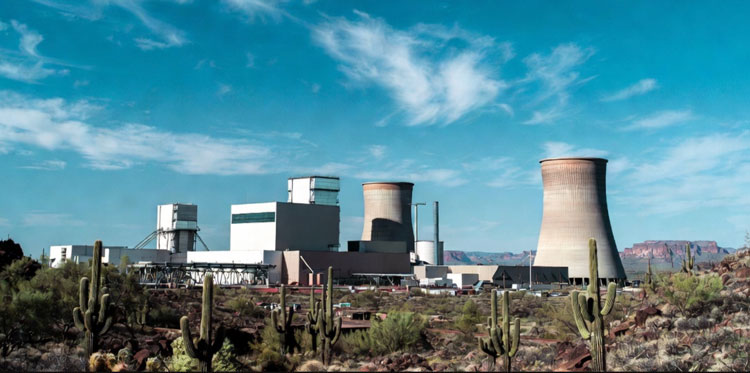
The bill builds directly on an NRC determination already made for TerraPower’s Natrium reactor project in Kemmerer, Wyoming, where commercial-grade materials were approved for non-safety areas. Current rules apply stringent nuclear-grade standards across both safety-related and non-safety structures in a broad, one-size-fits-all manner.
According to background information on the legislation, nuclear-grade concrete and steel require significantly more time and expense. Foundations can take roughly twice as long to pour, while superstructures take up to 50% longer. Concrete accounts for approximately 79.5% of materials used in nuclear plant construction. Supporters estimate that targeted use of commercial-grade materials in appropriate areas could cut overall construction time and costs by about 28%.
The legislation does not weaken safety requirements for critical systems. It instructs the NRC to identify specific non-safety portions of plants where standard commercial materials can be used safely, while preserving the full integrity of all safety-critical components.
The bipartisan effort reflects growing congressional interest in streamlining nuclear deployment to support grid reliability and economic growth. The full text of the Build Nuclear with Local Materials Act is available here.