
It seems to be a year of reckoning for small business owners across the Gila Valley. The question will be asked: How do you continue to grow, use fewer resources, and generate less waste? Sustainable Metal Packaging is one practical piece of that puzzle, especially for small brands in beauty, personal care, and local food who want to reduce plastic, protect their products, and show customers they take stewardship seriously.
What Sustainable Metal Packaging Really Means
In industry practice, Sustainable Metal Packaging usually refers to aluminum or tinplate containers that are designed to be durable, recyclable, and safe for contact with products like lotions, balms, or dry foods. Aluminum and steel are widely accepted in recycling systems, and U.S. data indicate that the recycling process for metal packaging is more successful when the packaging is collected, sorted, and mixed with other metals. For rural communities, the likelihood is higher that a coffee can or lip balm tin gets recycled as scrap metal than it sitting in a landfill and being forgotten.

Sustainable Metal Packaging can be:
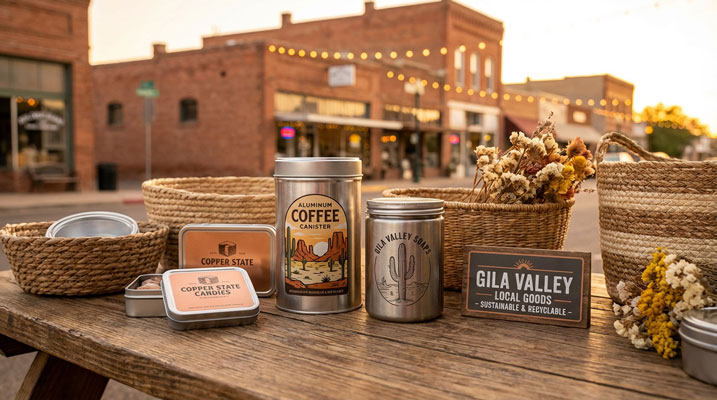
- Metal tins used for selling salves, soaps, or artisan candles in local markets. Durable aluminum pots for hair pomade, beard balm, or solid perfume.
- Steel or aluminum cans for roasted nuts, beans, or gift foods sold by farms and family shops.
These are the kinds of packs that feel solid in the hand, travel well to local fairs or farmers’ markets, and can be dropped into a recycling bin when their job is done. For many Gila Valley businesses, eco‑friendly metal packaging for small businesses is less about chasing a trend and more about making a simple, durable choice that fits local life.

Why It Matters for Compliance, Durability, and Community
From a technical and regulatory standpoint, three advantages stand out when small-town businesses look at Sustainable Metal Packaging.
- Environmental compliance and recyclability
Articles like Gila Herald’s “Why Sustainable Practices Are Essential for Small Town Communities and Their Growth” and “Adapting Business Practices to Environmental Policies” underline how environmental rules and expectations are tightening, even outside big cities. Using metal aligns with federal guidance that treats scrap metal as a valuable recyclable material when properly handled, rather than just waste. When paired with BPA‑free internal lacquers where necessary and compliant inks on the outside, metal containers can help small brands stay ahead of evolving safety and packaging standards without constant redesign. - Business practicality and toughness
In real-world applications, metal holds up well to the realities of rural supply chains: gravel roads, heat, distance to regional markets, and limited storage space. A dent‑resistant tin or can is less likely to split, leak, or crush in transit than a thin plastic, reducing losses on the way from a home workshop to a local store shelf. For small operations that can’t afford high write‑offs, that durability can matter just as much as the sustainability story. - Community impact and local branding
The Gila Herald has highlighted how family-owned businesses shape the identity and resilience of small-town communities. Packaging is part of that story. A well-designed metal tin with a local brand’s logo can be reused by customers, turning into a tiny billboard on kitchen counters and workbenches. Over time, this helps local products stand out against generic national brands and supports the kind of place-based pride that keeps dollars circulating in the valley.
For many owners, sustainable metal packaging solutions are not about perfection; they are about taking a realistic, step‑by‑step approach to reducing waste while keeping the business viable.
What Small Businesses Should Consider Before Switching

Drawing on manufacturing experience and supply chain work, there are a few practical questions Gila Valley businesses can use as a checklist before moving to Sustainable Metal Packaging.
- Cost and long-term value
- What is the real cost per unit when you factor in lower damage rates and the potential to charge a modest premium for a more durable, “keepable” container?
- Can you standardize a few sizes across products (for example, one tin for multiple balms) to keep inventory simple and lower minimum order quantities?
- Regulations and material choices
- Is the metal type (aluminum or tinplate) widely recyclable in your region, and can you avoid unnecessary plastic components that complicate recycling?
- Are linings, coatings, and inks appropriate for your product type and compliant with relevant safety guidelines for contact with cosmetics or food?
- Customer acceptance and local supply chain
- Will your regular customers understand and appreciate the change, and do you need simple in‑store signage or website notes to explain why the new container feels heavier or looks different?
- Can you work with distributors and local stores to collect feedback on how the metal packs perform on the shelf and during transport?
Some Gila Valley businesses have already seen benefits by shifting just one product line at a time—for example, moving a best-selling salve or locally roasted coffee into metal packaging first, measuring the impact, then deciding whether to expand.
A Small-Town Path Forward
The Gila Herald has consistently shown that sustainable practices are not only an environmental issue but a growth issue for small-town communities. Sustainable Metal Packaging fits into that picture as a realistic, hands-on option that helps local businesses cut plastic waste, protect their products, and present a stronger, more durable brand identity.

No single choice will solve every environmental or economic challenge facing rural communities. But when local makers, retailers, and family-owned businesses start choosing containers that are easier to reuse and recycle, it sends a clear signal about the kind of future they want for the Gila Valley. In 2026, Sustainable Metal Packaging is one way small-town enterprises can match their long-standing commitment to community with practical, visible steps toward a more sustainable local economy.