
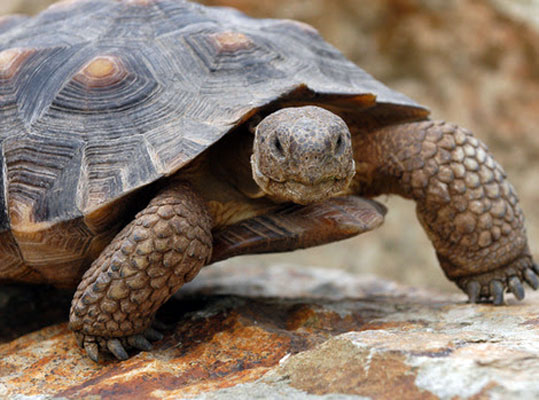
Arizona Game and Fish has over 100 non-releasable tortoises ready for adoption
Contributed Article/Courtesy AZGFD
PHOENIX– (AZGFD). As these beloved reptiles awake from their winter brumation, it’s the perfect time to adopt one as a pet and contribute to the conservation of the wild population.
Every year, the Arizona Game and Fish Tortoise Adoption Program helps match dozens of captive Sonoran desert tortoises with their forever homes. These tortoises are often the result of illegal captive breeding and cannot be released into the wild. Captive tortoises can carry respiratory infections that could devastate the wild population, which already faces threats from wildfires, human development, and drought.
AZGFD is currently caring for over 100 non-releasable desert tortoises of varying sizes and ages that are now available for adoption.
“Desert tortoises offer longtime companionship without the drama,” said Tegan Wolf, Desert Tortoise Adoption Program coordinator. “Tortoises are affectionate and low maintenance. They enjoy healthy greens, exploring the outdoors, and visiting with their companions. With the right preparations, desert tortoises make a great addition to a family home. Our team of biologists will help you find your perfect match and prepare for their arrival.”
Want to check out the tortoises in person? Visit the AmAZing Wildlife tent at the annual AZGFD Outdoor EXPO on March 28-29 at the Ben Avery Shooting Facility in Phoenix.
How to Care for Captive Sonoran Desert Tortoises
Burrow first, then apply: Desert tortoises spend their time outdoors. Given Arizona’s extreme temperatures, tortoises require a burrow to protect them from the heat in the summer. AZGFD has videos and instructions on creating a burrow. Individuals who want to adopt a tortoise must show that they have a burrow ready for their new tortoise prior to submitting an application.
Lifelong companions: Desert tortoises can live for 80 to 100 years. Often, families will enjoy a single tortoise companion for multiple generations. Loyal and true, tortoises are often included in estate planning and wills.
Plant-powered diet: Desert tortoises are completely herbivorous, eating a wide variety of plants in the wild. Ideally, a captive tortoise should be allowed to graze throughout the day on grasses, leafy plants and flowers.
Uniquely Arizona: Remember, these Sonoran desert tortoises are a state-protected species and cannot be taken out of Arizona. While not currently listed as endangered, the species faces threats like habitat loss and development.

Next steps on helping care for a desert tortoise:
This spring is the perfect time to build your burrow and submit an adoption application!
Everything you need to know about the adoption process, burrow-building, and tortoise-care can be found at azgfd.gov/tortoise.
Can’t adopt? You can still help! Donate to the Tortoise Program to support their care until they find forever homes.