
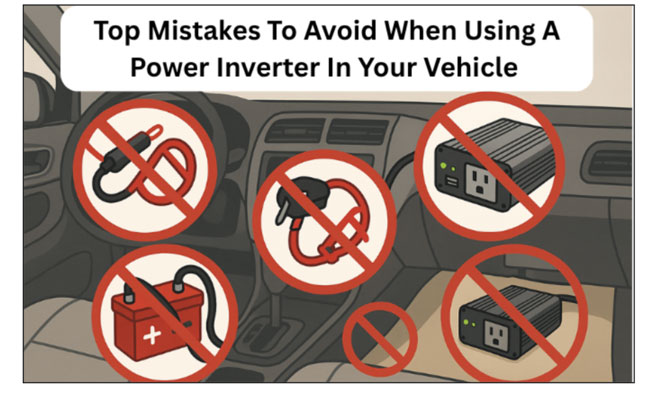
Has there ever been a time during a road trip when you attempted to charge your phone or laptop and it either stopped working or did some irreparable damage to your devices?
This is a common challenge that people face while traveling. Using a power inverter might make charging your devices seem easy, but there is much more to it.
If you do not pay attention, you can end up with burnt-out fuses, drained batteries, or even worse, electrical fires.
Whether you go camping during the weekends, work remotely while traveling, or even if you just need a coffee maker while on the go, understanding how to use a power inverter is essential.
While knowing the proper way to use a power inverter can offer you reliable power, steering clear of the common mistakes can offer even more benefits.
Take a look at some of the most common mistakes people make with vehicle inverters. Avoiding the mistakes would not only save your money and gear, but it can also significantly benefit your wallet.
1. Underestimating Harsh Outdoor Conditions
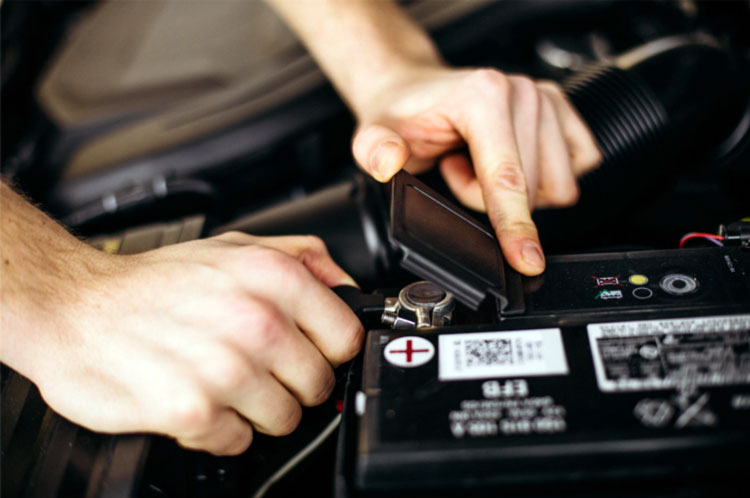
In rural locations, where extremes of weather such as excessive heat, dusty roads, or even wet, chilly mornings can be common, it can be easy to overlook your vehicle’s electrical system.
If your electronics are left exposed for extended durations, harsh weather can be a strain on your equipment, especially with prolonged exposure.
In this scenario, a power inverter becomes a necessity. Not all inverters are designed to endure a long, bumpy drive through hills, the dampness of coastal waters, or the harsh summer sun beating through the car windows.

Units designed for mobile use, lacking insulation or thermal shields, are unreliable for moving vehicles. High-quality mobile inverters, especially those designed for tough conditions, require skilled installation.
The most common of such mistakes is to ignore the specifications and ratings for each inverter and assume that any power station or electrical shop’s price and purchase will suffice.
Buy inverters intended for vehicles that are rated for specific environmental conditions and tolerances.
2. Ignoring Power Requirements and Load Limits
One of the most prevalent mistakes is underestimating the number of watts your devices realistically pull from the wall. It is much easier just to use the label of one device to estimate the power usage, but this method completely ignores surge wattage and the overall load when the devices are plugged in together.
Consider this scenario. You plug in a laptop, a portable fridge, and a fan. Each of these devices appears to be low power, but together, they can easily surpass the inverter’s limit— especially during startup surges.
The result of this overload can be inverter tripping, powering down your devices, or, in the worst-case scenario, overheating and permanent damage. You can avoid these issues by estimating the continuous wattage and comparing it to the inverter wattage.
Often, devices are advertised for their peak wattage, which is greatly misleading. Peak wattage is only a temporary figure, and your needs should be measured both in the short term and the long term.
Moreover, to reduce inverter strain, they must not be operated past 80% of their rated load. By relying on more measured figures, your estimated power requirements will permit for greater device and inverter longevity while keeping operations smooth.
3. Poor Installation and Wiring Practices
Problems can arise even with the most advanced inverter if the device isn’t configured correctly. Many individuals see the installation as a plug-and-play affair, which is utterly wrong.
An even greater challenge is loose plugs, improperly sized cables, and incorrectly rated fuses, which can all compromise safety. Take, for instance, the application of an improperly sized cable.
A thin cable will certainly overheat, cause a voltage drop, and in dire scenarios, the cable can melt. In addition, neglecting the installation of a fuse or circuit breaker is analogous to leaving the car without an essential safety feature to protect against shorts or current spikes.
Over time, the protective coverings of wires can be stripped away, leaving the wires vulnerable to damage. Coupled with the potential for shorts, this deterioration can certainly lead to a vehicle catching fire.
To prevent this, use cables of the right gauge, keep the wires organized, and place the fuses near the battery for optimal safety. In this regard, aimed performance, peace of mind, and safety can only be guaranteed if the installation is up to standard.
4. Overlooking Battery Drain and Charging Cycles
Using a power inverter pulls energy directly from your vehicle’s battery, and if you’re not keeping track, it can leave you stranded with a flat battery. This is especially common among users who run devices for extended periods while the engine is off—like powering a cooler overnight or charging laptops at a campsite.
Modern vehicles may have auxiliary batteries designed for such use, but even these have limits. Drawing too much power without a charging source can damage deep-cycle batteries or reduce their lifespan dramatically.
And relying on your starter battery is even riskier—once it’s drained, you’re not going anywhere without a jumpstart. To avoid this, monitor battery voltage regularly when using an inverter.
If you’re planning extended use, invest in a dual-battery system or ensure your alternator is robust enough to recharge between uses. Some inverters also feature low-voltage cutoffs—use them.
They’re not just a feature; they’re a safeguard. A dead battery on a remote road isn’t just inconvenient—it can be dangerous.
5. Running the Inverter Continuously Without Breaks
Another mistake users make is keeping the inverter running around the clock, even when nothing is plugged in. While it might seem harmless, continuous operation creates a constant drain on your battery and adds unnecessary wear to the inverter’s internal components.
Inverters generate heat even when idle, and without adequate cooling or ventilation, this can lead to internal component fatigue. Over time, capacitors may degrade, circuit boards may warp, and performance may drop.
This is especially true for inverters stored in tight spaces like glove compartments or under seats, where airflow is minimal. Moreover, prolonged inverter usage without breaks can cause thermal shut-offs or damage during long summer drives.
To extend your inverter’s life, power it off when not in use and avoid enclosing it in poorly ventilated areas. Some models offer sleep modes or energy-saving settings—learn how to use them effectively.
Just like your engine, your inverter needs downtime too.
Conclusion
By avoiding these common mistakes, you can enjoy uninterrupted power, protect your vehicle’s electrical system, and extend the life of your devices and inverter.
Always match the inverter to your real needs, install it properly, and treat it with the same care you give your car.
Whether you’re working remotely or camping under the stars, smart inverter use keeps the adventure going—safely and smoothly!