


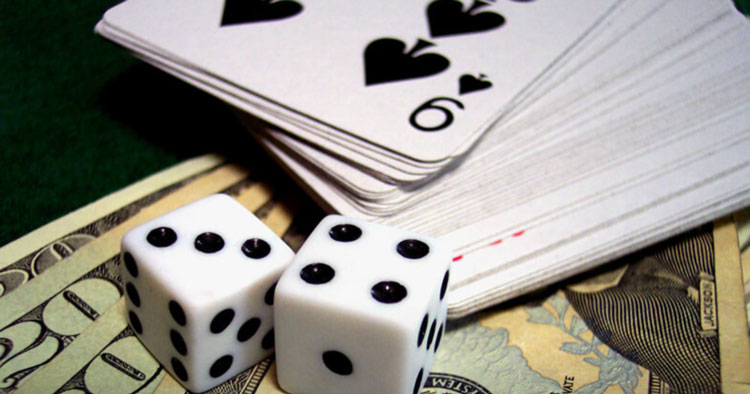
It is deeply ingrained in human nature to follow temptation and feel the irresistible call of opportunity. Gambling exerts an almost magnetic attraction – a fascinating mystery that arouses curiosity and draws people in. But why exactly are we so drawn to the flickering lights and the promising tinkling of the slot machines? It is not just the dream of treasure and riches, but the more subtle play with emotions and psychological patterns that makes our adventurous hearts beat faster.
Gambling is not just a challenge for the mind – it is an experiment in life itself. With every roll of the dice and every spin of the roulette wheel, we seek confirmation that luck is on our side. This intense anticipation activates our brain’s reward system and immerses us in the hope of discovering that one improbable chance that will make us king of the gambling universe. This quest for the big win is often inspired by stories of ordinary people becoming millionaires overnight. The thought that we, too, could one day have such an incredible experience drives many to keep playing.
Another element of this attraction is the ability of gambling to serve as an escape. In a world full of stress and demands, gambling offers a way to leave worries behind and immerse oneself in another reality. This escape from everyday life can provide short-term relief, while the exciting uncertainty of the game results creates an incomparable thrill. The social component also plays a role here because, in many cases, the thrill is enhanced by the presence and interaction with other players.
Hidden psychological mechanisms
Just as the stars illuminate the sky, our decision-making processes are also influenced by cognitive biases. These subtle mechanisms, hidden in the depths of our minds, often determine whether we draw the card or raise the stakes. One of the most prevalent biases is the gambler’s fallacy, which makes us believe that past events influence future outcomes – a magical thinking that continually draws us into the gambling vortex.

But it is not only this illusion of control that keeps us trapped. Emotions play a crucial role – an intoxicating mixture of elation at wins and heartbreaking disappointment at losses that is addictive. It is precisely these emotional swings that scientists are investigating in research projects, such as research into risk behaviour. Psychologists are trying to understand the complex emotions and motivations behind gambling behaviour in order to better address problematic gambling behaviour.
Games have fascinated mankind since the beginning of time, and gambling is the epitome of this fascination. However, it is not only the mind that is stimulated, but also the financial strategies of the players are put to the test. Those who want to achieve great success in gambling can learn a lot from the strategy of gaming to investment planning: what we can learn about long-term success. Successful gambling requires careful consideration of risk and reward, similar to long-term investments.
Furthermore, social influences and group dynamics are important aspects that often play a role in gambling. People are often attracted to the community of players and the excitement in the room. These social interactions can intensify the gaming experience and help maintain the desire to gamble. Another fascinating element of gambling is how it is practised and perceived in different cultures. In some cultures, gambling is celebrated as a social event, while in others, it is viewed as morally questionable.
The appeal of online gambling
With the advent of digital platforms, the world of gambling has been revolutionised, and fascinating new dimensions have opened up. The appeal of online casinos lies in the immediacy of access and the convenience they offer. Players can now enjoy their favourite games right from their homes – without losing the glamour and drama of a physical casino. Platforms such as Wanted Win Promo Code offer a variety of games and opportunities that accompany the thrill into the virtual depths of the gambling sphere.
Still, this is also coupled with the difficulty of responsible gaming and self-regulation. Although the ongoing availability of offers can be seductive, gamers have to be alert to prevent becoming caught in the trap of excessive gaming. Studies reveal that, especially for younger and unskilled players, the anonymity and accessibility of online gaming carry specific hazards.
The sale of valuable items, such as gold, can release extra money for you. The correct assessment of your personal financial leeway will greatly enhance your gaming pleasure and guard you against long-term financial damage.
Players move the wheel of fortune to their advantage using their understanding of mathematics, probability, and psychology, just as a painter sets his canvas. But considering the unpredictable factor – the human mind – is just as important as the game’s mathematical aspects for making gambling so alluring and demanding. Players aim to maximise their chances by applying techniques and considering probabilities, therefore acknowledging the uncertainty of luck at the same time.
Not only are the avid gamblers at the core of this exciting tension, but also the deep psychological elements of gaming, which make the search of uncertain fate a dance on a razor’s edge. The actual prize is usually the rollercoaster of emotions we ride along the road, not the financial ones. Remarkably a microcosm of human experience, gambling reminds us to balance risk against reward and continues to be a timeless lure for travellers seeking the excitement of the unknown. This emotional rollercoaster makes gambling an unmatched experience, reflecting the most basic aspects of human nature.

Still, one should not overlook another side: the possibility of reliance. Many people lose control of their gambling behaviour, which could cause major personal and financial issues. Thus, knowledge of the dangers of gambling is as vital as the game itself. Counselling centres and programs help people who fear their gambling behaviour is spiralling out of control. Maintaining a balance between enjoyment, thrill, and reason depends on awareness and responsibility.
Summary
Ultimately, whether in conventional casinos or via Slotozen Casino, gambling appeals to a deep-seated human curiosity about risk, reward, and uncertainty. It provides not just the thrill of chance but also a means of escape from daily life, therefore generating times of expectation and emotional highs. Complicated psychology driven by cognitive biases, social dynamics, and the human need for success and control shapes gambling. It is important to keep in mind, nevertheless, the balance between fun and obligation. Knowing the psychological processes involved can enable people to make wise decisions and prevent the risks of addiction, therefore ensuring that gambling stays a fun pastime rather than a destructive force. By means of knowledge and self-control, the appeal of gambling can be experienced sensibly, therefore enabling players to enjoy the excitement while safeguarding their welfare.