
By Andrew Hayslett/Cronkite News
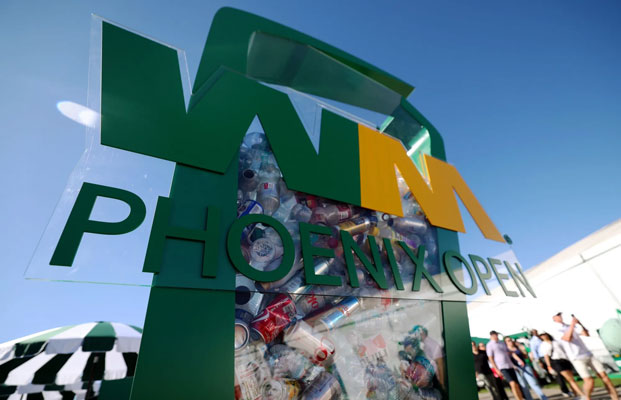
SCOTTSDALE – The WM Phoenix Open is an anomaly in golf. Unlike most tournaments, it draws large crowds that bring high energy and consume heavy amounts of alcohol. Despite the numerous people getting wasted, WM, the event’s title sponsor, officially known as Waste Management, Inc., aims for zero waste from the tournament, encompassing everything from carpets to the cups used for serving alcohol.
For the past 13 years, UL Solutions has certified the WM Phoenix Open as a zero-waste event, meaning that at least 90% of waste was diverted from landfills. In 2025, the tournament diverted 98% of its materials from landfills.
“Going into the 2013 tournament, my boss at the time was on our planning phone call and said, ‘I think we should take all trash cans off the course and make it zero waste,’” said Lee Spivak, WM Director of Advisory Services. “It (the response) was a little quiet.”
WM had a willing partner to achieve its goals. The Thunderbirds, the nonprofit that runs the tournament, shares the same goal as WM to make the tournament sustainable. The two organizations collaborate on that front.

That cooperation lays the groundwork for a zero-waste event, with vendors and fans getting involved as well. The Thunderbirds include strict sustainability measures in their contracts, including material and sustainability reporting requirements.
“We’ve had situations where vendors didn’t want to be sustainable, and they’re not allowed here,” said Mike Watson, WM Chief Customer Officer. “You have to follow the policies.”
WM helps vendors by providing lists of materials they can use that meet the requirements. They check in with vendors before the tournament and on-site to ensure they fulfill their contracts.
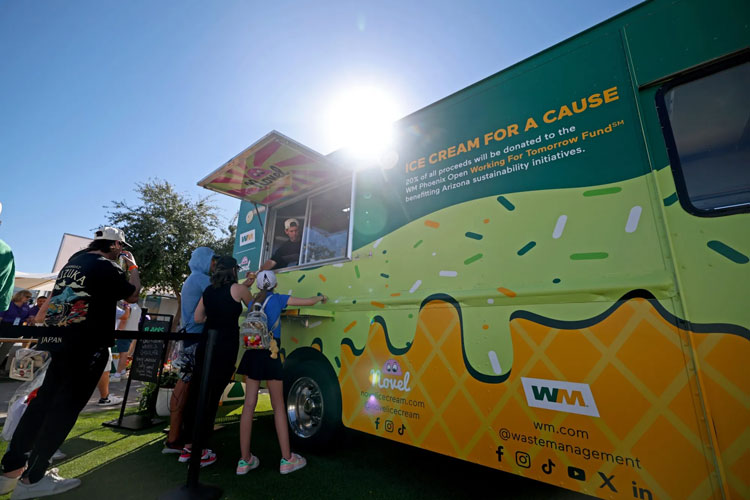
An example of a vendor achieving sustainability is Novel Ice Cream, which created a special ice cream flavor dubbed “Green Dream” for the tournament. The ice cream can be served in a bowl with two ice cream bowl-shaped cones, instead of a standard bowl.
The famous 16th hole got in on the act by shifting to a modular, aluminum-based design that supports the tournament’s goal as a zero-waste event. Some of those materials are reused at other events. The changes reduce the need for wood, carpet, paint, and scrim. The aluminum is used on the 17th hole as well.
“That was a huge deal,” said Chad Bowden, WM Director of Operations. “A lot of potential waste was diverted.”
The 16th hole has chutes that funnel bags directly into compactors, saving workers time. There is also plumbing to funnel the ice used to keep drinks cool, and that water is then used in the port-a-potties.
One thing fans can do to support the cause is wear green on Saturday, with a dollar donated to the Working For Tomorrow Fund for every fan, player, and caddie who wears green. In 2025, the initiative raised almost $500,000.
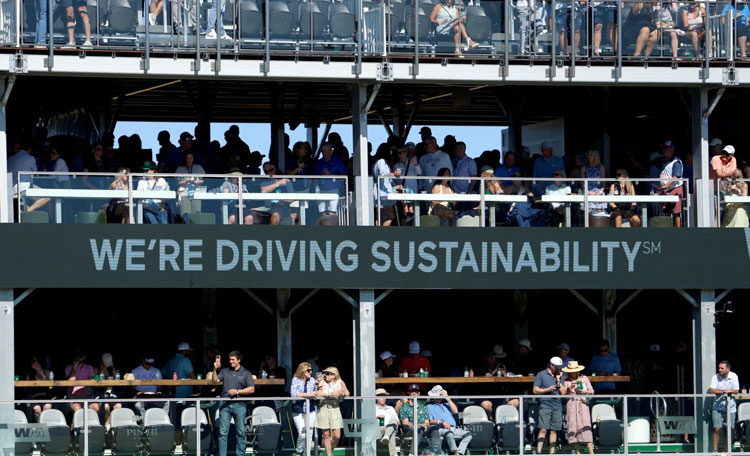
WM wants the event to reflect its business practice in sustainability. People see that on the course, as there are no landfill trash cans. Instead, there are compost and recycling bins.
WM made the bins easy to understand, with compost bins colored gold and round-topped, and recycling bins colored green and triangular-topped. The bins have pictures and words to help people put things in the right bins.
The tournament also practices what it preaches by donating materials such as wood, carpet, and scrim locally so they have a second life after the tournament. The WM is starting to use recyclable carpet in places.
“It’s tackling a challenge that is not really addressed,” Spivak said. “Carpet is one of the biggest material volumes by weight you have to handle.”
A small detail in the composting process is that everything that touches food must be certified by the Compost Manufacturing Alliance, which is the city standard. The processing facilities set the standards for what is and is not recyclable.
In the future, WM is considering having on-site renewable energy. The tournament currently uses generators from APS powered by biodiesel.
“Our purpose is about a sustainable tomorrow,” Watson said. “You have to stand for something.”