
The virtual landscape has never been this busy, with economic activity happening in every corner across the web. Digital assets are being bought and sold, in-game items are being traded, and it has become a mission to keep up with it all. However, it is in the P2E (Play-to-Earn) and crypto gaming realm that moves are being made, currency is being yielded and traded, and new digital societies are forming. This should come as no surprise, as the new economic landscape has increased the demand for new structures, specifically in the social sphere. As such, guilds and larger communities are being created, all through decentralized gaming.
From Virtual Gold to Real-World Green
At the core of these newly formed communities and guilds is a financial engine, driving its growth. Initially, there was a very high entry barrier when it came to participating and actually succeeding in P2E or crypto games. NFTs (Non-Fungible Tokens) cost an arm and a leg to come by, making it difficult for many to actually get their foot in the door. In comes the Scholarship Program, which is where guilds acquire assets and lend them to scholars (players) who wouldn’t have the financial capacity to start otherwise. From here, these guilds began to grow and generate income.
This income is then pooled into a centralized or decentralized treasury (depending on the guild) and is eventually used to procure more assets. A guild’s income is generally made up of earned game tokens, which get converted to fiat currencies when it comes time for distribution to players. This leads to another key element in obtaining player loyalty and trust: swift, reliable payments. A good example of this can be seen at an instant withdrawal crypto casino, where players can cash out their winnings instantly. With fast payout networks like Bitcoin Lightning, Solana, or Tron-based stablecoins, instant payouts, flexible withdrawal limits, and zero-fee transactions become possible.
Crypto casinos are but one instance of decentralized gaming, and provide high-volume, quick-liquidity on/off ramps for guild members to obtain their funds. Other ways include gamers heading into competitive tournaments and winning big, which is when these tokens get added to the treasury. Even more, asset staking, NFT trading, and even the farming of rare resources all provide further income generation to the overall guild. Think of it as a community of gamers all “working” (playing) towards a single goal, which, in turn, brings in more members and leads to rapid growth.

Why Gamers Need Guilds
As with the financial engine, the sheer scale of the in-game economy wouldn’t be able to function without collective action and coordination. Think of these communities or guilds as a workplace where each member has a specific role that keeps the company functioning. Would a business be able to run if it suddenly lost its HR department or the company accountant resigned? There would be complete chaos. The same is true within these crypto gaming societies. Every gamer brings their own unique skill and somehow contributes to keeping the digital workspace in tip-top shape.
This is also where communication comes into play. How does one build a community if no one is speaking to one another? The answer is simple: you can’t. Discord, Telegram, and other specialized forums are there for that exact reason, acting as digital offices for community managers to build trust. It also doubles as a space for mentorship, training, and even conflict resolution, depending on what is needed. This communication is the most crucial element and acts as the glue that holds everything together. Basically, it is a form of social capital that is so valuable that it underpins the shared economy.
Finally, there is the real-world impact. Most gamers are familiar with having a dedicated squad to play with once they hop online, but not many think about how this impacts them outside of the game. Building this digital, social connection offers a support network and digital camaraderie that cannot be found elsewhere. The same is true within these guilds, just add in the fact that it doubles as a structured means of earning a living for many of the players. P2E and crypto gaming models thrive on the social elements that come with the grind.
Guild Management & Governance
As with any community or society, there is going to be some form of hierarchy that has been established over time. This can be seen in the organizational evolution of these guilds, where each started off with a rather centralized structure and grew from there. At first, a few founders were manning the ship before it transformed into a DAO (decentralized autonomous organization). From here, governance needs to be established, and this is up to the senior members. Generally, this will see each senior or investor granted a governance token.
This makes decision-making processes that much easier. Think of these tokens as each member holding a share in a company, meaning each of them has some power over operational decisions. As such, treasury fund allocation, profit split ratios, and even vetting new game investments require the input of each member before approval. This is the equivalent of executives getting together in the boardroom to make important company decisions. However, this does introduce one of the challenges of managing a decentralized guild. Operating a borderless digital business across different cultures and through language barriers can prove daunting. It can be difficult to enforce community rules or a code of conduct among a group of anonymous members.
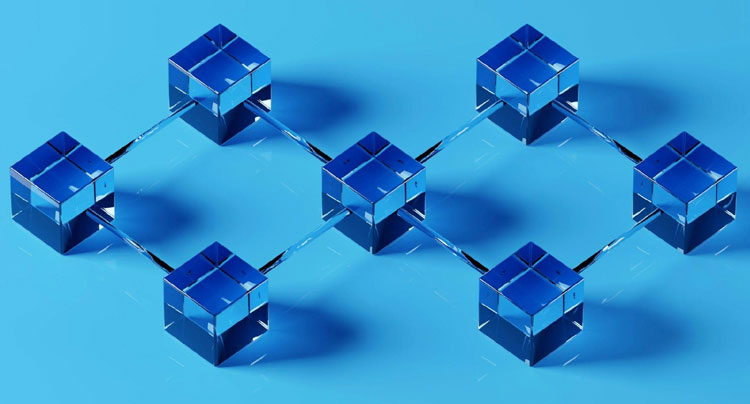
Here is where trust and transparency come into play. One great element underlying blockchain is that all transactions are public and can be viewed on a ledger. The system itself is setting a standard for accountability and transparency, which are some of the essential requirements for maintaining such a large guild or society. Treasury balances can be viewed by all members, meaning there is no room for one single individual to commit fraud, steal, or be dishonest. Everyone knows exactly what is happening at all times, and it creates a healthy, functioning, environment.
Conclusion
Crypto guilds and communities serve as a rather revolutionary economic example of what deep social cooperation looks like. Each and every single part of the organized community is important, and the social currency holds as much value as the assets. When looking at this on a broader scale, these guilds are providing the perfect blueprint for global, democratized labor and self-governance.