
Young wildlife are rarely abandoned, and parents will likely return
Contributed Article/Courtesy AZGFD
PHOENIX — As the spring season brings an increase in newborn wildlife throughout the state, the Arizona Game and Fish Department (AZGFD) is advising the public to leave baby wildlife alone.
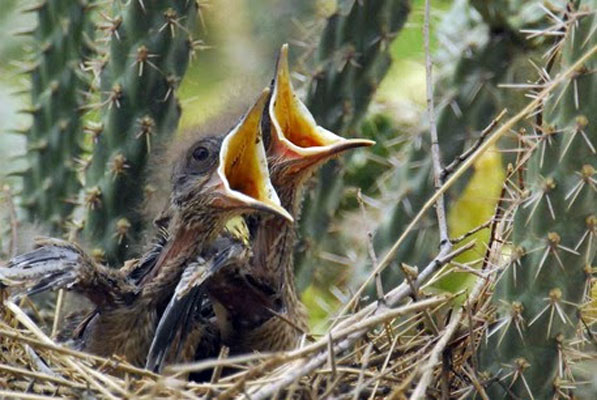
Young wildlife are rarely abandoned. While it might be difficult to resist the urge to help seemingly abandoned animals, like newly hatched birds and baby rabbits, a parent is likely nearby.
Typically, once any perceived predators (like dogs, cats, or humans) leave the area, one or both parents will return and continue to care for their young.
Unfortunately, some young animals, like elk calves and deer fawns, may have to be euthanized if removed from the wild because they cannot be released back into their natural habitats. Zoos and other wildlife sanctuaries usually are not viable options and often don’t have available space.

Baby birds are the most common young wildlife encountered and removed from the wild by the public.
“Adult birds will still care for their young if they fall out of the nest too soon. If you happen to see a flightless baby bird on the ground and are concerned for its safety, it is okay to put it back in the nest if you can safely do so,” said Darren Julian, Urban Wildlife Specialist for AZGFD.
Julian also advises those with pools to be on the lookout for ducklings throughout the spring.
“Mallard ducks will nest in your backyard and newly hatched ducklings will head straight to the pool,” said Julian. “Please provide a way for the young ones to get out of the water if they are unable to make the jump out of the water. Also, leave a gate open temporarily so that the adult female duck can guide them to the nearest open waterway to feed.”
A licensed wildlife rehabilitator should be contacted if an animal is encountered that clearly appears to be sick or injured, is unresponsive or lethargic, has been attacked by a cat or dog, or there is evidence that the parent animal is dead.