

For many people, the biggest barrier to staying active isn’t motivation.
It’s space.
Not everyone has a spare room to turn into a gym. In fact, most people are working with limited square footage—apartments, shared living areas, or rooms that serve multiple purposes throughout the day.
But small space doesn’t mean limited options.
In 2026, the way people approach fitness at home has shifted. It’s no longer about building a full gym—it’s about designing a setup that works within the space you already have.
Why Small Spaces Change How People Think About Fitness
When space is limited, every decision matters.
Large machines, fixed setups, and equipment that can’t be moved easily quickly become impractical. This forces a different kind of thinking—one that prioritizes efficiency over scale.
Instead of asking, “What equipment should I buy?”, people begin asking:
- What can I use regularly in this space?
- What fits without disrupting daily life?
- What allows multiple types of workouts?
This shift leads to smarter, more intentional choices.
The Difference Between “Having Equipment” and “Using It”
In small spaces, unused equipment becomes a problem.

If something is difficult to set up, takes too much room, or interrupts normal activities, it’s less likely to be used consistently.
This is why affordability isn’t just about price—it’s about usability.
A piece of equipment that fits naturally into your space and routine often delivers more value than something larger or more expensive that sits unused.
How to Build a Functional Setup Without Overcrowding
Creating a workout space in a small area doesn’t require complexity.
It requires clarity.
A functional setup usually includes:
- a small open area for movement
- a few versatile tools
- minimal setup time before starting
The goal is to reduce friction.
When you can start a workout within minutes—without moving furniture or reorganizing your space—you’re more likely to stay consistent.
How One Piece of Equipment Replaces Three in Small Homes
Versatility becomes the most important feature in limited environments.
Instead of multiple single-purpose tools, people are choosing equipment that can handle a range of exercises within the same footprint.
This is where simple tools become highly effective.
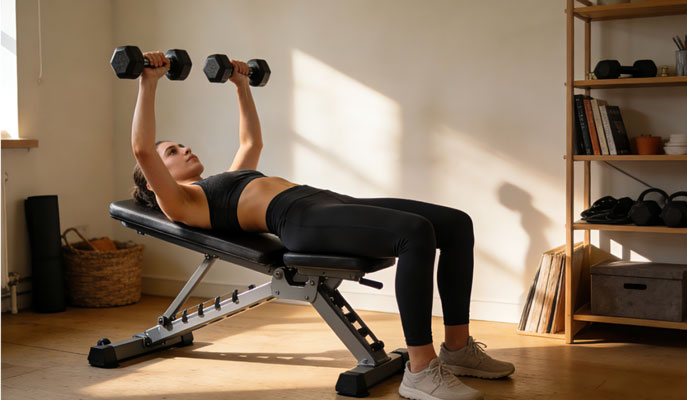
For example, incorporating dumbbell chest exercises into a routine allows users to train upper body strength without needing large machines. The same equipment can support multiple muscle groups, making it ideal for compact setups.
This kind of flexibility helps maximize both space and value.
Storage Matters More Than You Think
One of the most overlooked aspects of small-space fitness is storage.
Even compact equipment can become inconvenient if it doesn’t have a place.
People who successfully maintain home workouts in small spaces often:
- store equipment within easy reach
- avoid setups that require constant rearrangement
- keep their environment visually clean
When equipment is easy to access—and easy to put away—it becomes part of the routine instead of a disruption.
Less Choice, More Action: Why Simple Setups Work Better
In smaller environments, simplicity isn’t a limitation—it’s an advantage.
Fewer options mean fewer decisions. And fewer decisions reduce the likelihood of skipping workouts.
Instead of choosing between multiple machines or routines, people focus on repeatable movements, short effective sessions, and consistent timing.
This simplicity supports habit formation.
Over time, workouts become automatic rather than something that requires planning.
What Actually Makes a Setup “Affordable”
Affordability is often misunderstood.
It’s not just about buying the cheapest equipment—it’s about making choices that deliver long-term value.
In small spaces, that usually means:
- equipment that can be used frequently
- tools that support multiple exercises
- setups that don’t require upgrades or replacements
In this context, selecting the right home gym equipment becomes a practical decision rather than a purely financial one.
Designing Around Your Life, Not Against It
One of the biggest mistakes people make is trying to force a gym-style setup into a space that doesn’t support it.
This often leads to frustration and inconsistency.
A more effective approach is to design your setup around how you actually live:
- when you have time to exercise
- how your space is used throughout the day
- what level of effort you’re willing to maintain
This alignment makes it easier to stay consistent.
A Different Kind of Fitness Mindset
Small-space fitness encourages a different mindset.
It shifts focus away from:
- having the “perfect” setup
- following complex programs
- chasing ideal conditions
And toward:
- making the most of what’s available
- building habits that fit your environment
- prioritizing consistency over perfection
This mindset is often more sustainable.
Conclusion: Making Fitness Work Within Your Space
Limited space doesn’t have to limit your ability to stay active.
In many cases, it leads to better decisions—simpler setups, more consistent routines, and smarter use of equipment.
By focusing on versatility, accessibility, and usability, it’s possible to create a fitness system that fits naturally into your home.
And when your setup works with your space instead of against it, staying active becomes easier—not harder.