

Conservation efforts help ensure a healthy habitat awaits the birds
Contributed Article/Courtesy AZGFD
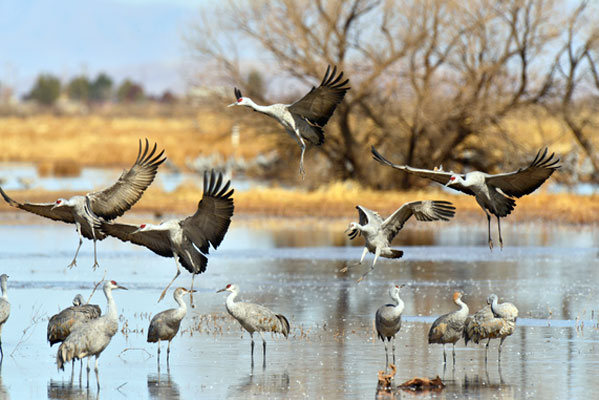
McNEAL — Sandhill cranes by the thousands are once again returning to their wintering grounds at the Whitewater Draw Wildlife Area in southeastern Arizona.
For the next several months, more than 20,000 of these fascinating birds, along with waterfowl and other wetland-associated species, will provide an unparalleled wildlife-viewing experience.
“In my opinion, there just isn’t a better wildlife-viewing opportunity in Arizona than Whitewater Draw,” said Jeff Meyers, wildlife viewing program manager for the Arizona Game and Fish Department (AZGFD). “We’re really seeing AZGFD’s conservation efforts pay off in the form of healthy habitat and thriving wildlife.”

Not only is the Draw in excellent shape to welcome back the sandhill cranes, but it is also doing so well that some long-term local residents have reached quite a milestone of their own.
“The barn owl mating pair featured on our barn owl cam just welcomed their second clutch of the season,” said Meyers. “That’s a strong indication of how abundant resources are for the wildlife in the area.”
Having a second clutch, or a second round of chicks, in the same season is a feat achieved by only about 10% of Arizona’s barn owls each year. The extended season and extra chicks have been delighting viewers of the AZGFD Barn Owl Live-streaming Webcam.
“It’s been lots of drama and great moments as the barn owl pair raised these chicks,” said Meyers. “Now that the second clutch is about to fledge, it’s the perfect time to shift our attention to the crane cam and watch as thousands of these amazing birds head our way.”
Along with a close-up view of the thousands of cranes wintering at the Draw, the AZGFD Sandhill Crane Live-streaming Webcam also offers stunning views of the surrounding area.
The cranes come and go, making for great viewing throughout the day, but the hour right around sunrise, as the cranes head out to feed for the morning, is a particularly good time to watch. The leggy birds generally return to the wildlife area before noon, where they will remain for the rest of the day.

Across the globe, there are 15 species of cranes. Two species are found in North America — sandhill, the most abundant, and the endangered whooping crane.
Sandhill cranes are wary birds that shy away from areas of dense vegetation that may conceal predators. The wide-open Whitewater Draw offers the cranes an ideal place to roost, allowing them to spot predators from a distance, while standing in the water at night helps alert them to unwanted nocturnal visitors.
The cranes will begin to leave the wildlife area between late February and the middle of March. By April, all of the birds will be on their way to their northern nesting grounds, some as far away as Siberia.
Visit AZGFD’s Sandhill Crane Page to learn more.