
Column By Sean Rickert
Among the Propositions on the ballot this fall is the poorly conceived effort to force schools to improve by reducing their problem solving capacity– labeled Proposition 320. If approved Prop. 320 would require school districts to allocate more than 60% of their operational budgets for instructional expenditures. At first this seems like a good idea. Fiscal Year 2025 is the most recent year for which a School District Spending Report is available. The report shows that twelve districts demonstrated the required level of operational efficiency and forty-seven made the required level of improvement outlined in the proposal. Almost none of those districts would be covered under Prop. 320 because they are neither located in Maricopa, Pima or Pinal counties, nor serving more than 7,500 students. They demonstrate that the requirements of the proposition are already being achieved by almost a third of Arizona’s public schools. It is still a bad idea.

Proposition 320 is a bad idea. The sponsors wanted to force every district in Arizona to spend more than 60% of their operational budget on instruction. Then they realized that many rural districts were already achieving this, and those who were not had really good reasons. So, they shifted the focus to only schools in the three most populous counties and large districts elsewhere like Flagstaff and Yuma. Arizona’s constitution would allow the legislature to expand the scope of Prop. 320 to include small rural schools, so treat it like it affects all schools.
The logic is flawed. The belief is that we can make schools better without investing in them if we force local boards to trim everything except ‘instruction’. Is this a way to address Arizona’s ‘teacher shortage’? Arizona has the lowest average teacher salary in the nation. Supporters of Prop 320 argue schools should spend less on other things and more on teachers. If that is true then why is it that of the 12 districts in Arizona who did spend 60% or more on instruction, only five had average teacher salaries greater than the state average. You can spend more than 60% and still be more than 20% below the state average teacher salary. Prop. 320 doesn’t make up for what Arizona’s budget doesn’t put towards K-12 education.
Finally, Prop. 320 is a bad idea because it takes control away from the people who care. Of the 12 districts putting 60-cents of every dollar towards instruction, seven are large enough to have student academic achievement numbers to report. Two performed poorly and four exceeded their peer group averages across all subjects. This combination of high operational efficiency and high student achievement isn’t causal. Local leaders making hard decisions about what is best for students exist within schools where student learning is highly valued. They push for student achievement and for operational efficiency. Those local leaders on school boards in small towns across Arizona push to provide a quality education for the children in their communities. Proposition 320 eliminates the ability of local leaders to make these decisions. That is bad for schools.
Proposition 320 sounds like a good idea. It is not. Please vote, “No” on Proposition 320.
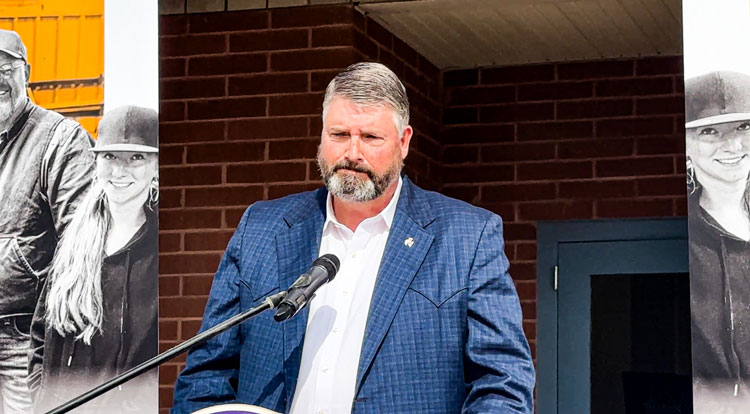
Mr. Sean Rickert spent 30 years in public education including 14 years as the superintendent of Pima USD. For each of those 14 years he prepared an expenditure budget for the district that put more than 60% of all spending towards what the state counts as ‘instructional’ spending. He currently lives in Thatcher, Arizona and works as a consultant helping rural school leaders achieve success.