

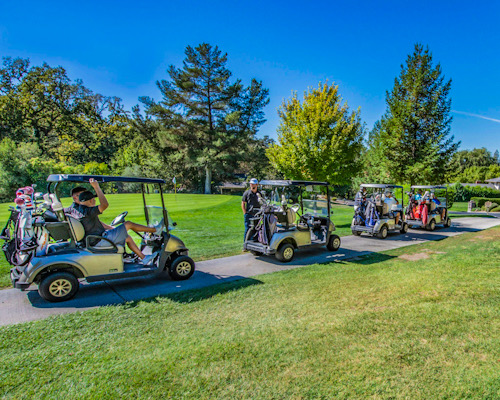
Golf carts may have been designed around fairways and clubhouses, but their usefulness is no longer limited to golf. On larger properties, holiday sites, farms and private communities, compact recreational vehicles can provide a convenient way to move people and light equipment without using a full-size car.
Their appeal comes from simplicity. They are relatively easy to manoeuvre, require less space than most road vehicles and can handle many short-distance tasks that would otherwise involve a lot of walking.
The important question is not whether a recreational vehicle looks capable. It is whether its design matches the environment where it will actually be used. Ground clearance, passenger capacity, storage, range and comfort all become more important once the vehicle leaves a smooth golf path.
Ground Clearance Changes Where the Vehicle Can Go
Standard golf carts work well on relatively flat, maintained surfaces. Once the route includes gravel, uneven ground or steeper sections, clearance and suspension become much more important.
That is one reason people comparing vehicles for larger properties may research lifted golf carts online. The additional height can provide more clearance over rougher surfaces, while larger tyres may suit environments where a low standard cart would be less practical.
That does not make every lifted cart suitable for every terrain.
The intended route should still determine the setup. A vehicle used on maintained paths has different requirements from one regularly crossing uneven private land.
Passenger Capacity Should Match Real Use
A recreational vehicle may seem spacious until several people, bags and supplies all need to travel at once.
Before choosing a model, think about who will normally use it.
A two-seat vehicle may be ideal for routine property checks or short trips between buildings. A household, resort or event site may benefit more from additional seating.

The layout matters as much as the headline seat count.
Rear seats sometimes convert into cargo platforms, which can make the vehicle far more flexible for owners who alternate between transporting people and equipment.
It is worth considering the busiest realistic day rather than only the most common trip.
A little additional capacity can prevent the vehicle from becoming inconvenient as soon as circumstances change.
Cargo Space Can Be More Important Than Speed
Outside a golf course, utility often matters more than how quickly the vehicle moves.

Garden tools, sports equipment, shopping bags, coolers or maintenance supplies all require somewhere secure to sit.
Even modest cargo capacity can transform a recreational vehicle from simple transport into a useful working tool.
Think about how items will actually be loaded.
A flat rear platform may suit boxes and larger objects, while enclosed compartments are more useful for smaller items that should not move around during travel.
Storage that is awkward to access will be used less often, regardless of how much volume it technically provides.
Practical vehicles make everyday tasks easier rather than simply adding another way to get from one point to another.
Electric Range Needs to Match the Property
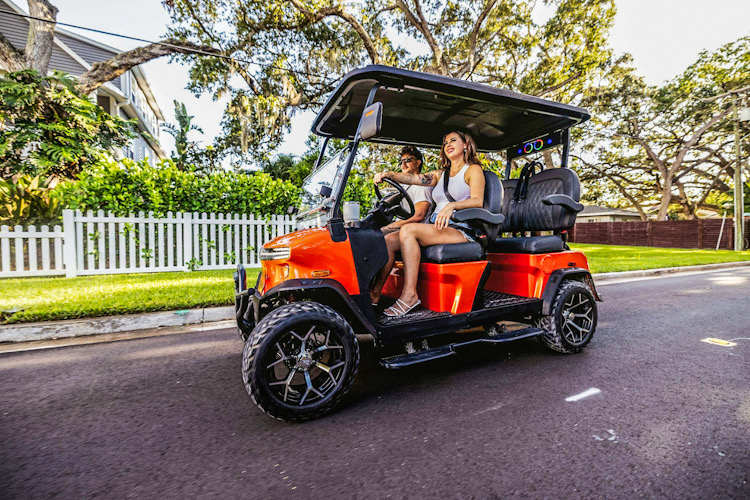
Electric recreational vehicles are convenient for short repeated journeys, but range still deserves attention.
The useful figure is not simply the maximum distance quoted under ideal conditions. Hills, passenger weight, temperature and repeated stopping can all affect how far a vehicle travels before charging.
Think about the longest normal day.
A vehicle operating around a compact holiday property may never travel far from a charger. One used across a larger estate could cover substantially more distance.
Charging access matters too.
If the vehicle has a regular parking space near suitable power, keeping it ready becomes much easier. If charging involves extension cables or moving equipment every evening, the routine can quickly become frustrating.
Range is most useful when considered alongside actual daily behaviour.
Comfort Matters More on Longer Trips
Golf carts are often associated with short journeys, but off-course use can involve considerably more time behind the wheel.
That makes seating, suspension and weather protection more important.
Repeated travel over rough ground can become uncomfortable if the suspension is poorly suited to the surface. Seats that feel acceptable for five minutes may also become noticeably less comfortable after repeated longer journeys.
Roofs and windshields can extend usability when weather changes.
Depending on the climate, additional protection from rain, wind or intense sun may have a greater effect on everyday usefulness than cosmetic upgrades.
The best configuration is the one that makes people willing to use the vehicle regularly.
Manoeuvrability Is One of the Biggest Advantages
Compact dimensions can make recreational vehicles particularly useful in places where cars feel excessive.
They can move between buildings, through wider garden paths or around busy event areas with less space.
That does not remove the need for careful driving.
Pedestrians, children, animals and equipment may all share the same routes. Good visibility and sensible speeds are particularly important in spaces that were not originally designed as roads.
Parking is another advantage.
A compact vehicle can often be stored close to where it is needed rather than in a distant parking area.
For properties involving many short trips throughout the day, that convenience can save a surprising amount of time.
Maintenance Still Determines Long-Term Practicality
A recreational vehicle is only useful when it is ready to operate.
Tyres, brakes, batteries and suspension components all need routine attention, particularly when the vehicle regularly encounters rougher surfaces.
Electric models also require owners to think about battery condition and charging habits.
A simple maintenance schedule helps prevent small issues from becoming reasons the vehicle sits unused.
Cleaning matters too.
Mud, dust and debris accumulate more quickly once a cart moves beyond maintained paths. Regular cleaning makes inspections easier and can reveal damage or wear earlier.
Practical ownership means considering the maintenance routine before the purchase, not only after problems appear.
The Best Vehicle Fits the Property
A recreational vehicle becomes genuinely useful beyond the golf course when it solves repeated everyday problems.
It might reduce long walks across a large property, make it easier to transport supplies or provide convenient transport for guests.
The right setup depends on those tasks.
Ground clearance may matter on rougher land, while seating capacity could be the priority in a residential community. Elsewhere, cargo space or electric range may determine whether the vehicle is genuinely convenient.
There is no single configuration that works everywhere.
The most practical choice is the one selected around the routes, surfaces and jobs it will encounter most often. When those factors come first, a recreational vehicle can become much more than something associated with eighteen holes.